A distributor preparing a meeting room, a compact living room and a portable demonstration kit could be offered the same screen size for all three. That would not make the projector decision the same. The lens position, brightness budget, power needs and audience layout are different before any screen material enters the conversation. A screen chosen only for its ‘ALR' or ‘high-gain' label can make the wrong projector setup harder to use.
Start with the room and the projector. Decide where the lens can sit, how large the image needs to be, whether daylight will be present and how many people must see it clearly. Then choose a screen that works with that particular optical path. For buyers of TOUMEI projectors, this order also makes a quotation more useful: it identifies the platform to evaluate, rather than asking the factory to recommend a projector around a screen selected in isolation.
Choose the TOUMEI model for the room's actual job
Begin with the physical constraints. Is there space behind the viewers for a normal front-throw projector? Must the unit sit on a cabinet beneath the image? Is the installation permanent or does someone move it between rooms? How wide is the seating area, and will the lights remain on for presentations? Those answers narrow the projector shortlist before a gain number or screen coating becomes relevant. The projector throw-ratio guide is useful for understanding lens-to-screen geometry, but the installation drawing for the exact model remains essential.
TOUMEI has more than one route to the brief. S2 addresses ultra-short-throw placement near the wall; X6 offers a standard-throw DLP platform with a different published brightness specification; Q3 is an LCD option; and S7 is a DLP platform with a built-in battery in its documented AOSP configuration. These are not interchangeable solutions, and none should be chosen by one specification alone. Screen compatibility is the next decision, after a workable projector position and image size have been identified.
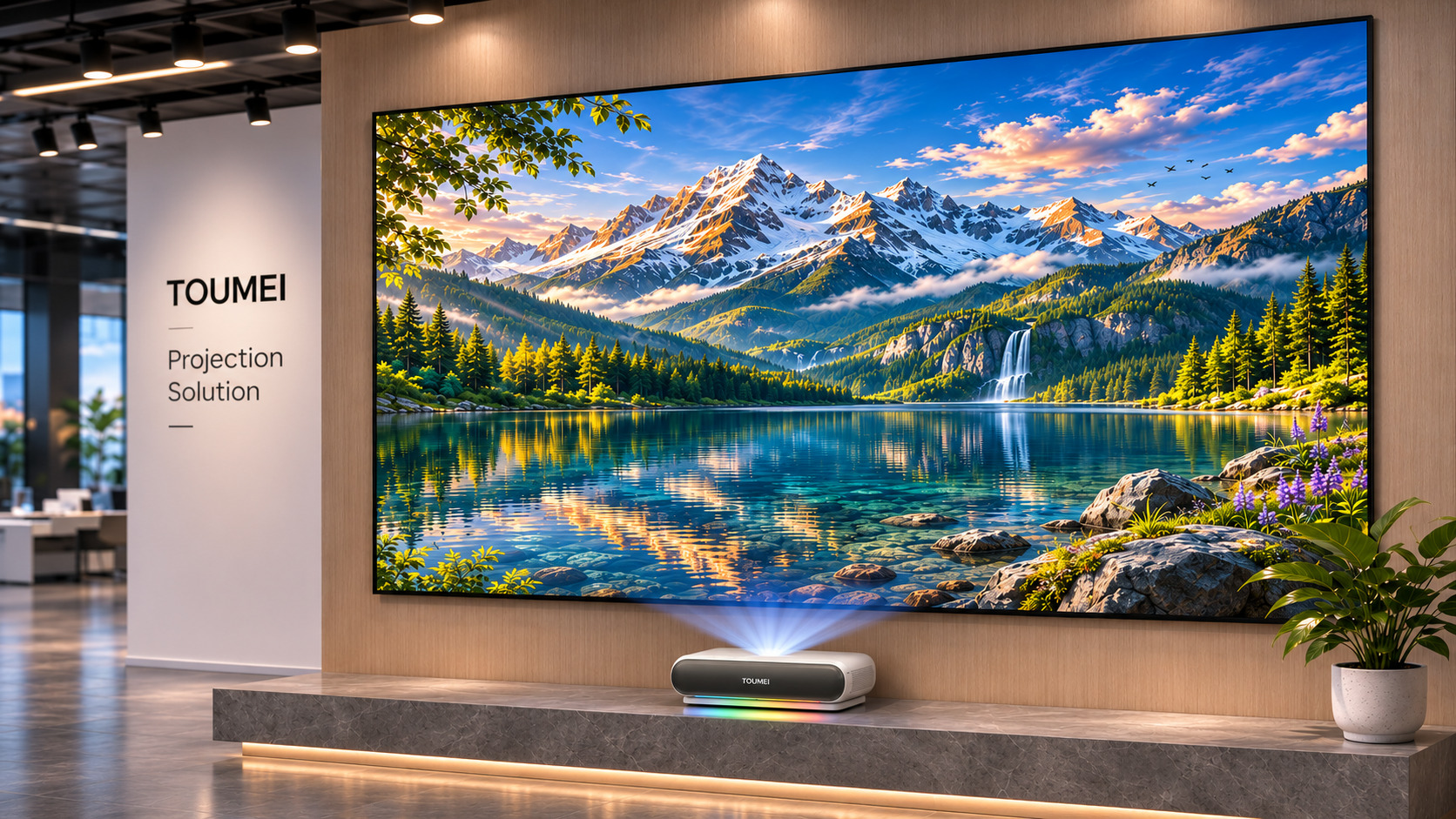
Figure 1. Illustrative TOUMEI S2 ultra-short-throw installation. The image shows projector placement; screen compatibility and ambient-light performance require separate verification.
S2: build the system around ultra-short-throw placement
The TOUMEI S2 ultra-short-throw projector is specified in its Android 13 configuration with a triple-laser light source, 1,000 ANSI lumens and a 0.18:1 throw ratio. Its published screen-size range is 60–110 inches. The practical attraction is placement close to the wall rather than a projector behind the seating area. A buyer fitting a large image above a cabinet should first request the S2 installation drawing for the chosen image size; a throw-ratio figure by itself is not the clearance between the back of the cabinet and the wall.
That geometry affects the screen. Light from S2 reaches the surface from a steep upward direction. If the installation calls for ambient-light rejection, the screen maker must verify that the proposed material is compatible with ultra-short-throw light and is mounted in the correct orientation. A conventional ALR surface designed for a projector farther back can reject part of S2's intended light. Screen flatness matters too, because ripples become more visible at a steep incidence angle.
Treat the cabinet, projector and screen as one installation drawing, not three separate purchases. Ask the screen supplier for the exact material code and supported geometry, then test the proposed S2 configuration at the intended image size. The screen is an accessory choice in this process; the S2's close-to-wall placement is the starting point that determines what the accessory must support.
X6: plan for a shared room and a larger viewing brief
The TOUMEI X6 DLP projector lists 1,600 ANSI lumens and a 1.2:1 throw ratio. That gives a dealer a different platform to evaluate for a meeting room, training room or shared viewing space where a conventional lens-to-screen distance is possible. Brightness is a useful shortlisting figure, especially as image size increases, but it is not a promise that the image will remain bright with every ceiling light on. The intended width, room lighting and picture preset should be part of the sample review.
For X6, begin with the installation position and the seating plan. If viewers are spread across a wide table, test a matte-white surface as a baseline. A compatible standard-throw ALR material may be worth comparing where side lighting is a problem, but check whether it darkens the image for people at the outer seats. The screen should support the X6 arrangement; it should not dictate an awkward projector location just to fit a catalog description.
When comparing sample images, keep the X6 picture preset, screen size and lighting unchanged. Look at a text-heavy slide from the back and side seats, then examine a dark scene for washed-out detail. Ask for measurement conditions when a supplier makes a brightness or contrast claim. TOUMEI's projector-lumens buying guide helps frame that discussion without treating screen gain as additional projector output.
Q3 and S7: separate fixed-room needs from portable use
The TOUMEI Q3 LCD projector lists 550 ANSI lumens and a 1.2:1 throw ratio. It belongs on a shortlist that can be evaluated with a sensible image size and realistic light control, rather than being treated as a smaller X6 with identical performance. In a room where a projector will normally stay put, confirm the shelf or mount position, the size of the image and whether the farthest seat can read ordinary presentation text. A screen with a higher peak gain may improve the central view yet make off-axis seating less comfortable.
The TOUMEI S7 DLP projector is a different brief when portability and power flexibility are important. TOUMEI's published AOSP Android 11 configuration lists 600 ANSI lumens, a 1.2:1 throw ratio and a built-in battery; stated runtimes vary by operating mode and use conditions. A buyer moving S7 between demonstration rooms should verify the actual power plan, available throw distance and screen size at every location. S7 Google TV specifications must be confirmed separately; the AOSP battery and software details should not be copied across versions.
Now match the selected projector to a screen
Once the projector model, lens position and target image size are settled, choose the surface. A matte-white screen often provides a sensible comparison point for a controlled room and widely spaced seating. A directional ALR surface might help in a room with troublesome lighting, but it requires the correct incoming light angle and a check from side seats. Neither ‘ALR' nor ‘1.3 gain' is proof of a better finished system. TOUMEI's screen-and-projector discussion explains why this remains an installation-specific decision.
S2 — If ALR is needed, specify UST compatibility. Check the screen orientation, flatness and cabinet clearance against the installation drawing.
X6 — Start with a standard-throw screen at the planned size. Compare matte white with compatible ALR only when room lighting calls for it.
Q3 — Test legibility at the planned image size and outer seats. Control room lighting before depending on a higher-gain surface.
S7 — Check screen size and viewing angles in each location. Confirm the system version before quoting power or battery runtime.
Test the projector-and-screen system before approving a bundle
Test the proposed projector at its planned position, screen width and normal room lighting. Keep the throw distance and picture preset unchanged when comparing screens. Show a text slide, a uniform gray field and a dark scene. Inspect the center and outer seats; record the material, projector settings and lighting so the result can be repeated.
An X6 meeting-room trial should keep X6 at its intended position while the screen options change. An S2 trial needs the real UST placement and a screen approved for that angle. These practical checks are not laboratory measurements, but they can reveal a poor pairing before an order is placed.
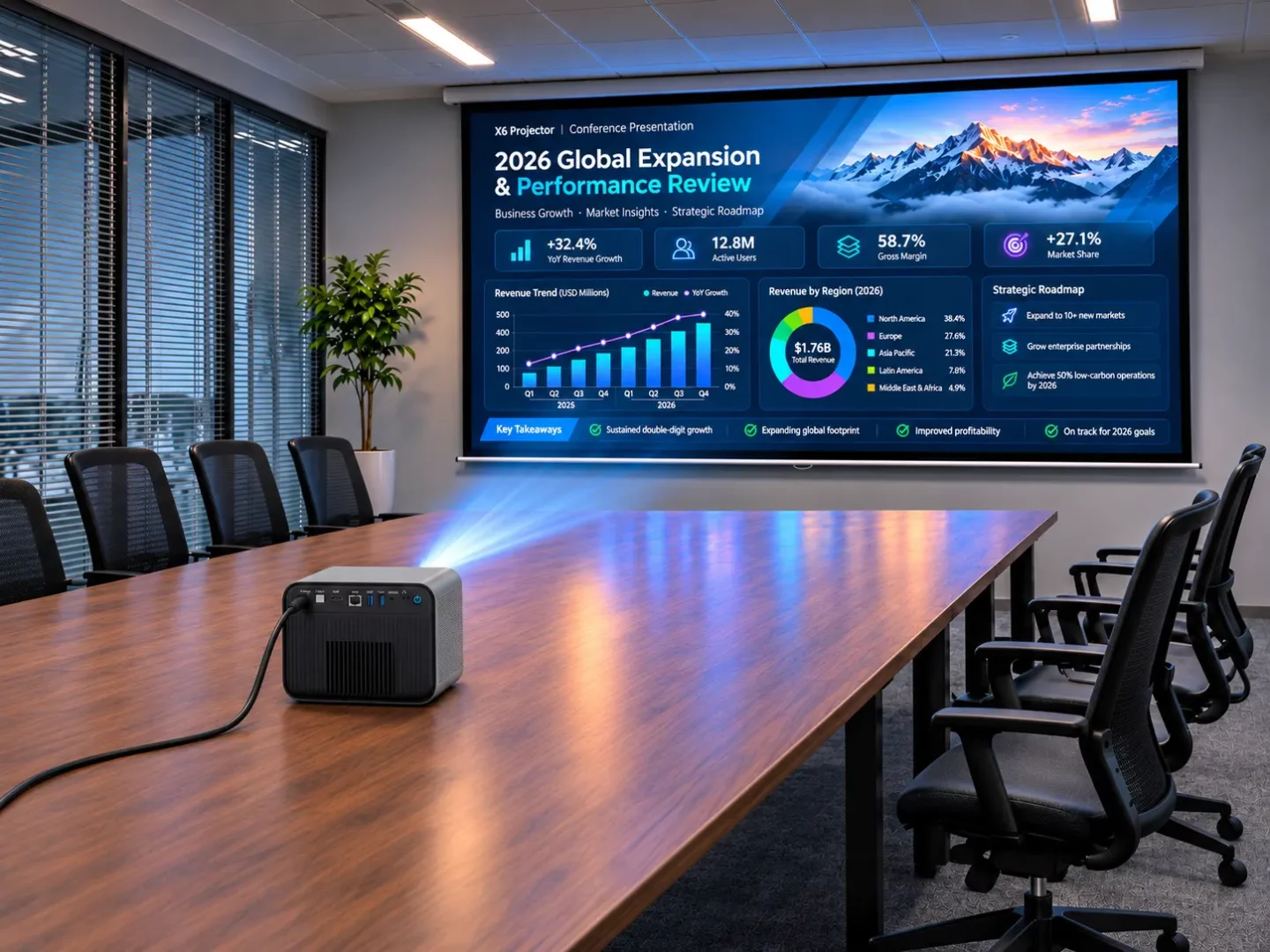
Figure 2. Illustrative TOUMEI X6 standard-throw setup in a meeting room. The scene is not a measured brightness, contrast or ALR performance test.
Send TOUMEI a projector-first purchasing brief
A practical enquiry starts with the purpose of the room and a shortlist of TOUMEI models. Include the target image width, lens-to-screen space, lighting conditions, seating area, power arrangement, intended operating system and destination market. Explain whether the projector will be mounted, placed on furniture or moved between locations. If a screen is included in the purchase, identify its supplier and material code, and request that compatibility and mounting responsibilities be documented. The TOUMEI projector range helps buyers see the available platforms before requesting a sample.
For OEM, ODM or private-label sourcing, add the expected order quantity, branding scope, software version and any requested accessories. Use the TOUMEI OEM/ODM enquiry to discuss a projector configuration and sample evaluation; do not assume a third-party screen has been tested or approved unless its supplier supplies the evidence. The useful purchasing outcome is a repeatable, supportable projector setup, with a screen chosen to suit the optical system and the people watching it.