Motion performance has become one of the most critical factors in determining product placement/positioning as well as the overall level of satisfaction for end-users.
With MEMC utilized in modern-day projectors to improve overall motion smoothness and clarity, the actual increase in performance is highly dependent on how well MEMC was implemented/not implemented, the configuration of the system, as well as how the system will be used. This is a tech-application associated technical analysis of MEMC technology in projectors that will assist B2B purchasers determine when they should take advantage of MEMC and when it is appropriate to limit or turn OFF MEMC.
What Is MEMC in a Projector System?
MEMC These days with digital video ( as an example), motion estimation and compensation is used to create Intermediate Frames in real time to increase the effective frame rate of video.
Almost all video is recorded at 30fps (broadcast, online) or 24fps (motion pictures) – whereas at least modern projectors typically run at 60Hz or above. The mismatch in frame rate between these formats can create judder and/or blurriness on larger projection surfaces; MEMC resolves this issue by interpolating extra frames, creating an overall greater amount of fluidity throughout the outputted motion.
MEMC Processing Workflow
Motion Estimation
The projector’s video processor analyzes consecutive frames, detects moving objects, and calculates motion vectors including direction and velocity.
Motion Compensation
Based on the estimated motion vectors, intermediate frames are generated and inserted into the video stream, effectively increasing playback frame rate and reducing motion discontinuity.
From a system engineering perspective, MEMC is a compute-intensive process that relies on both algorithm maturity and sufficient SoC processing capability.
Key Benefits of MEMC for Projector Applications
Improved Motion Smoothness
MEMC significantly enhances visual continuity in fast-motion content such as sports broadcasts, live events, and action scenes. Camera pans appear smoother, and object movement becomes easier to track.
Higher Perceived Motion Clarity
By reducing motion blur and judder, MEMC improves perceived motion resolution. This benefit becomes increasingly important as projection size increases.
Enhanced Viewing Comfort
For home theater, commercial display, and exhibition environments, smoother motion can reduce visual fatigue during extended viewing sessions.
Recommended MEMC Settings by Use Case
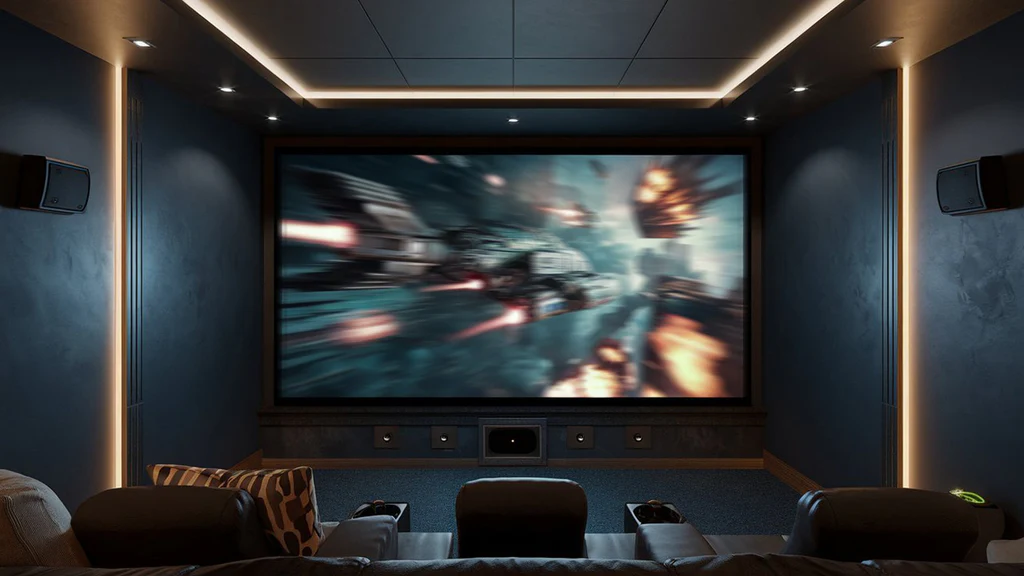
Sports and Live Event Content
Recommended setting: MEMC On (Medium to High)
Motion smoothness and clarity directly enhance perceived image quality in high-speed scenes.
Film and TV Content
Recommended setting: MEMC Off or Low
This preserves original cinematic motion while optionally reducing mild judder.
Gaming and Interactive Applications
Recommended setting: MEMC Off
Disabling MEMC minimizes input lag and ensures responsive user control.
Animation Content
Japanese animation: Low to Medium MEMC may improve perceived smoothness
CG animation: Optional, depending on brand positioning and audience preference
Commercial and Educational Use
Dynamic visual displays: MEMC Low
Static presentations or lectures: MEMC Off
Why MEMC Performance Varies Between Projectors
MEMC quality differs significantly across projector platforms. Key factors include:
Motion detection accuracy
Artifact suppression capability
SoC processing headroom
Firmware tuning and scene optimization
For OEM/ODM partners and brand owners, real-world testing is essential. MEMC should be evaluated under representative content conditions rather than relying solely on specification sheets.
Best Practices for B2B Evaluation and Deployment
When selecting or deploying MEMC-enabled projectors, B2B buyers should:
Test multiple content types in real usage environments
Evaluate motion quality at different MEMC strength levels
Assess latency impact in interactive scenarios
Verify compatibility with keystone and scaling functions
Provide clear user guidance or default presets
A well-implemented MEMC strategy improves perceived quality without compromising system reliability.
Conclusion
While MEMC is a very capable motion enhancement technology, its value is very dependent on the situation in which it’s used. In terms of the B2B projector market, we are not looking to enable MEMC on a permanent basis, but rather to use it selectively and intelligently.
When used with suitable hardware, a mature set of algorithms, and a proper configuration strategy, MEMC will dramatically improve the motion experience and the satisfaction level of the end user. The opposite is true if the MEMC technology is implemented improperly and/or used improperly, such as with the potential for latency issues and other visual artifacts.
In addition, a scenario based approach to the use of MEMC allows for balanced performance in entertainment, commercial, and professional projector applications.
MEMC (Motion Estimation and Motion Compensation) is a video processing technology that analyzes motion between frames and inserts intermediate frames to improve motion smoothness. In projectors, MEMC helps reduce judder and motion blur, especially when displaying fast-moving content such as sports or live events.
No. MEMC is most beneficial for high-motion content like sports broadcasts, live performances, and large-screen simulations. For film playback, presentations, or static content, MEMC may be unnecessary or even undesirable, as it can alter the original cinematic motion.
Yes, MEMC processing can introduce additional latency because it requires real-time frame analysis and generation. For interactive applications such as gaming or real-time simulations, MEMC is usually recommended to be turned off to avoid noticeable input lag.
MEMC quality depends on several factors, including motion detection algorithms, processing power of the SoC, firmware optimization, and artifact suppression capabilities. Two projectors may both list “MEMC” in specifications but deliver very different real-world performance.
Poorly implemented MEMC may cause artifacts such as ghosting, image tearing, or unnatural motion effects (often called the “soap-opera effect”). High-quality MEMC systems minimize these issues through advanced motion prediction and scene recognition.
Sports & Live Events: MEMC On (Medium–High)
Movies & TV Content: MEMC Off or Low
Gaming / Interactive Systems: MEMC Off
Corporate Presentations: MEMC Off
Exhibitions / Digital Signage: Low–Medium depending on motion content
B2B buyers should evaluate MEMC through real-world content testing rather than relying solely on specifications. Testing should include fast motion scenes, camera pans, and edge-movement scenarios under actual deployment conditions.
No. MEMC simulates higher frame rates by inserting generated frames, while a higher native refresh rate relies on actual source frames or panel capabilities. MEMC improves perceived smoothness but does not replace true high-frame-rate content.