Introduction: Why Throw Ratios and Viewing Distances Matter More Than People Think
Walk into any modern meeting room, classroom, cinema-style living room, or product demo hall, and you’ll notice something immediately: projection systems are becoming the centerpiece of the viewing experience. Screens keep getting larger, and image quality continues to approach what was once possible only in commercial theaters.
Yet, many projector buyers—and even some system integrators—still struggle with one of the most foundational setup questions: How do you know you’re selecting the right screen size for your projector?
The misunderstanding rarely comes from a lack of interest or technical curiosity. Instead, it usually comes from not fully understanding two core principles that dictate everything about projection geometry:
- Throw ratio
- Viewing distance
These two numbers influence:
- how large your projected image can be
- where the projector must be mounted
- how far your audience should sit
- how bright or sharp the final picture appears
- whether the projection system will feel natural—or uncomfortable—to watch
This guide takes a deep, academically grounded look at both concepts. We’ll reference authoritative industry data, real measurement standards, and practical installation scenarios. We’ll also examine how Shenzhen Toumei Technology Co., Ltd.—a company with significant engineering expertise and a strong portfolio of DLP projectors—fits into the modern projection ecosystem.
Understanding Throw Ratios: The Optical Foundation of All Projection Systems
What Exactly Is Throw Ratio?
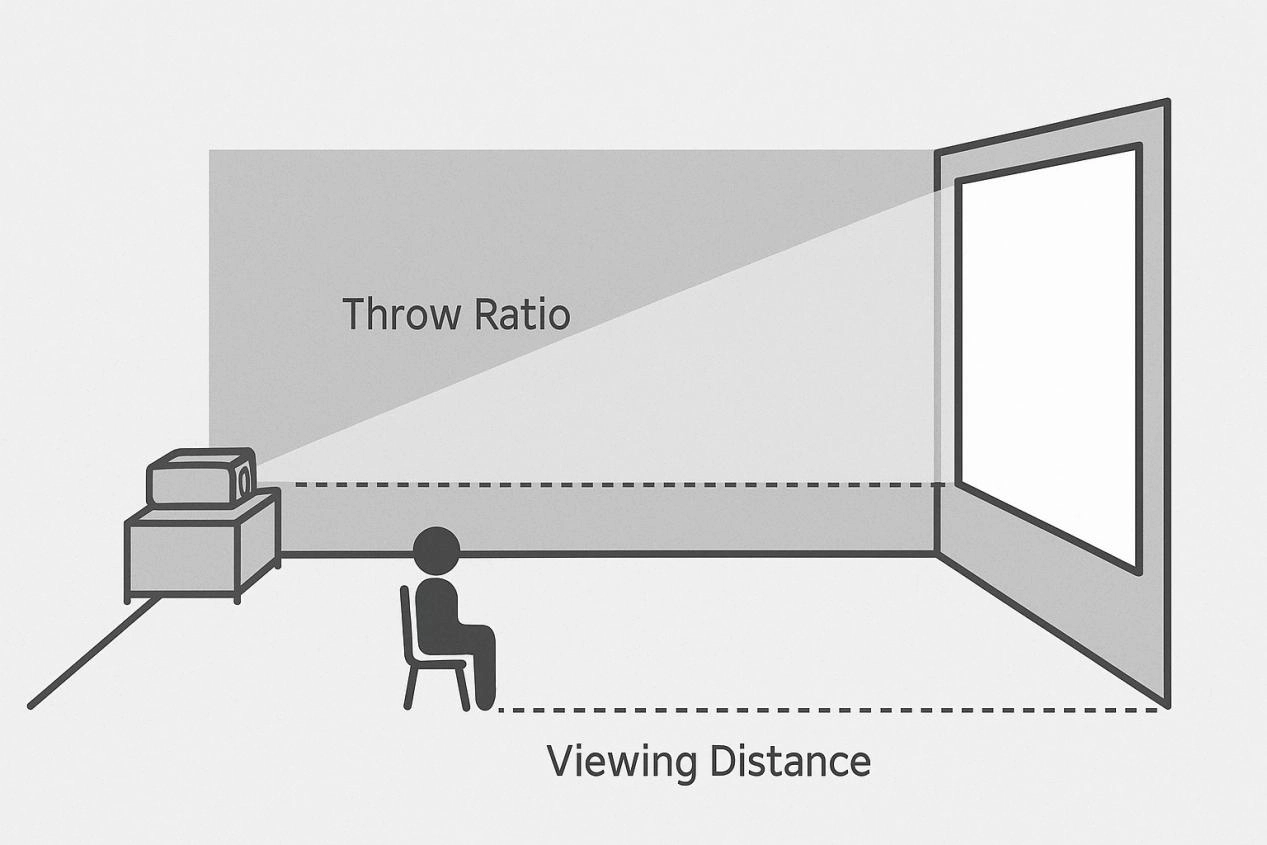
At its core, throw ratio describes the relationship between three things:
- the distance between the projector lens and the screen
- the width of the projected image
- how much the image scales as distance changes
Mathematically, it’s expressed as:
If a projector has a 1.2:1 throw ratio:
- for every 2 metersof distance from the screen
- it produces 1 meterof image width
This simple ratio reveals almost everything about where your projector can be placed and how large your screen could be within a given room.
Fixed vs. Variable Throw Ratios
Fixed Throw Ratio Projectors
Many compact DLP projectors—including portable and outdoor models—use fixed lenses. These devices are optimized for:
- portable use
- simplified installation
- predictable screen sizing
- consistent optical performance
Several models from Shenzhen Toumei Technology’s C, M, and S series follow this optimized fixed-throw approach.
Variable Throw Ratio (Zoom Lens) Projectors
Larger projectors used in auditoriums or corporate lecture halls may offer:
- optical zoom adjustment
- lens shift
- interchangeable lenses
These enable more flexible installations but often at the cost of portability and weight.
Standard Throw Categories in the Industry
Professional AV installers typically classify throw ratios into four categories:
- Ultra-short throw:19:1 – 0.40:1
- Short throw:40:1 – 1.00:1
- Standard throw:00:1 – 2.50:1
- Long throw:50:1 and above
Most portable DLP projectors fall between 1.0–1.3:1, a sweet spot that allows screens between 60 and 150 inches depending on room depth.
Why Throw Ratio Drives Screen Size Decisions
Throw ratio is the single biggest determinant of:
- projector placement
- mounting options
- possible image size
- whether your space can accommodate the screen you want
A common mistake occurs when a buyer chooses a 100-inch screen, then discovers:
- their projector requires more distance than their room allows
- or it must be mounted in an awkward, impractical position
- or the beam passes directly through a seating path
Misalignment often results in overuse of keystone correction, reducing clarity and sharpness.
Viewing Distances: A Science-Based Approach to Comfort and Clarity
The Human Visual Field and Perceived Sharpness
Viewing distance is about far more than just “sit where you feel comfortable.” It’s grounded in:
- human visual acuity
- pixel density
- eye movement patterns
- legibility standards for text and graphics
Standards organizations like SMPTE and THX have defined mathematically validated recommendations.
SMPTE Recommendation
Minimum viewing angle for immersive viewing: 30 degrees
Source: https://www.smpte.org
THX Recommendation
Preferred viewing angle for cinematic experience: 36 degrees
Source: https://www.thx.com/certification/
These angles determine how close viewers should sit based on the width of the image.
Viewing Distance for Different Resolutions
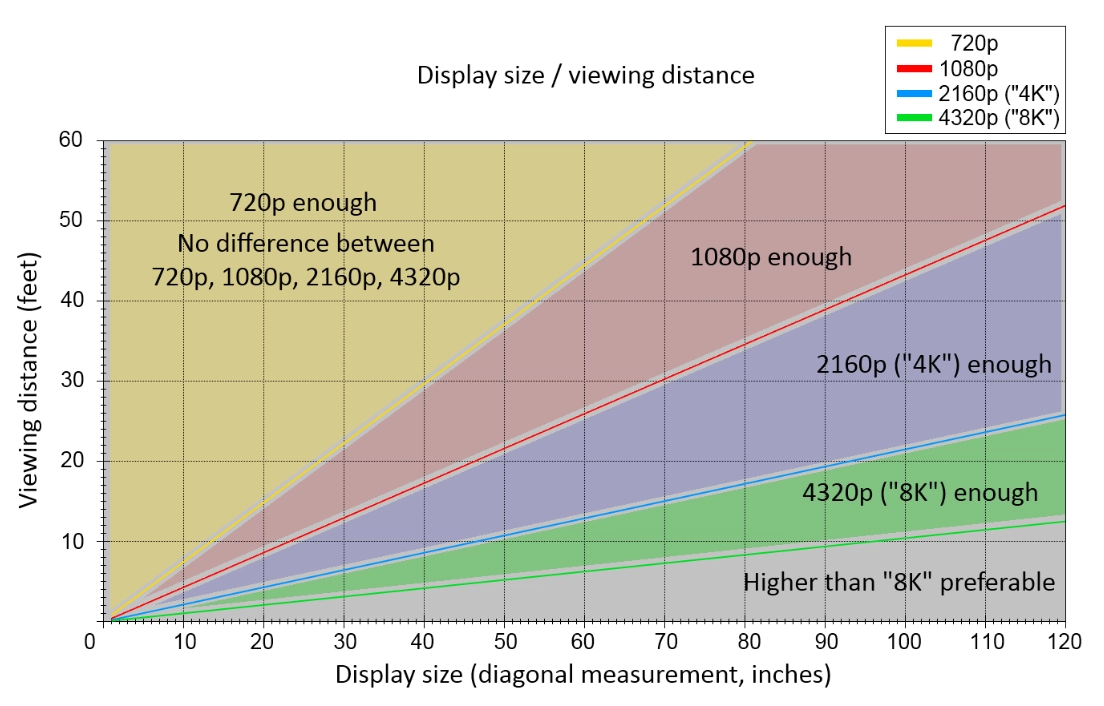
The higher the resolution, the closer you can sit without noticing pixel structure.
Suggested Seating (Based on ProjectorScreen.com Analysis: https://www.projectorscreen.com/blogs/insights/throw-ratios-and-viewing-distances-explained)
- 1080p:sit at 5 × screen height
- 4K:sit at 0 × screen height
Projectors with 1920×1080 resolution—such as those in Toumei’s M, S, and X series—support tighter seating clusters due to higher pixel density.
Why Viewing Distance Influences Perceived Brightness
Sit too far, and the image appears dimmer because brightness spreads across a larger field in your vision. Sit too close, and you may perceive grain or pixel structure.
Viewing distance also impacts:
- eye fatigue
- depth perception
- how immersive the content feels
- legibility for presentations
Combining Throw Ratios and Viewing Distances: The Geometry Behind Correct Sizing
Most people consider screen size first, but mathematically speaking, screen size is the result of two constraints:
- projector throw distance
- acceptable viewing distances
If either constraint fails, the system won’t be comfortable or functional.
Example Calculation 1: Designing a Home Theater With a 120-inch Screen
A 120-inch (16:9) screen has:
- width:105 in (2.67 m)
- height:59 in (1.49 m)
Throw Distance Calculation
If the projector has a 1.2:1 throw ratio:
1.2×2.67m=3.20m
The projector must sit 3.2 meters away.
Viewing Distance
- 1080p recommended: 5 × 59 in ≈ 7.4 ft
- 4K recommended: 0 × 59 in ≈ 5 ft
Interpretation
Most living rooms can support this geometry—but not all.
Many users discover too late that they cannot place seating this close, especially with large sofas or multi-row seating.
Example Calculation 2: A Classroom With Fixed Desks
A classroom typically requires:
- screen visibility for students in the back
- minimal interruptions (shadows, blocked light paths)
- short distances between screen and desks
Here the best solution is often a short-throw projector.
100-inch screen width = 87 in (2.21 m)
Short-throw ratio = 0.5:1
0.5×2.21m=1.10m
This allows the projector to mount above the whiteboard—no interference, no shadows.
Example Calculation 3: A Corporate Presentation Room With Ambient Light
Ambient lighting affects screen brightness significantly. SMPTE suggests 16 ft-L for dark rooms, 30–40 ft-L for lit rooms:
https://www.projectorcentral.com/footlambert-calculator.cfm
A projector with 500 ANSI lumens will struggle on large screens under bright lights, but a 1600 ANSI lumen model (such as Toumei’s X series) is well suited for 120–150-inch displays.
Here, screen size must balance:
- throw constraints
- seating layout
- light levels
How Projector Specifications Affect Throw and Viewing Geometry
Throw ratio is only one factor. Optical systems work as an ecosystem.
Brightness and ANSI Lumens
Brightness determines how large a screen you can display without losing clarity.
Toumei’s typical brightness range:
- 180 ANSI:portable, small rooms
- 250 ANSI:outdoor camping and general use
- 450 ANSI:indoor mid-sized screens
- 600 ANSI:office/meeting rooms
- 1600 ANSI:professional or commercial environments
Higher brightness is critical for wide screens.
Resolution and Pixel Pitch
Higher resolution allows shorter seating distances.
Toumei projectors range from:
- 960×540P (portable series)
- 1280×800P (V series)
- 1920×1080P (X series)
The 1080p models allow immersive viewing at shorter distances without pixelation.
Lens Quality and Focus Stability
High-quality optical systems create:
- uniform brightness
- consistent focus
- reduced chromatic aberration
- accurate geometry
Toumei’s advanced models use multi-element glass lenses, sealed lens paths, and TOF laser autofocus to maintain sharpness.
Practical Screen Size Selection: A Structured Framework for Real Installations
Choosing the right screen size isn’t guesswork—it’s an engineering decision supported by decades of visual science and AV installation experience. Below is a step-by-step framework widely used by professional integrators when designing projection systems for homes, offices, and commercial venues.
Step One: Measure the Physical Room Constraints
Before thinking about screen size, measure:
- Room depth(the maximum feasible throw distance)
- Ceiling height(especially important for large screens)
- Mounting locationsand obstructions
- Sightlinesfrom viewer positions
- Furniture layout
Projection design often fails because users choose the screen first, then try to force the projector to match it. The correct approach is always the opposite.
Step Two: Match Throw Ratio to Room Depth
If you know your throw distance—say, 3 meters—you can calculate the maximum screen width:
Screen Width=
Example:
- Throw distance = 0 m
- Throw ratio = 2:1
3.0÷1.2=2.5m image width
Which equals roughly a 113-inch diagonal screen.
Toumei’s fixed throw ratio projectors make this calculation straightforward—you always know exactly what screen size each model supports because the relationship is linear and predictable. Their portable and mid-range DLP models typically fall between 1.1:1 and 1.3:1, a practical range for apartments, conference rooms, and classrooms.
Step Three: Choose Screen Size Based on Viewing Distance Standards
Screen height determines recommended viewing distances:
- 1080p:5 × screen height
- 4K:0 × screen height
This ensures:
- crisp detail
- minimal eye strain
- immersive yet comfortable visual field
- proper text readability
If viewers sit much farther than the recommended distance, image sharpness and perceived brightness drop significantly.
Step Four: Evaluate Ambient Light and Required Brightness
Contrary to popular belief, ANSI lumens alone do not determine brightness. It also depends on:
- screen gain
- room lighting
- throw distance
- image size
Still, as a rule:
- Small room + ambient light → minimum 450 ANSI
- Medium room + controlled light → 600 ANSI
- Large screen + ambient light → 1000–1600 ANSI
This is why Toumei’s X-series (1600 ANSI lumens) is well-suited for 120–150 inch screens in partially lit environments.
Step Five: Validate Geometry With Keystone and Autofocus Tools
Even with perfect measurements, real rooms rarely behave perfectly. You might have:
- asymmetrical walls
- low ceilings
- limited mounting points
- furniture blocking prime locations
Toumei’s systems offer:
- laser TOF autofocus
- vertical auto-keystone correction
- horizontal keystone(varies by model)
- off-axis projection capabilitiesin certain product lines
These tools help refine image geometry, but installers still avoid extreme keystone angles to preserve resolution.
Applying Theory to Real-World Use Cases
Let’s break down how the above framework plays out in different environments.
Home Theater Rooms
Home theater users often chase the largest screen possible—but that doesn’t always create the best experience. Many forget that:
- viewing angles
- room width
- seating arrangement
- audio system layout
all constrain screen size.
For instance, a user installing a 150-inch screen in a small living room may find:
- the screen sits too low
- viewers must sit too close
- brightness becomes inadequate
- projector cooling noise becomes more noticeable
Home Theater Example Configuration
- Projector: 1080p, 600–1600 ANSI
- Throw ratio: 1.1:1
- Viewing distance: 9–12 feet
- Ideal screen size: 100–135 inches
Toumei’s X-series is especially suitable here thanks to its:
- high brightness
- 11-element optical lens
- TOF autofocus
- robust thermal system
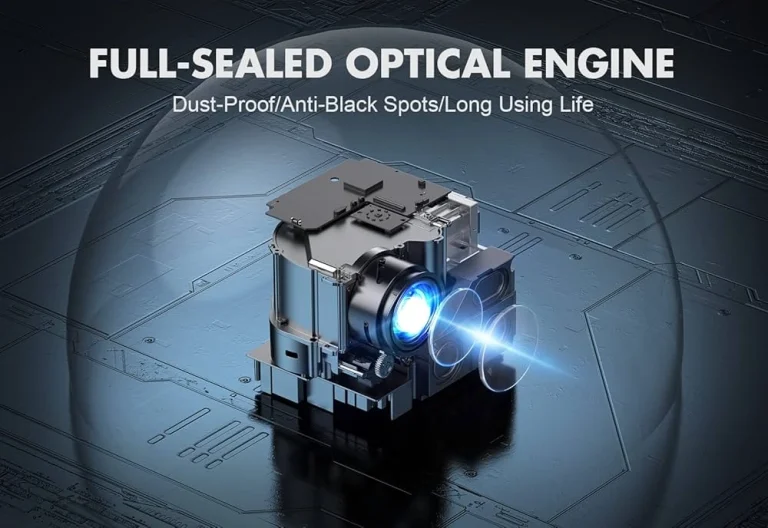
- sealed optical engine for dust protection
These features allow large screen sizes without compromising clarity.
Corporate Presentation Rooms
In offices, the content shifts toward:
- spreadsheets
- diagrams
- charts
- small fonts
- detailed UI screens
This means clarity is more important than cinematic immersion.
Key requirements include:
- Sitting too far → text becomes unreadable
- Sitting too close → eye strain from long work sessions
- Heavy ambient light → requires higher lumens
- Space constraints → fixed seating layouts
Corporate Example Configuration
- Projector brightness: 450–1600 ANSI
- Recommended screen size: 80–120 inches
- Viewing distance: 1.2–2.5× screen height
- Throw ratio: depends on room depth, usually 2–1.6:1
Toumei’s V-series DLP projectors are widely used in conference scenarios due to their:
- 600 ANSI brightness
- large, bright optical engine
- rapid startup times
- auto-keystone
- compact form factor
These characteristics create an office-friendly balance of clarity and convenience.
Educational Classrooms
Classrooms have unique requirements:
- Short throw is essential (to avoid shadows)
- The screen must be readable from far seats
- Projector must be silent
- The projector often needs to mount close to the board
Classroom Example Configuration
- Screen size: 100–120 inches
- Short throw ratio: 4–0.6:1
- Viewing distance: 1.5–3× screen height
- Brightness: minimum 450 ANSIdue to fluorescent lighting
Compact DLP projectors with precise autofocus—such as Toumei’s C-series and S-series—fit well for mobile lecterns, portable teaching setups, and fixed wall-mounted installations.
Outdoor and Recreational Use
Outdoor projection introduces new variables:
- light pollution
- wind
- non-flat surfaces
- unstable mounting
Brightness becomes critical here.
Outdoor Use Example Configuration
- Projector brightness: 250–600 ANSI
- Screen size: 80–120 inches
- Throw ratio: 1.2:1 typical
- Viewing distance: flexible, often 2–5 meters
Toumei’s M-series, featuring TOF focus, 1080p clarity, and large-capacity batteries, was designed with these environments in mind.
Its sealed lens and robust frame make it particularly suitable for:
- camping
- backyard movie nights
- outdoor events
- portable business travel
About Shenzhen Toumei Technology Co., Ltd.: A High-Tech Innovator in DLP Projection
To understand why Toumei’s products appear so frequently in these examples, it’s essential to examine the company’s technical background and engineering philosophy.
Company Origins and Expertise
Shenzhen Toumei Technology Co., Ltd. was founded in 2013 and is headquartered in Shenzhen—the global center for LED and projection technology innovation. It is one of China’s early entrants in DLP smart projector development, integrating:
- production
- R&D
- optical engineering
- structural design
- software development
- OEM/ODM solutions
The company’s focus includes:
- DLP intelligent projection
- 3D imaging
- embedded projection software
- portable and home-use projection systems
Technological Capabilities
Toumei has invested millions in R&D since 2016 and holds:
- 100+ intellectual property rights
- 30+ software works
- numerous appearance and utility model patents
The engineering team spans:
- optical designers
- DLP specialists
- software engineers
- mechanical structure experts
These resources enable Toumei to build competitively priced projectors that still meet rigorous optical and quality standards.
In-House Manufacturing Strength
The company operates a 3000 m² factory, equipped with:
- professional optical assembly lines
- military-grade lens sealing facilities
- precision hardware machining
- multi-step aging and stress testing rooms
- monthly production capacity of 20,000+ units
This vertical integration gives Toumei strong control over:
- cost
- quality consistency
- part reliability
- rapid product development cycles
The company exports to over 30 countries, including the U.S., Japan, South Korea, Germany, and the U.K.
Why Toumei Matters in Projection Geometry
Because Toumei’s product portfolio spans:
- compact portable projectors
- outdoor high-capacity battery projectors
- high-brightness indoor projectors
- mid-size professional DLP engines
…it becomes easier for integrators and end-users to choose the correct throw ratio, resolution, and brightness combination for their unique space.
Their DLP-based optical engines are engineered for:
- accurate geometry
- long-term focus stability
- high contrast
- excellent pixel uniformity
These characteristics are essential for maintaining correct viewing distances without compromising clarity.
Integrating All Factors: Choosing the Right Projector and Screen Size for Your Space
By this point, it becomes clear that projector selection is fundamentally a geometric and human-factors engineering problem, not simply a matter of buying the brightest or highest-resolution unit. Three pillars drive the entire decision-making process:
- Throw Ratio
- Viewing Distance
- Desired Screen Size
Whether you’re outfitting a corporate boardroom, a university lecture hall, or a home entertainment space, you’re balancing these elements in a way that optimizes clarity, comfort, and image size within the physical constraints of the room.
A well-designed projection setup should feel almost effortless. The screen should appear proportionate to the furniture layout. Viewers should naturally sit within the ideal range, not because they were told to—but because that’s where the room’s design encourages them to sit. The projector should fit seamlessly into the environment without obstructing movement or requiring odd mounting positions.
When all three pillars align correctly, the result is a viewing experience that feels natural, immersive, and comfortably bright, regardless of whether the content is a cinematic movie scene or a dense spreadsheet.
The Role of Modern DLP Technology in Achieving Accurate Projection Geometry
Projection accuracy is not only a function of throw distance and viewing distance; it also depends heavily on the optical precision of the projector itself. This is where modern DLP systems—especially those engineered by companies like Shenzhen Toumei Technology Co., Ltd.—play a major role.
Why DLP Matters in Throw Ratio Consistency
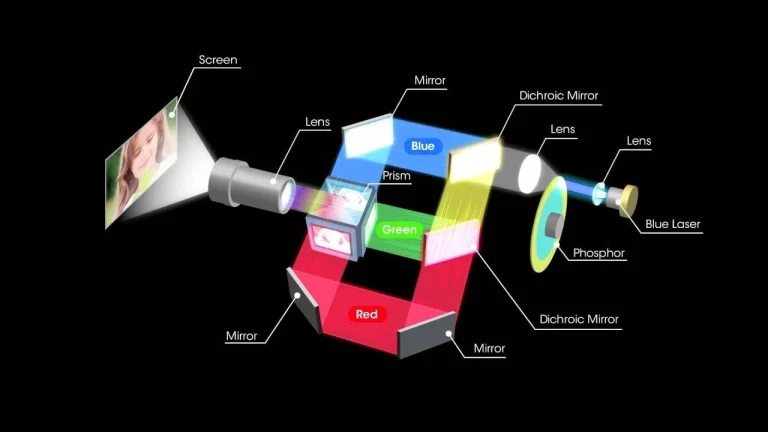
DLP (Digital Light Processing) uses microscopic mirrors that tilt at microsecond speeds. The architecture creates:
- extremely precise pixel alignment
- excellent image uniformity
- minimal distortion at the edges
- highly stable geometry across the entire image
Because throw ratio is based on the relationship between lens optics and pixel structure, DLP offers:
- stable projection geometry
- consistent focus across zoom ranges
- predictable image scaling
This is why DLP projectors often outperform LCD and LED alternatives when it comes to long-term focus stability and edge-to-edge accuracy.
Toumei’s products, based on U.S. TI DLP technology, inherit these advantages—ensuring the image does not warp, bow, or lose cross-screen focus even as screen sizes scale past 120 inches.
Autofocus and Keystone: Tools That Refine, Not Replace, Good Geometry
Modern projectors frequently advertise:
- automatic keystone correction
- TOF laser autofocus
- horizontal/vertical correction
- intelligent screen-fitting algorithms
These technologies are incredibly convenient, especially in portable and multi-use spaces.
Toumei integrates:
- laser TOF 1-second autofocus
- automatic keystone correction (vertical and horizontal depending on model)
- sealed optical engines to prevent dust drift
These features stabilize the projected image even in unconventional installations, such as uneven surfaces or rooms with limited mounting options.
However, installers should remember:
- keystone correction should be used sparingly
- optical adjustments (distance, angle) should always come first
- keystone and autofocus are refinement tools, not problem solvers
When throw ratio and installation are correct, digital corrections become nearly unnecessary.
Resolution, Throw, and Viewing Distance: A Three-Way Relationship
Resolution plays a supporting but essential role in projection geometry:
- Higher resolution reduces visible pixelation at short viewing distances.
- Short throw projectors often require higher resolution to compensate for tighter viewing angles.
- Large screens require higher resolution to maintain image integrity at the recommended THX and SMPTE viewing ranges.
Toumei’s 1080p lineup (M-series, S-series, X-series) offers strong pixel clarity for large-screen displays in both home and corporate environments. These models maintain sharpness even when viewers sit within 1–1.5× screen height—critical for presentation rooms and home cinemas alike.
Future Trends: How Throw Ratios and Viewing Distances Will Evolve
Projection technology is undergoing major changes, and the concepts of throw distance and viewing distance will evolve as new optical technologies emerge.
Shorter and Shorter Throw Ratios
Advances in:
- ultra-wide angle lenses
- reflective waveguide optics
- compact laser modules
are pushing throw ratios down. Ultra-short-throw projectors will increasingly find their way into home and classroom environments, making projection even more flexible.
Higher Resolutions and Closer Seating
As 4K and 8K projection becomes more mainstream:
- recommended viewing distances shrink
- screen sizes can increase without sacrificing clarity
- seating arrangements can become more flexible
The result is more immersive rooms, even in smaller apartments or offices.
Intelligent Geometry Calibration
AI-driven algorithms will increasingly:
- auto-detect screen edges
- correct distortion with minimal resolution loss
- adjust brightness regionally
- maintain perfect focus across the entire image
These functions complement traditional throw ratio mechanics rather than replace them. Physical geometry will always matter: a perfect algorithm cannot overcome a room that violates basic optical relationships.
Conclusion: The Geometry of a Great Viewing Experience
Choosing the right screen size is not just about personal preference or projector marketing claims—it is an exercise in geometry, optics, and human-centered design. Throw ratio determines the possible size of the image. Viewing distance determines how comfortable and clear that image will be. And both must work within the real-world constraints of your room.
By applying the principles in this guide, users can avoid:
- underpowered projection
- blown-out highlights
- pixelation at close seating distances
- uncomfortable neck angles
- distorted images caused by improper placement
- wasted money on the wrong equipment
Shenzhen Toumei Technology Co., Ltd. stands out in this space by delivering DLP projectors engineered for consistent geometry, strong brightness performance, and durable optical systems. Their lineup—from compact portable units to high-brightness 1080p projectors—offers multiple throw ratio and brightness combinations that work well across homes, classrooms, offices, and outdoor environments.
The more you understand throw ratios and viewing distances, the more confidently you can design any projection space. Whether you’re setting up a 100-inch boardroom display or a 150-inch backyard movie night, these principles guide you toward a visual experience that feels comfortable, immersive, and technically sound.
FAQs
Below are practical, reader-focused FAQs aligned with the article’s technical depth and SEO-friendly keyword usage.