When you plan a visual display system, you face a basic question. Do you pick a short throw or a long throw projector? This decision matters for a corporate boardroom, a museum exhibit, or a home theater. The answer isn’t about finding a universal winner. It’s about finding the right tool for your specific space and needs.
The choice hinges on one key number: the throw ratio. Get this wrong, and your whole setup can fail. This guide gives you a clear, technical comparison. We will look at the science, real-world uses, and how modern DLP projectors handle both short and long throws. The goal is to help you invest in a system that works perfectly from the start.
The Science of Throw Distance: Core Principles and Metrics
First, let’s move past simple labels. Throw distance is a precise calculation. It affects if you can install the projector, how good the image looks, and the final cost.
The Defining Metric: Throw Ratio
You find the throw ratio with a simple formula: Throw Distance / Image Width. Let’s break that down.
A standard long throw projector usually has a ratio higher than 1.5:1. What does that mean in practice? To get a 100-inch wide image, the projector must sit at least 3.31 meters from the screen.
Now, look at a short throw model. Its ratio sits between 0.4:1 and 1.0:1. An ultra-short throw (UST) projector goes even lower, below 0.4:1. That same 100-inch image can now come from just 30-50 centimeters away.
How the Lens Makes the Image
Different ratios need different lenses. Long throw lenses are simpler. They let light travel and spread out over a longer path. Short throw lenses are more complex. They use wide-angle or fish-eye designs. These lenses bend light at sharp angles to create a big picture from a very short distance. This complex design often makes short throw models more expensive.
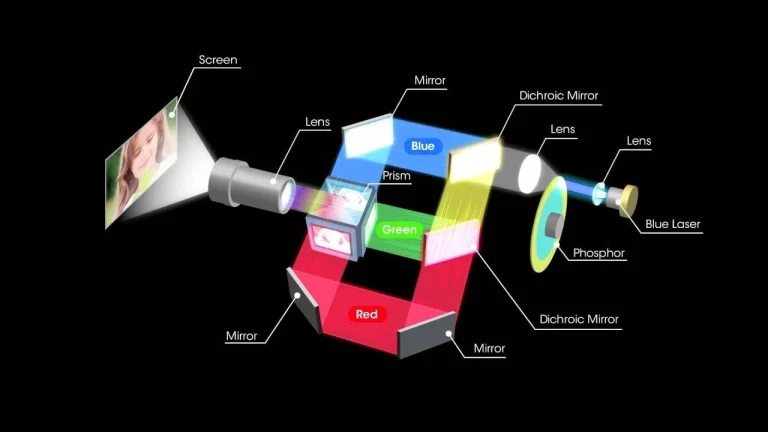
DLP technology fits both approaches well. It is efficient with light and very precise. This lets engineers build lenses that keep the image bright and clear, even with the tricky angles of a short throw.
Short Throw Projectors: Maximizing Space and Integration
Short throw projectors are perfect when space is tight or the look needs to be clean. Their main benefits are flexibility and a better user experience.
Where They Shine: Key Benefits and Uses
- They Save Space:These projectors free up the room. A UST model can sit right against the wall. This removes annoying shadows and stops people from walking through the beam of light. That’s a common problem in busy classrooms or meeting rooms.
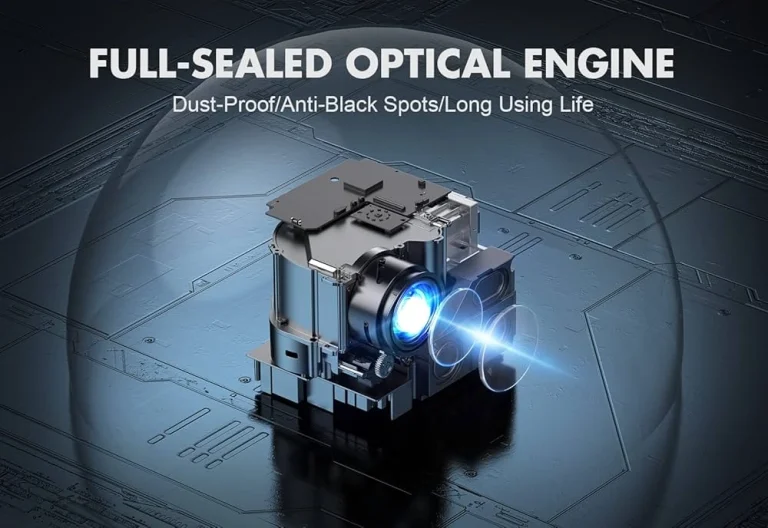
- Easier Setup and Care:Being close to the screen makes wiring and alignment simpler. Routine jobs, like cleaning a filter, are also easier. Many use sealed DLP optical engines. This design helps keep dust out, which is great for projectors in open areas.
- Better in Lit Rooms:The light doesn’t have to travel far. This means less light scatter. When you pair it with a special anti-reflective screen (for UST models), it can handle room lights better than a similar long throw projector.
The Technical Details
- Typical Throw Ratio: 0.4:1 to 1.0:1 (Ultra-Short Throw: < 0.4:1).
- Distance Needed for a 100″ screen:About 0.5m to 2.2m.
- Important Note on Screens:Image quality depends a lot on the screen. For UST projectors, experts often suggest an ambient light rejecting (ALR) screen. This stops bright spots and makes sure the whole picture is even.
- Important Note on Setup:You must place it perfectly. Being just a little off can cause distortion. Luckily, modern digital tools can help fix this.
Best Places to Use Them
- Small Meeting Rooms & Executive Offices:Perfect where space is valuable and a neat, professional look is key.
- Today’s Classrooms:Let the teacher stand in front of the screen without a shadow, which helps keep students focused.
- Store Displays & Digital Signs:Allows for big displays in tight spaces like kiosks or wall mounts.
- Home Theaters in Smaller Rooms:Gives you a big screen feel even if your media room isn’t very deep, like a picture hanging on the wall.
Long Throw Projectors: Delivering Performance at Scale
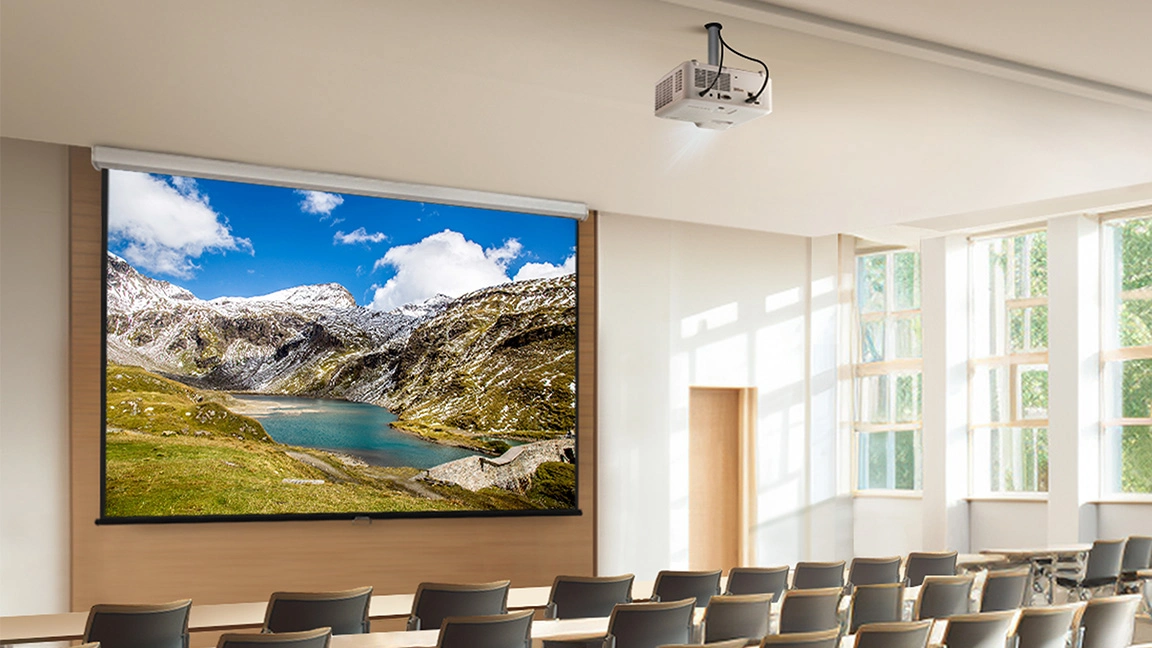
Long throw projectors are the powerhouses for big spaces. When you need raw performance—extreme brightness and flexible placement—they are the top choice.
Where They Shine: Key Benefits and Uses
- Extreme Brightness for Big Venues:These are built to be incredibly bright. DLP models for large venues can range from 5,000 to over 50,000 lumens. This makes them the only option for auditoriums, churches, or big halls where light must travel far and fight other lights in the room.
- More Choices for Placement:You can put the projector far from the screen, often in a control room or at the back. This keeps all your AV gear in one safe place. It also reduces fan noise for the audience.
- Superior Image Consistency:With a longer path, good lenses can create a picture that is sharp and evenly colored from the center all the way to the corners. For advanced jobs like 3D mapping on buildings, you need to project from several distant points. This is essential for making the images line up perfectly.
The Technical Details
- Typical Throw Ratio:5:1 and above.
- Distance Needed for a 100″ screen:About 3.3 meters or more.
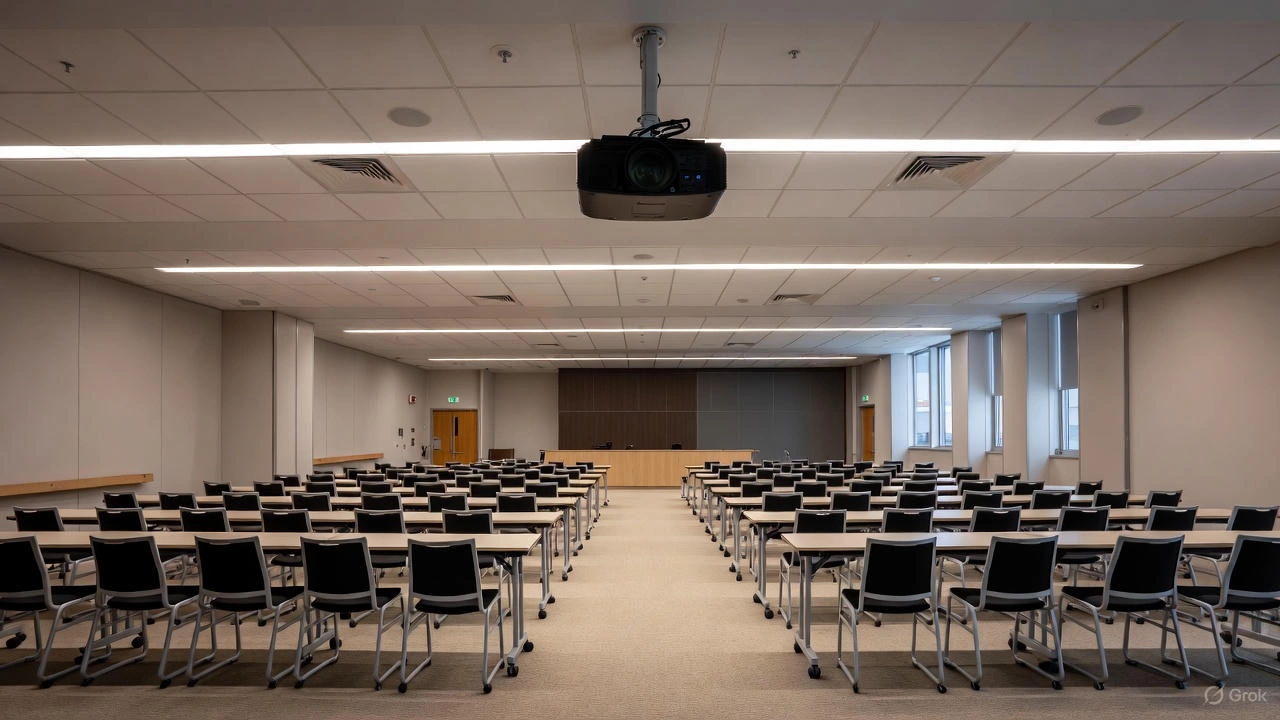
- Important Note on Setup:This needs careful planning. You must think about ceiling mounts, strong supports, and long cables for power and signal.
- Important Note on Environment:Projectors in enclosed spaces need good airflow and cooling. This keeps them at the right temperature and helps the light source last longer.
Best Places to Use Them
- Big Auditoriums and Lecture Halls:Where the throw distance is over 10 meters and high brightness is absolutely necessary.
- Professional Simulation:Used in flight simulators or control rooms that blend multiple projectors for one wide, seamless screen.
- Major Events and Concerts:For projecting onto huge stage backdrops from positions in the ceiling rigging.
- Museums and Large Galleries:For big, detailed displays where the projectors can be hidden away to not spoil the look of the space.
The Indispensable Foundation: Why DLP Technology Matters
Short throw or long throw, the core technology inside is vital. Digital Light Processing (DLP) is a top choice for professional settings, and for good reason.
- Built to Last:The heart of a DLP projector is the Digital Micromirror Device (DMD) chip. This is a solid-state chip with no moving parts in the imaging section. A major study by the Munsell Color Science Laboratory back in 2002 showed DLP projectors kept a perfect image after 4,000 hours of non-stop use, while other technologies started to fade.
- Protection From Dust:The DLP light path is usually sealed inside an engine. This is a huge advantage. It stops dust from settling on the internal lenses or the chip. Dust is a main reason projectors get dimmer or start to show specks on the image. A DLP projector keeps its original picture quality much longer with less cleaning.
- Great for Fast Motion:The tiny mirrors on the DMD chip can flip on and off incredibly fast. This speed makes motion in videos, sports, and games look very smooth. It also makes advanced 3D and high-quality laser light sources work better.
- Deep Blacks and Contrast:Because the mirrors physically switch to an “off” position, they can create true black. This gives a high native contrast ratio. The result? Images have more depth, detail in dark scenes, and overall visual impact. This is key for movies and simulation.
Comparative Analysis: A Decision Matrix for Professionals
Let’s make the choice easier. Here is a side-by-side look at the important factors.
Decision Factor: Space & Installation
- Short Throw:The best for small spaces. It makes large images possible in rooms less than 4 meters deep. Setup is generally easier, but it needs very exact placement.
- Long Throw:Needs a lot of empty space between the projector and the screen. Installation is more involved. It needs mounting, long cables, and often cooling plans. However, it lets you put the projector out of the way.
Decision Factor: Image Quality & Brightness
- Short Throw:Very good brightness for its location. Might have slight distortion at the very edges, but this can be fixed with software. Works best with the right ALR screen.
- Long Throw:The best for maximum pure brightness. It often has sharper corners and more even color. This is the clear pick for battling ambient light in a large venue.
Decision Factor: Cost Considerations
- Short Throw:Usually costs more to buy because of the complex lens. You might also need to spend more on a high-quality ALR screen. However, installation costs are lower.
- Long Throw:Often has a lower price per lumen for standard models. But installation costs are higher (mounts, cables, labor). Remember to think about the cost and ease of changing the lamp or laser later.
Decision Factor: Audience & Presenter Interaction
- Short Throw:No shadows from the presenter. No bright light in the presenter’s eyes. This creates a more engaging and personal setting.
- Long Throw:The presenter can walk into the beam and cast a shadow. If the projector is in the back, its noise won’t bother the audience as much.
About Shenzhen Toumei Technology Co., Ltd.
In the world of optical technology, deep expertise is everything. Shenzhen Toumei Technology Co., Ltd. is built on this kind of technical skill. It is a focused innovator in China’s leading electronics hub. The company started in 2013 in Shenzhen’s Longhua District. It has earned respect for its precise engineering and commitment to research.
Toumei’s special skill is in capacitive touch technology and integrated display modules. They know how to add interactive features to high-quality screens. This gives them a unique view of the entire user experience. They develop touch interfaces for cars, medical tools, and smart home devices. Their strict focus on clear optics, reliability, and making things smaller applies directly to the world of advanced projection.
The company’s approach is about solving tough integration problems with strong, practical solutions. This engineering-first thinking means their products are reliable parts of a bigger system. It could be a screen in a medical device or a car’s dashboard. For professionals buying projection tech, a partner like Toumei offers solutions born from a real understanding of performance, durability, and how to make things work together smoothly.
Conclusion: Aligning Technology with Strategic Need
So, which is better: short throw or long throw? The final choice is a strategic one. It depends on your room’s shape, your performance goals, and your budget. There is no single answer, only the best tool for your job.
Is your main problem a lack of space? Do you want a clean, built-in look? Think about a modern office, a classroom, or a living room. Here, the short throw projector is a powerful choice. It gives you a big screen without taking up the room. It lets people interact without shadows getting in the way.
On the other hand, is your goal perfect, bright, large-scale imagery? Think about an auditorium, a church, or a major event. In these cases, the long throw projector is still the champion. Its flexible placement and raw power are necessary for big, professional projects.
For both types, a strong base is key. That base is DLP technology. Its sealed design, consistent performance over years, and high-quality images protect your investment. Your visual communications will stay strong for a long time. Start by measuring your space and understanding your lighting. Then you can choose a system that turns your limitations into a great viewing experience.