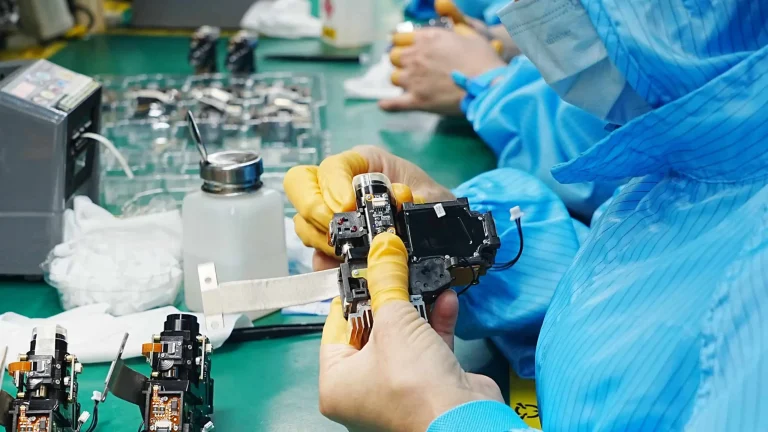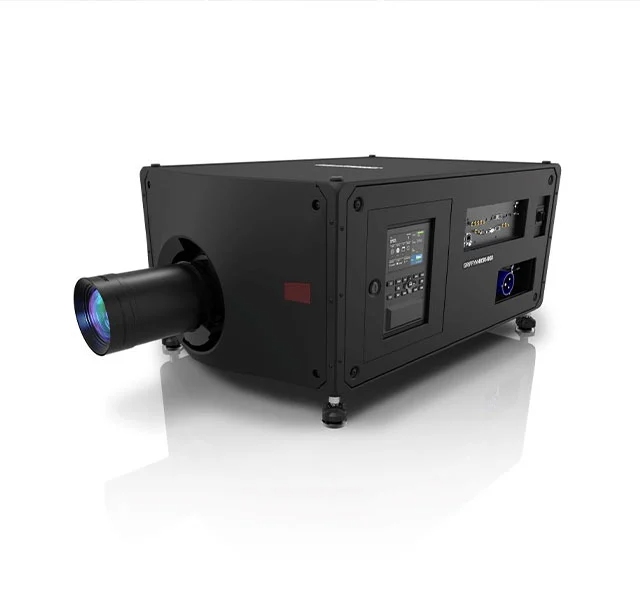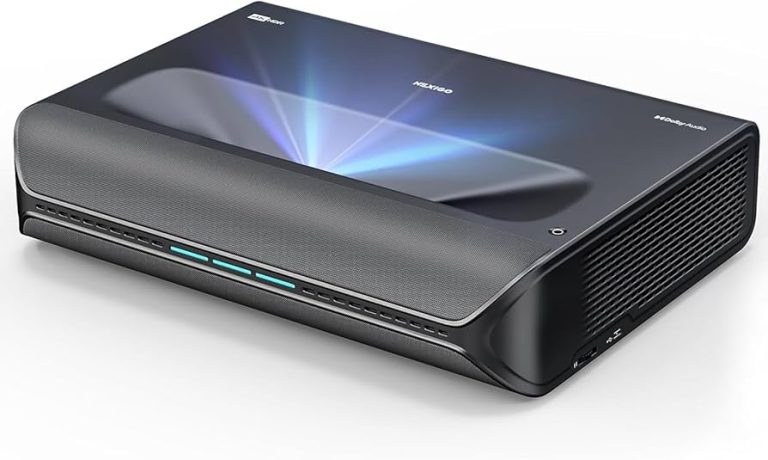
In the last few years, more and more electronics, home appliance and outdoor gear distributors have started looking at DLP smart projectors as their next growth category. Some already sell TVs, speakers or power stations and see portable projectors as a natural add-on. Others are Amazon or Shopify sellers who notice that “mini projector” searches and social media content are still going strong.
But very quickly, almost everyone faces the same fork in the road: should you start with standard wholesale smart projectors, using ready-made SKUs from a factory, or jump straight into an OEM/ODM project to launch your own custom model? We see two typical stories repeat again and again. One seller rushes into an OEM project, locks a big part of their budget in development and inventory, and then realizes the product specs do not really match their local market. Another seller starts with standard wholesale, uses one or two mature SKUs to test different channels, and only moves to OEM/ODM once they have real sales and return data to guide the project.
This article is not about textbook definitions of OEM and ODM. It is written for distributors, importers and brand owners who want practical guidance on which model fits their current channel stage. By the end, you should be able to answer a simple but critical question: “Given where my business is today, which path is safer and more profitable for me to take?”
Why ‘wholesale vs OEM/ODM’ is really a channel question
“Should I just take one of your existing models and start wholesale, or should we develop a completely new OEM/ODM projector for my brand?”
It sounds like a product question, but in reality it is a channel stage question. If your channel is still testing the category, jumping into a heavy OEM/ODM project can be painful. If your channel is already mature and brand‑driven, only using standard wholesale can hold you back.
In this article, I’ll walk through how we look at this choice from a Shenzhen DLP projector factory’s point of view – and how you can match the model to where your business really is today, instead of to buzzwords or wishful thinking.
What Standard Wholesale and OEM/ODM Mean for Smart Projector Buyers
Before we talk about stages, let’s translate both models into “real life” language.
Standard wholesale: using ready‑made smart projector SKUs
In a standard wholesale setup, you work with ready‑made smart projector SKUs that are already in mass production. You ask for samples, test them, and then place orders based on an agreed MOQ. You might change the packaging, manuals or a few cosmetic details, but you are not redesigning the machine from the inside out.
For projectors, that usually means:
The optical engine (brightness, resolution, throw ratio) is fixed.
The mainboard and operating system are already proven in other markets.
Your main job is to pick the right model for your customers and sell it well.
Why distributors like this path:
You can go live fast. Most of the R&D and debugging is already done, so lead time is mainly production and shipping.
Upfront investment is lower. Apart from samples, you are mainly putting money into the first batch of stock, not into tooling or engineering.
The risk is simple and visible: you may move the inventory slower than expected, but you are not stuck in an endless development loop.
The downside is also clear:
Differentiation is limited. If you select a very common platform, you will see similar designs, sometimes even the same mold, under other brands.
In price‑sensitive channels, standard SKUs can quickly get dragged into price competition.
For anyone that is new to projectors, standard wholesale is usually the cheapest way to buy real feedback from the market without betting the company on the first guess.
OEM/ODM: building a projector around your channel, not the other way around
OEM/ODM is a very different conversation. Here, you are not just buying; you are co‑designing the product together with the factory. In OEM/ODM smart projectors, a full project with a Shenzhen factory can reach quite deep.
Typically, it covers four areas:
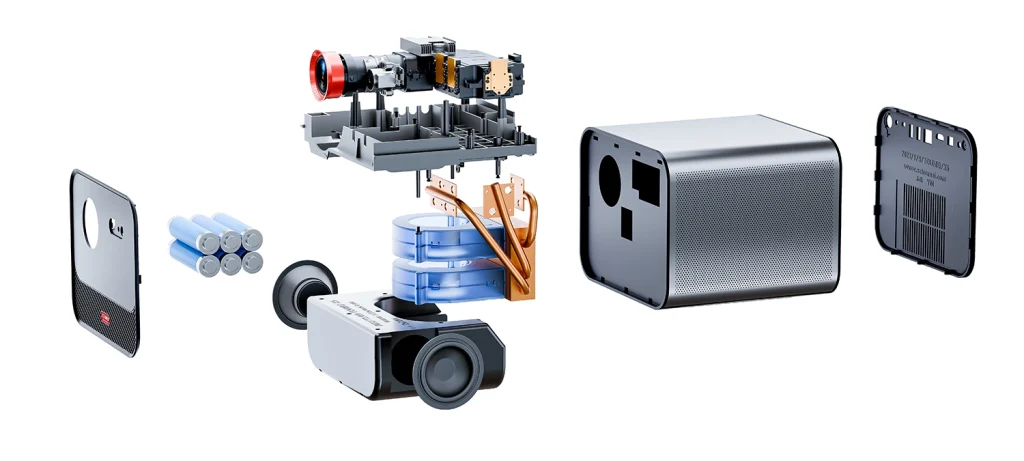
Hardware platform: Selecting or customizing the optical engine, mainboard, memory and ports around your scenarios and price targets.
Industrial design: Creating a look and feel that fits your brand – size, materials, color, button layout and so on.
System and UI: Language packs, app store, content recommendations and user flows adapted to your main market.
Compliance: Planning CE, FCC, RoHS and any local requirements from the beginning, not as an afterthought.
Done right, this gives you two big things:
A projector that is clearly built for “your” use case: family movie nights, glamping, classrooms, hotel rooms, meeting rooms, etc.
A story that fits a brand‑driven channel: you are not just another seller of generic projectors.
But OEM/ODM is also where many people burn their fingers:
You need more budget up front – not just for hardware, but for several rounds of samples, testing and possible tooling.
It takes longer. A serious smart projector project can easily run over a few months if you want it stable.
It demands more decision‑making. Someone on your side has to decide what “good enough” means for image quality, noise, software and so on – and take responsibility for those choices.
So OEM/ODM is not “better by default”. It’s simply the wrong tool if your channel is not ready for it yet.
Standard Wholesale vs OEM/ODM Smart Projectors: A Quick Comparison
Here’s a simple table that summarizes how the two paths feel from a buyer’s side:
| Dimension | Standard Wholesale Projectors | OEM/ODM Smart Projectors |
|---|---|---|
| Time to market | Very fast; you use ready‑made SKUs already in mass production. | Slower; you need development, sampling, testing and certification. |
| Upfront investment | Lower; mainly first‑batch inventory, minimal engineering cost. | Higher; includes engineering, tooling, certification and safety stock. |
| Differentiation | Limited; you rely on model choice, branding and content. | High; you control specs, design and user experience end‑to‑end. |
| Main risk | Sell‑through and inventory risk. | Spec mismatch, delays and capital being tied up. |
| Best fit for | Newcomers testing the category or expanding SKU range. | Mature, brand‑driven channels with clear volumes and plans. |
Once you see it side by side, it’s easier to ask the real question: given the stage your channel is at right now, which type of risk would you rather carry?
Stage 1: Testing Smart Projectors with Standard Wholesale First
Let’s start with the most common situation. You already have some traffic or customers, but you are new to projectors.
Typical Stage 1 profile:
You sell related products – TVs, soundbars, power stations, camping gear – and your buyers are asking about projectors more often.
You don’t yet have your own data on what your market really expects from a projector: brightness, resolution, fan noise, throw distance, streaming support, and so on.
You have a clear budget for testing the category, but you don’t want to lock too much cash for too long.
At this point, what you need most is clarity, not a “perfect” custom design.
This is where standard wholesale really shines:
You pick one or two proven SKUs, for example 1080P portable DLP smart projectors around 250–450 ANSI, that already have a good track record in similar markets.
You plug them into your current channels – Amazon, shop, offline stores – and watch how they actually perform.
You pay attention to real data: which photos and messages convert, who buys them, who returns them, and why.
Instead of spending months arguing about specs in a PDF, you let the market tell you what matters. Maybe your customers care more about quiet fans than about an extra 50 ANSI lumens. Maybe they care more about Netflix working out of the box than about a slightly higher contrast ratio.
If you’re new to projectors, standard wholesale is usually the cheapest and fastest way to buy that learning.
Stage 2: When to Add Light OEM/ODM Customisation on Top of Standard Smart Projector SKUs
Stage 2 is where many distributors find themselves after 6–12 months.
You’ve already crossed the “does this category work for us?” line:
You have at least one or two projector models that sell every month.
You can roughly predict how much volume you can move if the price and season are right.
You also start to see more of the same designs appear under different brand names.
Here, the big question shifts from “will projectors sell?” to “how do we stop being just another option on the shelf?”
Jumping straight from Stage 1 to a full OEM/ODM project is possible, but often risky. A safer middle step is to keep your standard SKUs and layer light customisation on top:
Work with your factory to tweak a mature platform instead of inventing something completely new.
Localise what your buyers actually see and touch: on‑screen language, quick‑start tutorial, pre‑installed apps, default picture mode and so on.
Adjust details that strongly affect real‑world experience, such as fan curve, default brightness profile or focus behaviour in your common room sizes.
This way, you don’t lose the stability of a proven design, but you also don’t look exactly the same as everyone else using that design.
Once you collect enough data from this “light OEM” stage – for example, clear feedback that your market wants a quieter projector for small apartments, or a more robust build for rental / events – then it becomes much easier to write a meaningful OEM/ODM brief. At that point, you’re not guessing; you’re simply putting your best‑selling learnings into a dedicated model.
Stage 3: Using Full OEM/ODM Smart Projectors to Support a Brand‑Driven Channel
Stage 3 is where OEM/ODM really earns its keep.
Partners in this stage usually look like this:
They already move meaningful volume in projectors or related display products every year.
They run offline showrooms, build projects for schools, hotels or offices, or operate a strong brand online.
They think in product lines and roadmaps, not just in “this month’s hot SKU”.
For them, the bigger risk is now the opposite: relying only on generic models can limit their margin and their brand story.
This is where building one or two core OEM/ODM models on top of standard wholesale makes sense:
You anchor your category story around custom projectors that truly fit your markets – for example, a compact living‑room projector tuned for 2–3 metre throw distances, or a rugged portable projector designed for outdoor rental.
You still keep standard SKUs in the portfolio to cover other price points and niches.
You work with the factory as a long‑term partner, not just as a supplier, so future revisions and new models have a clear direction.
Co‑designing at this level is not about “adding another feature”. It is about giving your sales team a product they can confidently present as something your competitors cannot easily copy.
A Simple Checklist to Decide Your Next Step
If you’re still unsure where you stand, these questions help cut through the noise:
Roughly how many projectors have you sold in the last 12 months?
Do you know your top three return reasons and what customers actually complain about?
Can you realistically commit to a certain MOQ per model per quarter, and for how long?
How much capital can you afford to keep locked in development and inventory for 6–9 months?
Are you just “also selling projectors”, or do you already have a clear story and positioning in this category?
If most answers sound like “we’re still figuring it out”, then standard wholesale should probably be your main tool for now. If you can answer these questions with confidence and you see a clear gap that generic models cannot fill, then it may be time to sit down with a Shenzhen DLP projector OEM/ODM manufacturer and talk about a dedicated model.
How Toumei, a Shenzhen DLP Smart Projector OEM/ODM Manufacturer, Supports Both Paths
Toumei is a Shenzhen‑based DLP smart projector OEM/ODM manufacturer. Since 2013, we’ve been working with global brands, distributors and e‑commerce sellers who are at very different stages in the projector category.
For partners who are just starting with projectors, we:
Recommend a small set of portable and home DLP projector SKUs that are already proven in multiple markets.
Share transparent specs – ANSI brightness, resolution, throw ratio, noise level, system configuration – so you can set the right expectations with your buyers.
For partners with more mature channels, we:
Help choose or customise optical engines and mainboards around your scenarios and target price points.
Work on industrial design, branding and packaging to match your brand language.
Localise UI, language packs and content for different regions.
Manage full OEM/ODM projects from prototype to mass production, and advise on certifications such as CE, FCC and RoHS.
If you’re not sure whether you should stay with standard wholesale, add light customisation, or plan a full OEM/ODM projector, you don’t need a long consulting report. Share three things with us – your main market, your rough monthly volume and your target price range – and we can give you a practical suggestion from the perspective of a Shenzhen DLP projector factory.