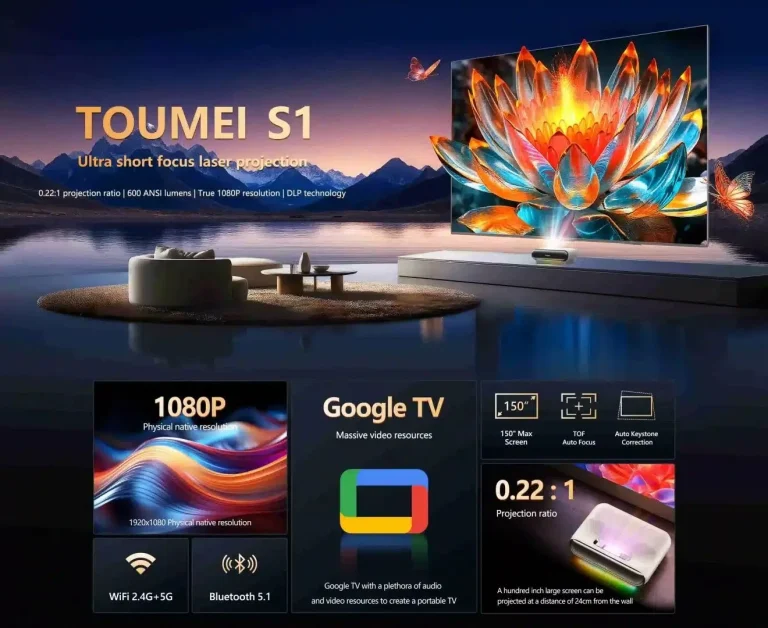
A portable projector looks like an easy wholesale category until the first batch starts generating returns and bad reviews from real users. On paper, many models seem interchangeable: “1080P,” “smart OS,” “wireless casting,” and “high brightness,” but in actual B2B distribution they behave very differently. Some portable projectors sell through cleanly because they match real usage, while others create a chain of problems: overstated brightness, unstable mirroring, noisy thermal systems, app restrictions, unclear warranty ownership, and disappointing daytime performance.
This wholesale guide explains how to choose reliable portable projector suppliers, how to match different projector types to your sales channels, and when to stay with a standard wholesale model instead of rushing into custom OEM/ODM.
What This Portable Projector Wholesale Guide Covers
This article is written for business buyers, not casual tech readers. It is designed to help you build a commercially healthy portable projector program instead of just buying a cheap model that becomes a support problem.
This guide is especially relevant if you are:
An importer adding a new display category next to existing consumer electronics lines.
A regional distributor expanding beyond audio into smart-life and home-entertainment products.
A cross-border e-commerce seller looking for a higher-ticket portable projector SKU with margin and bundle potential.
An OEM/ODM procurement manager comparing projector factory capability and long-term reliability.
A brand product manager evaluating whether portable projectors deserve a long-term slot in your assortment.
Typical situations where this wholesale guide is useful:
You want to launch a smart projector line but are not sure whether to start with a low-cost trial SKU or a more stable mid-range model.
Your current projector supplier keeps changing firmware, optical performance, or components between sample approval and bulk order.
Your market now expects built-in streaming and wireless casting, but your old products still depend on external sticks or unstable mirroring workflows.
You want to test a private‑label portable projector program but need to control MOQ, warranty exposure, and landed cost risk.
You are entering retail, gifting, education, or home‑entertainment channels where portability matters more than peak brightness alone.
The value of this guide is simple: it helps B2B buyers choose portable projectors by commercial fit, not by marketing noise.
Key Takeaways for Portable Projector Distributors
Before comparing cosmetic features or negotiating the last few dollars on unit price, lock the fundamentals of your projector program.
If you are a first‑time distributor, do not start with the cheapest portable projector on the quote sheet. Start with a stable mid‑range smart projector, because low purchase cost rarely offsets high return rates.
If you sell through marketplaces or retail chains, do not accept vague brightness language. Ask for ANSI or another clearly stated standardized brightness reference, because inflated lumen claims damage trust very quickly.
If your market values convenience, a built‑in smart system and dual‑band Wi‑Fi are not premium extras; they are baseline features for modern portable projectors.
If you are discussing OEM, do not begin with logo, carton, or shell color. Begin with optics, thermal behavior, software stability, and BOM control.
If your local after‑sales network is weak, avoid excessive customization in the first buying cycle. Standardized wholesale projector models usually create cleaner feedback and better cash flow.
If a supplier looks polished but cannot clearly explain heat control, fan‑noise limits, wireless compatibility, and component consistency, that supplier is not ready for serious volume.
In simple terms: a portable projector that is easy to list but hard to support is a bad B2B product.
Types of Portable Projectors for B2B Wholesale
Portable projectors are often treated as one broad category, which is a sourcing mistake for B2B buyers. In reality, the portable projector market breaks into distinct commercial bands with different margin logic, user expectations, and after‑sales risk.
Entry‑Level Smart Portable Projectors (Price‑Driven Wholesale)
This is the price‑led tier in portable projector wholesale, usually aimed at discount electronics channels, promotional retail, gift‑oriented sellers, and online stores testing demand with minimal capital exposure.
Advantages: low entry cost and easier trial orders for new portable projector sellers.
Risks: exaggerated brightness claims, unstable casting, weak acoustics, and aggressive spec wording are most common in this tier.
Entry‑level portable projectors are not useless. They can work for dark‑room casual viewing, seasonal campaigns, and price‑sensitive channels. But they become dangerous when positioned as full home‑cinema replacements, because expectation mismatch drives returns and negative reviews.
Mid‑Range Full‑HD Smart Projectors (Best Starting Point)
This is where most serious portable projector distributors should start. A good mid‑range projector usually combines native 1080P resolution, practical real‑world brightness, built‑in streaming capability, dual‑band wireless connectivity, and enough software stability to reduce setup friction.
This tier works well for:
Regional consumer‑electronics distributors building a reliable portable projector line.
Marketplace sellers who need stronger review protection and fewer after‑sales tickets.
Importers looking for repeatable reorder potential instead of one‑off deals.
Retailers building home‑entertainment bundles that combine projectors with screens and audio.
It is also the easiest band to explain honestly: you are not selling a toy, but you are also not overreaching into premium theater positioning that your hardware cannot support.
Premium Portable and Higher‑Brightness Projectors
This is the expectation‑heavy tier of portable projectors, designed for brighter living rooms, hospitality environments, upper‑mid retail, and users who care about higher image quality, smarter features, and stronger perceived product quality. The advantage is broader use cases and a stronger premium story—but in B2B, pricing must match what customers can immediately perceive on‑screen.
This is where the PJ215 PRO smart portable projector stands out as a premium option. It supports 4K decoding for detailed visuals, combined with 250 ANSI lumens of true brightness, and the brand emphasizes that its brightness is real, not exaggerated. Even in daytime or with the lights on, the image remains clear, with up to a 150‑inch screen for home‑cinema experiences.
PJ215 PRO runs on Android TV 9.0, giving users easy access to Netflix, YouTube, and Prime Video once connected to Wi‑Fi, and offers HDMI, USB, Wi‑Fi, Bluetooth, and Type‑C for a complete entertainment hub. For convenience, it features auto focus and auto keystone correction for instant setup, weighs only about 1.16 kg (similar to a MacBook Air), and supports Type‑C power for truly portable big‑screen viewing.
Standard Wholesale vs OEM/ODM Portable Projector Programs
Not every B2B buyer needs a custom portable projector program. A standard wholesale model makes sense when you are entering the category, validating a new market, or building a repeatable replenishment business with lower operational complexity.
OEM/ODM portable projector programs make sense when you already have:
Stable channel demand and reorder confidence.
Clear product positioning and differentiation logic.
Internal capacity to manage specification approval, labeling, compliance documentation, packaging, and after‑sales accountability.
Customization creates upside, but it also creates responsibility and multiplies decision points. For first‑time buyers, starting with a strong standard wholesale model is usually safer.
Portable Projector Wholesale Comparison Table
Below is a simplified comparison of common portable projector wholesale configurations for B2B buyers.
| Type / Configuration | Typical Application Scenarios | Core Specs Focus | MOQ / Price Position | Maintenance / After‑Sales Burden |
|---|
| Type / Configuration | Typical Application Scenarios | Core Specs Focus | MOQ / Price Position | Maintenance / After‑Sales Burden |
|---|---|---|---|---|
| Entry‑level smart portable | Gift retail, online trial campaigns, dark‑room casual use | Basic smart functions, compact body, lower real brightness | Lowest price barrier, suitable for cautious testing | Highest complaint risk if claims are overstated |
| Mid‑range full‑HD smart projector | Retail distribution, import programs, marketplace growth, home cinema bundles | Native 1080P, practical brightness, smart OS, dual‑band Wi‑Fi | Best balance of cost, sell‑through, perceived value | Moderate and manageable when positioning is accurate |
| Premium portable smart projector | Hospitality, brighter rooms, premium retail, advanced home use | Higher brightness, stronger optics, refined software, better auto setup | Higher capital requirement and slower test cycle | Lower scenario mismatch but higher inventory risk if mispriced |
| OEM/ODM custom projector | Established brand owners, repeat‑volume buyers, private‑label programs | Custom industrial design, firmware, packaging, branding, documentation | Higher MOQ and longer lead time | Highest responsibility and program complexity on buyer side |
The key takeaway is this: if you do not fully understand your channel yet, start in the middle with a stable mid‑range portable projector.
Why Distributors Are Adding Portable Projectors
The shift from audio‑only distribution toward portable projectors is not a trend story; it is a margin story. Traditional audio accessories can still generate volume, but many subcategories are now deeply transparent on price, with unauthorized sellers and aggressive discounting making channel value hard to protect.
Portable projectors operate differently:
The ticket size is higher, and the feature stack is richer, which supports healthier margins.
The category naturally supports bundled sales—screens, tripods, mounts, cables, power accessories, and upgraded audio can all attach to one projector.
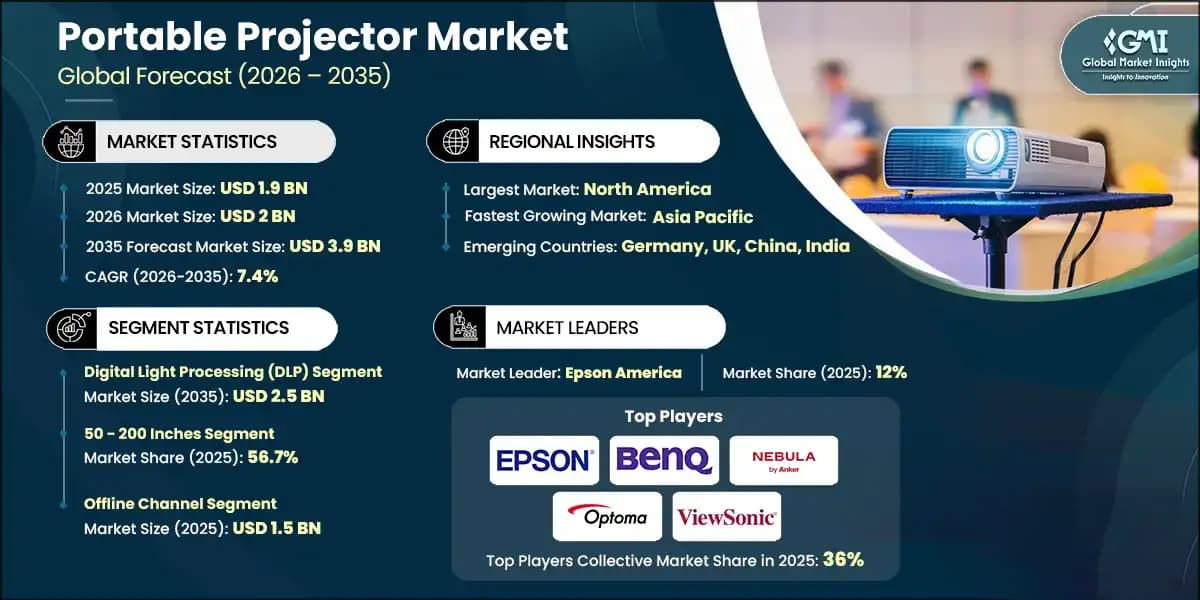
For distributors already active in consumer electronics, portable projectors are often more attractive than adding another low‑margin accessory line. Market estimates place the global portable projector market around USD 1.9 billion in 2025 and roughly USD 2.0 billion in 2026, with projected growth toward USD 3.9 billion by 2035, indicating a consistent growth direction tied to streaming, compact entertainment, and flexible display demand.
For Toumei , portable projection fits naturally inside its smart‑life portfolio next to connected home devices and entertainment hardware, and buyers exploring this category can move directly from the smart projector collection to conversion paths such as “Become a Distributor” or “Contact B2B Team” without leaving the commercial funnel.
Portable Projector Specs That Actually Affect Sell‑Through
Spec sheets do not fail in the market; poor interpretation does. A portable projector should be sourced based on the use case it is meant to serve, not the largest number printed on a listing image.
Brightness: the Most Misused Spec
Brightness is where many portable projector sourcing mistakes begin. Low‑end listings often use “lumens” in a way that tells buyers very little about actual on‑screen performance.
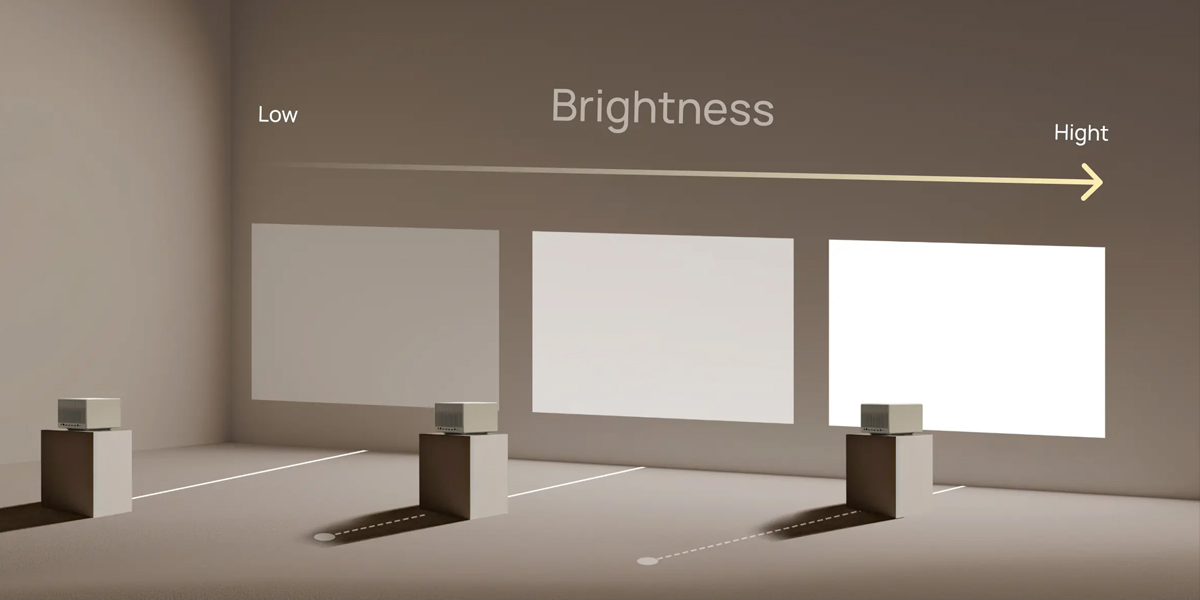
Standardized brightness language such as ANSI or ISO‑style measurements provides a more useful basis for comparison than generic light‑source claims.
The mistake is assuming higher brightness is always better; in smaller, darker home‑use settings, excessive brightness can push heat, fan noise, and visual harshness higher than needed.
In brighter rooms, underpowered brightness creates disappointment immediately and drives return rates up.
Resolution: Native Matters More Than Compatibility
“Supports 4K” is not the same as native 4K in a portable projector. For most B2B channels, native 1080P remains the sweet spot because it delivers visible quality that justifies the price without pushing BOM and retail pricing into premium territory.
Native 1080P also makes the sales story cleaner: 1080P is easy to explain, while “4K support” should be positioned as a compatibility feature rather than the core promise unless the hardware truly delivers native 4K performance.
Smart OS and App Access
A portable projector that still behaves like a dumb display is harder to sell in 2026. Mainstream buyers expect streaming access, a familiar interface, and fewer cables.
If the experience begins with adapters, dongles, and troubleshooting steps, the product is already behind, which is why built‑in smart functionality is now part of the baseline commercial expectation in many retail and marketplace channels.
Wireless Connectivity
Users test mirroring almost immediately after unboxing a portable projector. If wireless casting drops, lags, or behaves inconsistently across phones and routers, users do not care whether the root cause is protocol limitations or network conditions—they blame the projector.
That is why dual‑band Wi‑Fi matters, and why this point should be validated in sample testing with real devices and networks instead of being assumed from a quotation sheet.
Thermal Design and Fan Noise
Portable projectors are used during movies, games, family viewing, and bedroom entertainment, so fan noise is not a secondary issue. It shapes perceived quality and long‑session comfort, and a model that looks strong in a static demo but sounds intrusive at home quickly becomes an after‑sales problem.
Engineering and Supply Chain Perspective
A portable projector does not fail because one number on the spec sheet is weak. It fails because several small decisions were allowed to slip.
From an engineering and sourcing perspective, five factors usually determine whether a portable projector remains commercially healthy after launch:
Optical consistency
Thermal management
Firmware stability
Connectivity reliability
BOM discipline
Real‑World Failure Cases in Portable Projector Programs
Scar Story 1: The Brightness Headline That Hurt the Product
One common sourcing mistake is choosing a portable projector because the brightness claim dominates the comparison table. A product intended for dark‑room entertainment is pushed toward a brighter optical setup so the sales sheet looks stronger; then the thermal system works harder, fan speed rises, the acoustic experience worsens, and the projector starts receiving comments such as “too noisy” or “not cinematic enough.”
The problem was not that the projector was underbuilt; the problem was that it was over‑positioned for its real use case.
Scar Story 2: Casting Stability Treated as a Side Feature
Another painful lesson comes from wireless use. A portable projector can pass a short bench test and still fail in the market because mirroring behaves inconsistently across different mobile devices and routers.
This is one of the ugliest after‑sales problems in the category because support teams struggle to diagnose it quickly, and the customer only knows one thing: wireless screen casting does not work the way they expected. That is why sample validation should include real phones, different networks, and long‑session usage.
Scar Story 3: BOM Drift Quietly Damaged Reliability
Even experienced buyers get caught by silent BOM drift. The sample performs well, the pilot batch looks acceptable, and later production quietly switches components in the power supply, cooling, or wireless modules.
The portable projector still looks identical from the outside, but field performance changes—more heat, more instability, more inconsistent behavior—and by the time the importer notices the trend, inventory is already in the channel. That is why disciplined manufacturers with strict BOM control win repeat business.
Why Toumei Is a Reliable Portable Projector Manufacturer for B2B
This is where Toumei’s broader manufacturing credentials matter for portable projector buyers. The company’s B2B positioning highlights in‑house testing capability, quality systems, and global‑market compliance, including ISO 9001, BSCI, SEDEX, RoHS, CE, FCC, and REACH across its broader business profile.
Toumei’s background also emphasizes a 40,000‑square‑meter manufacturing base, in‑house lab testing, and a global channel footprint across more than 110 countries, which signals process reliability rather than just attractive device design.
Within the site, portable projectors sit naturally inside the Smart Life category and the dedicated smart projector collection, and buyers can move directly from those pages to B2B conversion paths such as “Become a Distributor” or “Contact B2B Team.” The key takeaway is simple: good projector programs are built by controlling failure points, not by stacking flashy features.
B2B Procurement, ROI and TCO for Portable Projector Wholesale
In B2B procurement, the cheapest portable projector is often the most expensive projector in the business. Teams still make the same mistake: they compare ex‑factory prices, win a few dollars per unit, and call it success—until the hidden costs show up.
Why Unit Price Misleads
Unit price reflects only the first transaction; it does not reflect:
Defect handling and replacement units
Return freight and reverse logistics
Warehouse inspection and rework
Service tickets and support labor
Review deterioration on marketplaces
Lost repeat orders and damaged channel relationships
Slower sell‑through caused by poor user experience
A portable projector with a lower purchase price but a higher complaint rate is not cheaper; it is only cheaper to buy.
A Simple ROI Logic Buyers Can Use
Use a practical framework instead of focusing only on unit price. For example, if your annual volume is 10,000 portable projectors and you save USD 4 per unit by switching to a lower‑cost supplier, you appear to save USD 40,000.
Now assume that switch increases your return or warranty incident rate by just 1%—that is 100 additional problem units. If each problem unit costs USD 20 to USD 35 in combined reverse logistics, labor, replacement handling, and support time, you lose USD 2,000 to USD 3,500 immediately, and weaker user reviews or markdown pressure can push the real commercial cost even higher.
Quality costs. Failure costs more.
Portable Projector vs Large‑Screen Display TCO
For some buyers, the real comparison is not projector versus projector, but portable projector versus large commercial display. Projectors often win on initial cost per inch once the target image size moves above the typical 85‑inch TV range, and consumer‑facing cost comparisons repeatedly show that large‑format projection can create much bigger screens for less upfront spending than very large flat panels, especially at 100 inches and beyond.
Ownership cost changes the picture: in business environments, LED displays and flat panels often carry higher initial acquisition cost but lower maintenance burden over time, while projectors may require lamp replacement, optical servicing, recalibration, or downtime depending on light‑engine type and usage intensity.
So buyers should not ask only “Which device is cheaper?” but “Which display type is cheaper for my actual usage pattern and support capacity?”