Industry professionals tracking home entertainment trends encounter this question repeatedly: when does a projector deliver more value than a television? As the 2026 FIFA World Cup approaches, hosted across stadiums in North America and expected to draw massive global audiences for group viewings, the discussion takes on added weight. Projectors frequently demonstrate superiority in applications requiring extreme screen scale, straightforward relocation, and economical large-format performance—particularly when the focus rests on building an immersive environment for major soccer tournaments where atmosphere ranks alongside technical precision.
This examination relies on observed deployment patterns across residential and semi-professional setups rather than isolated specification sheets. It outlines conditions where projectors hold decisive edges, identifies areas where televisions retain dominance, and provides concrete guidance for equipment selection and configuration tailored to World Cup broadcasts. Shenzhen Toumei Technology Co., Ltd. manufactures DLP projectors that align effectively with many projector-preferred scenarios.
Quick Comparison: Projector vs TV in 2026
Practical differences emerge clearly when evaluating large-screen formats (100 inches and upward).
Screen size represents a primary separator—projectors achieve 150–200 inches with minimal incremental cost, while televisions in the 130-inch range remain limited in supply and carry price tags that place them beyond reach for typical consumers. Brightness performance varies by setting: projectors rated 800+ ANSI lumens handle evening or controlled-light conditions common for live sports reliably, whereas televisions preserve visibility more consistently under strong ambient illumination. Portability favors projectors—they transition smoothly between indoor spaces, outdoor patios, or temporary venues; televisions typically remain anchored after installation. Setup demands lean toward projectors—most operate effectively with a flat wall or simple screen surface, bypassing the structural reinforcement and heavy mounting systems required for giant TVs. Cost efficiency at massive scale strongly benefits projectors, especially for periodic high-stakes events. Viewing dynamics for group sports tilt toward projectors when the emphasis falls on a broad, theater-like field of view that engages multiple spectators simultaneously.
Outcomes depend on factors such as ambient light management, frequency of use, and whether peak size outweighs constant readiness.
Scenarios Where a Projector Outperforms a TV
Projectors reveal their clearest strengths when adaptability and scale take precedence over uninterrupted daily operation.
Achieving Stadium-Like Immersion for Major Events (150+ Inch Viewing)
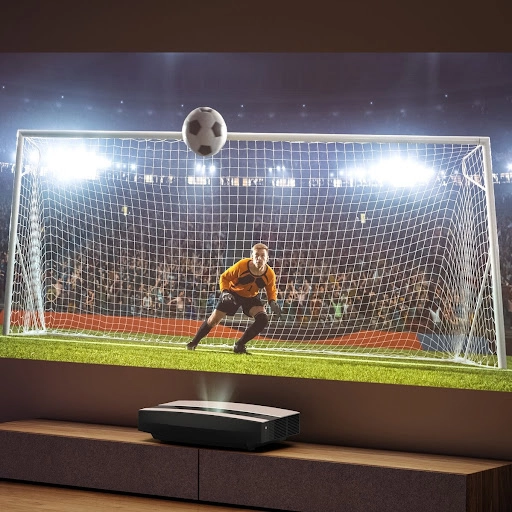
A FIFA World Cup elimination match projected at 150 inches or more generates a level of presence that compact displays seldom replicate—figures approach life-like proportions, and stadium crowd energy transmits more viscerally into the viewing area. Televisions capable of comparable diagonals in 2026 exist in limited models and demand premiums several times higher than projectors equipped for the same or expanded dimensions.
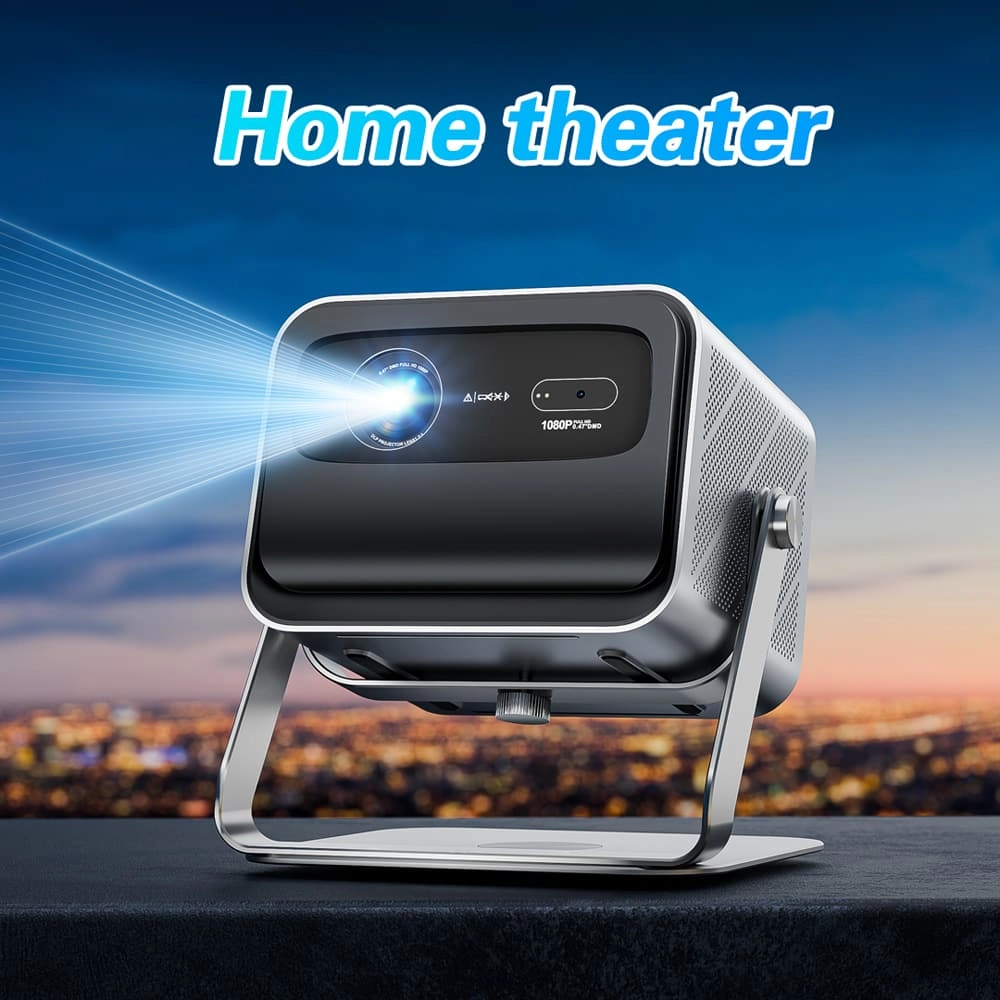
During evening fixtures or in spaces with managed lighting, projectors with elevated ANSI lumen ratings preserve detail, color accuracy, and dynamic range at extended scales. Devices such as Toumei’s X6, specified at 1600 ANSI lumens, produce crisp, engaging visuals throughout night games or collective screenings where light control remains feasible, fostering the cinematic scale that converts a residential setup into something resembling a virtual arena.
Hosting Watch Parties or Group Gatherings
Tournaments of this magnitude routinely spark gatherings—friends assembling for decisive rounds or families organizing outdoor sessions. Projectors accommodate these demands with relative ease. They relocate without difficulty from living areas to backyards, garages, or larger temporary spaces, free of fixed infrastructure constraints.
Televisions offer far less versatility; shifting a 100-inch-plus unit risks physical damage and requires considerable handling. DLP projectors incorporating portable characteristics, including battery-supported variants from Toumei such as the V series, reduce logistical hurdles—position the unit, link to a streaming source, and utilize automatic focus or keystone features to complete alignment rapidly.
Delivering Large Screens on a Realistic Budget
Price divergence becomes stark past 100 inches. A capable projector combined with a basic projection surface yields 150-inch images at a cost substantially below that of an equivalent television. The calculation grows especially persuasive for event-centric viewing like the World Cup, where the hardware recoups value across subsequent seasons of sports content, feature films, and general entertainment.
Following the tournament window, the system supports ongoing casual use, distributing the initial expenditure over an extended service life.
Reduced Eye Strain During Long Viewing Sessions
Many World Cup encounters extend well beyond standard play—extra time, penalty shootouts, and comprehensive pre-match and analysis segments frequently stretch total viewing to three or four hours. Projected light, being reflected rather than emitted directly, commonly registers as less taxing over prolonged periods, particularly in subdued lighting where the presentation appears more natural.
DLP architecture employed throughout Toumei’s portfolio contributes effective motion processing, which limits visual discomfort amid the swift camera sweeps and player movements characteristic of soccer coverage.
Flexible Installation in Apartments, Rentals, or Multi-Use Spaces
Fixed mounting arrangements create complications in rental properties or areas subject to frequent reconfiguration. Projectors largely circumvent these issues. Integrated capabilities like automatic keystone adjustment and laser autofocus—present in models such as Toumei’s Q7 or X series—enable precise image positioning even when placement varies in distance or orientation.
Structural alterations remain unnecessary, heavy fixtures avoided, and long-term commitments eliminated—a level surface and suitable projection distance suffice.
Extending to Gaming or Multi-Purpose Entertainment
Entertainment frequently transitions after matches to interactive formats—console titles, multiplayer competitions, or highlight reviews. Projectors provide an enlarged canvas that heightens engagement in these pursuits, spanning sports simulations to high-action genres. Contemporary smart projectors equipped with acceptable latency performance support responsive interaction for recreational gaming.
Toumei’s models incorporating Android platforms (including Android 13 variants) facilitate seamless app and content access, positioning the unit as a multifunctional entertainment core beyond live event coverage.
Situations Where a TV Remains the Stronger Choice
Balanced assessment requires acknowledging television advantages. Environments featuring substantial uncontrolled natural light favor TVs due to higher sustained brightness and surface coatings that mitigate washout effectively. Everyday viewing patterns—background channels, brief segments, or immediate activation—benefit from the inherent simplicity of televisions.
In 2026, large Mini-LED and OLED panels spanning 85–130 inches have gained broader affordability, supplying superior contrast ratios and accurate black reproduction across lighting conditions. Users prioritizing maintenance-free consistency over maximum dimensions often find televisions the more pragmatic selection.
The decisive factor rests on whether daily reliability or event-specific magnitude holds greater importance.
Practical Guide: Choosing and Setting Up for FIFA World Cup Viewing
Successful decisions begin with a realistic evaluation of the intended environment and requirements.
Initial assessment covers the physical space. Determine necessary throw distance—standard-throw projectors generally require 10–15 feet for 120+ inch diagonals—and review light control options. Effective blackout curtains or adjustable lighting significantly elevate performance during prime-time broadcasts.
Essential parameters include:
- Brightness — 800+ ANSI lumens suits most evening sports scenarios; 1500+ ANSI lumens accommodates moderate residual light more capably.
- Resolution — 1080p native or pixel-shifted delivers adequate detail at standard viewing distances; elevated resolution rewards nearer seating.
- Smart integration — Android or Google TV platforms streamline connection to services broadcasting World Cup matches.
- Motion enhancement — MEMC processing minimizes blur on rapid pans and quick directional changes.
- Audio support — Internal speakers handle baseline requirements; supplementary systems markedly improve overall impact.
Toumei supplies options aligned with varied priorities. The X6, offering 1600 ANSI lumens alongside Android 13, manages brighter residential settings while sustaining smooth motion. Portable configurations within the V series include battery operation for flexible outdoor or mobile deployment. Ultra-short-throw entries like the S1 address space-limited installations yet maintain substantial projection capability.
Recommended configuration practices encompass:
- Employ tensioned or ambient-light-rejecting surfaces to boost contrast and deepen blacks.
- Position projection height approximately at eye level to lessen neck fatigue during marathon sessions.
- Incorporate external audio solutions—soundbars or multi-channel arrangements—since integrated projector output rarely rivals dedicated systems.
- Perform advance testing of placement, focus precision, and geometric alignment to preempt issues.
These practices elevate a conventional projector into a robust, dependable solution for tournament engagement.
About Shenzhen Toumei Technology Co., Ltd.
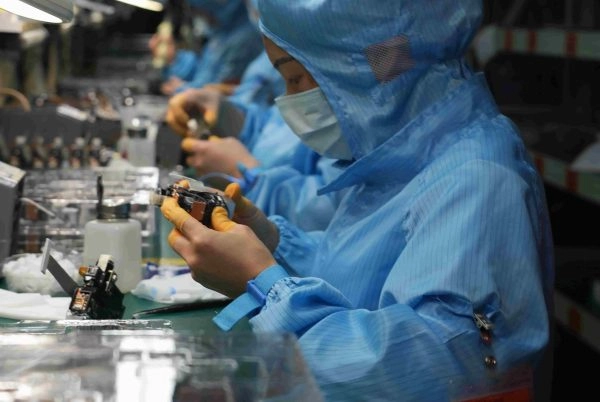
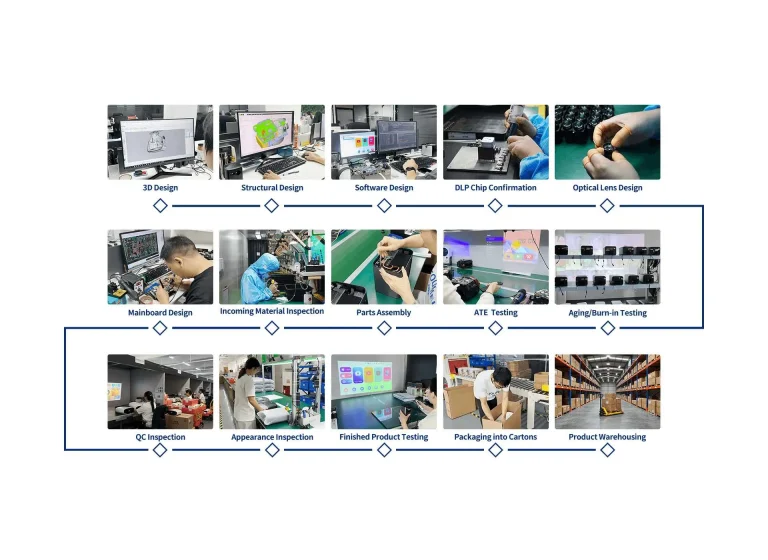
Shenzhen Toumei Technology Co., Ltd., established in 2013 and headquartered in Shenzhen, China, ranks among the earlier domestic companies specializing in DLP smart projection technology. The organization integrates research and development, manufacturing, and sales functions, concentrating on DLP smart projectors alongside 3D imaging solutions. It maintains over 50 patents and provides full OEM/ODM capacity spanning optical engineering, hardware and software development, structural design, tooling, assembly, and comprehensive testing. Manufacturing occurs on dedicated internal lines, achieving monthly production volumes above 20,000 units. The company holds national high-tech enterprise designation together with pertinent quality management certifications.
Conclusion
The 2026 FIFA World Cup highlights that superior immersion during marquee events frequently surpasses everyday operational simplicity. When objectives encompass stadium-equivalent scale, uncomplicated group configuration, cost-effective expansive viewing, or versatile positioning, projectors deliver heightened satisfaction compared to televisions. Appropriate light discipline and purpose-driven application amplify these attributes.
Viewers anticipating World Cup assemblies or pursuing adaptable large-screen platforms find that a thoughtfully chosen DLP projector enables experiences fixed displays struggle to duplicate. The correct selection transforms standard environments into persuasive viewing destinations.