I'd work out projector throw distance for a small room before choosing a shelf or buying a mount. The arithmetic is image width multiplied by the projector's stated throw ratio. The room check is a measurement from the lens to the screen. Both need to describe the position you actually intend to use.
Take an assumed 80-inch diagonal picture and a shelf behind a sofa as an example. I'll use a ratio of 1.2 just for the calculation, without assigning it to a product. The interesting part comes after the multiplication: does that shelf give you enough space?
Measure the Usable Lens-to-Screen Distance
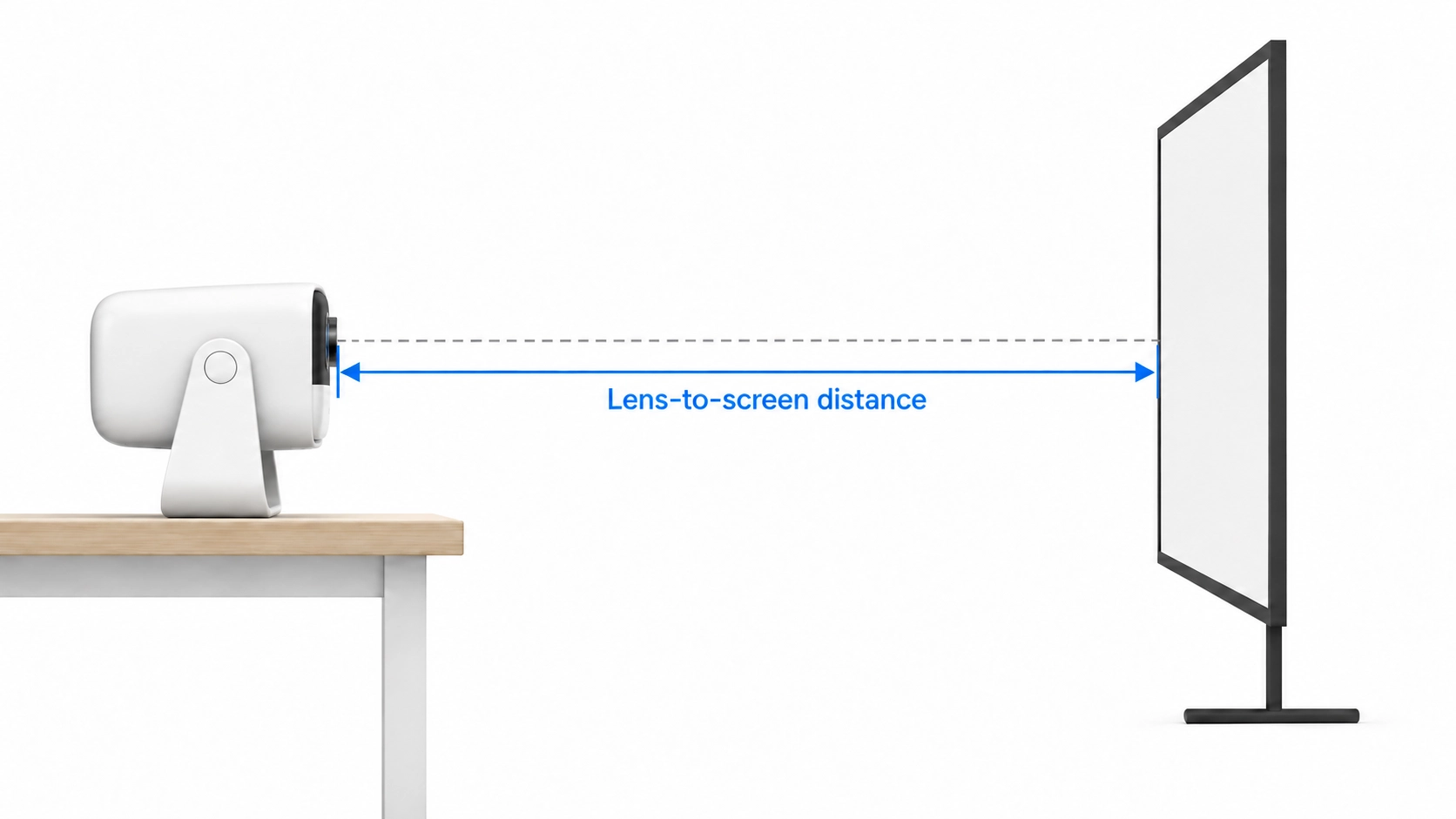
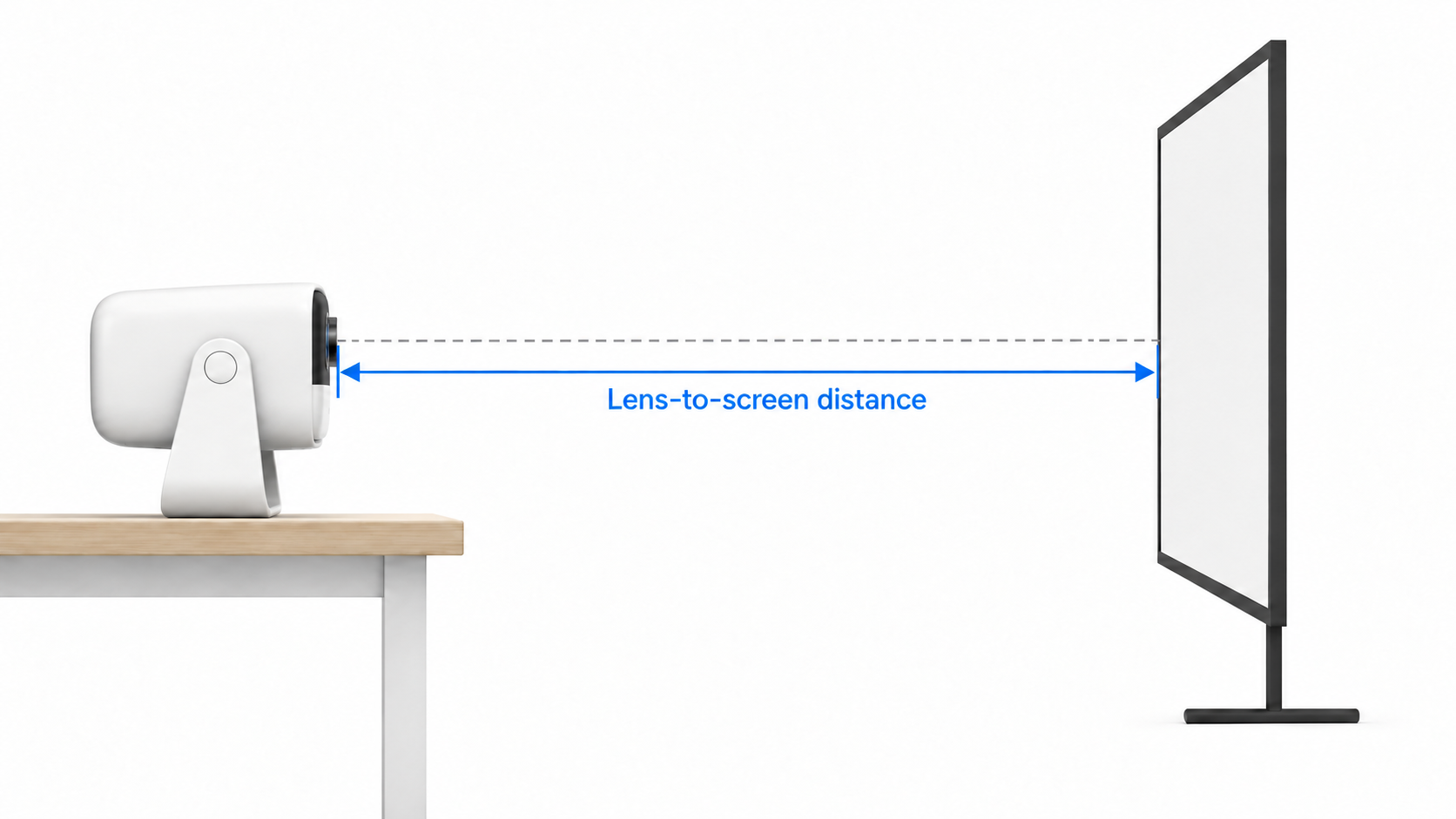
The projector placement guide defines the term this way: “Throw distance is the distance between the projector lens and the screen or wall onto which the image is projected.” Use those endpoints on your sketch. A measurement from the back of the housing starts somewhere else.
Start your sketch at the shelf and mark the proposed lens position. Measure from that mark. With a pull-down screen, I'd use its surface, even if the wall behind it is easier to reach. Include the body and cables on the sketch too; take mounting and ventilation requirements from the manual.
Convert Screen Diagonal to Image Width
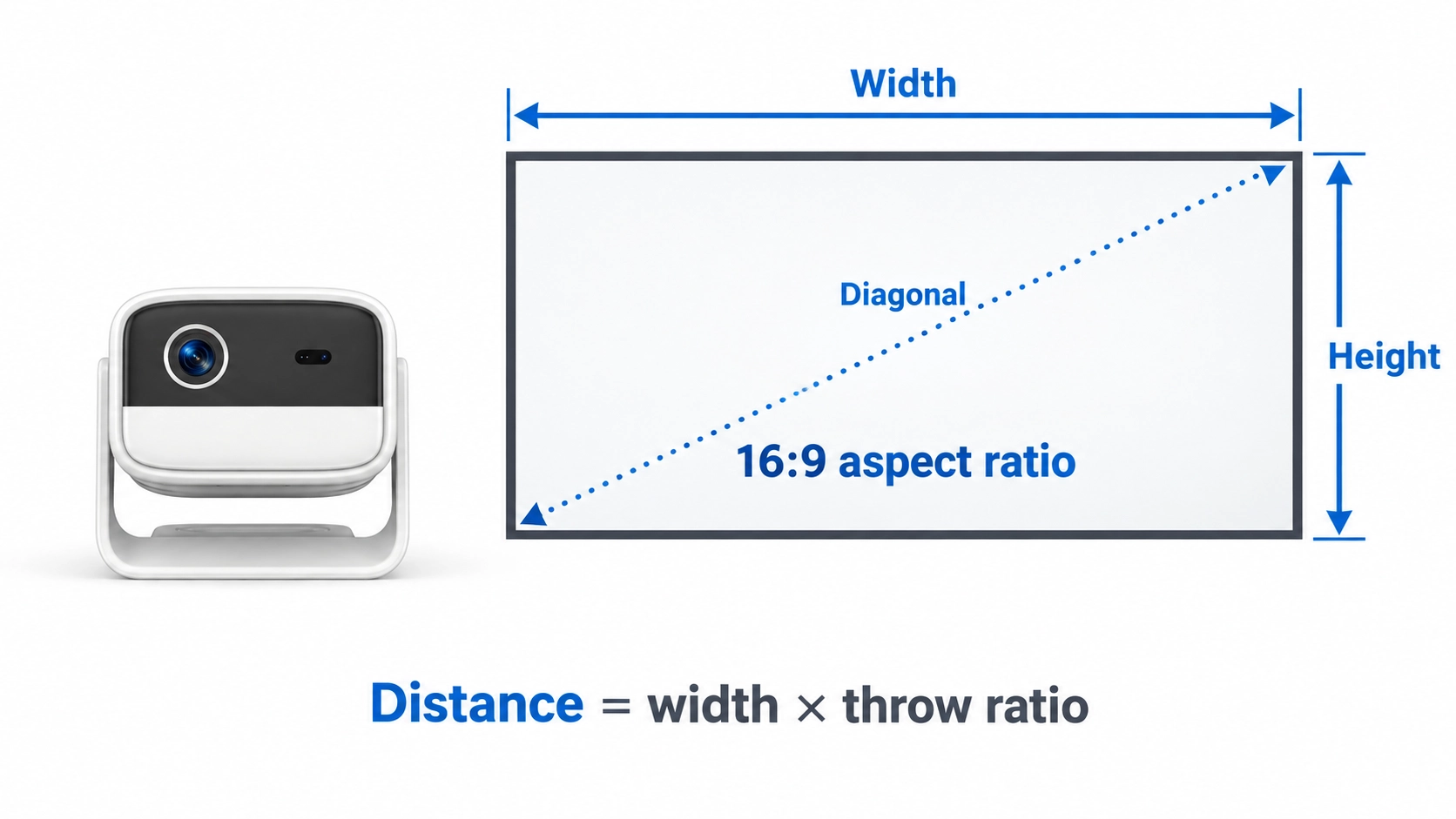
The “80-inch” figure is a diagonal. I wouldn't put it straight into a throw calculation. Either obtain the screen's active width or work it out for a known 16:9 rectangle:
Width = diagonal × 16 ÷ √(16² + 9²)
For the example, 80 × 16 ÷ √337 comes to about 69.7 inches. That's the picture width. I'd keep inches for the distance as well, and leave the frame out when measuring a screen already in the room.
Check Which Number You Are About to Multiply
Try the arithmetic with 80: at our assumed ratio, the result is 96 inches. Now compare that with the 83.6-inch result from using the example's width. A change of input produced a 12.4-inch difference between the rounded answers. Neither multiplication was difficult. Choosing the dimension is where the mistake entered this hypothetical calculation.
My recommendation is to draw a line across the screen sketch and write 69.7 beside that line. Put 80 on its diagonal. Keep those labels when you send the drawing to a supplier. Ask them to read back the width they used in their calculation; the question is more useful than a general request to check your arithmetic. If they used another dimension, settle that first.
Calculate Projector Throw Distance for a Small Room
The stated relationship is “Throw Ratio = Throw Distance / Image Width.” Rearrange that relationship to calculate the required lens-to-screen distance:
Throw distance = image width × throw ratio
Here is a worked example with an assumed ratio of 1.2, not a specification for any product:
– Calculated image width: 69.7 inches.
– Assumed throw ratio: 1.2.
– Calculated lens-to-screen distance: 69.7 × 1.2 = 83.6 inches, rounded.
Now suppose the shelf allows only 75 inches. We've calculated 83.6, so this combination doesn't fit. I'd look at a smaller picture or another candidate with an appropriate stated ratio. The throw-ratio explanation is useful for exploring that relationship. Once a model is on the shortlist, I would also check it in a projection calculator.
Decide Whether You Would Accept a Smaller Picture
The hypothetical shelf gives us 75 inches. What happens if you choose a 60-inch picture width at the same assumed ratio? You get 72 inches: 60 multiplied by 1.2. That leaves 3 inches between the calculated requirement and the space in this example. It also asks you to accept a narrower picture. Make that choice before discussing a mount.
I'd show the two widths side by side on the room sketch. Write “preferred” against one and “alternative” against the other, then ask about the shortlisted model. The original 69.7-inch width gives an 83.6-inch requirement; the alternative gives 72. Please don't describe those as two tested setups. They are calculations with an assumed ratio. Use the actual model's stated value for the next comparison, and ask about its placement instructions before approving either arrangement.
Need help applying these measurements to one of our projectors? Share your target image size, available lens-to-screen distance and proposed mounting position with our team for product technical support before you finalize the setup.
Check Placement Before Buying or Mounting
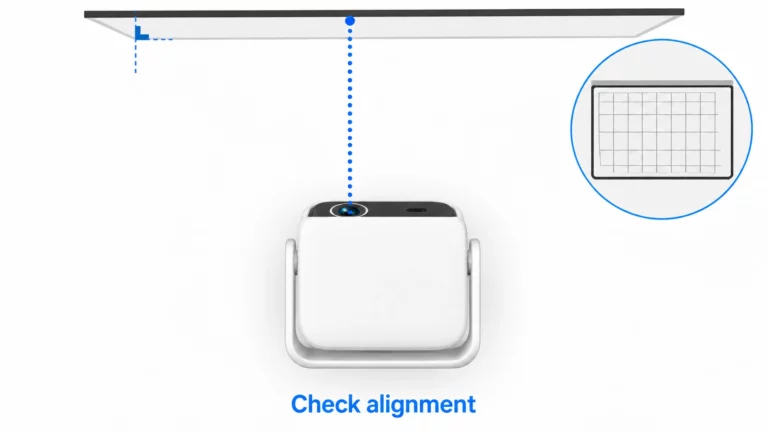
My next step would be a full-size test image at the proposed position, before making a mount permanent. Have the manual there. Check the proposed arrangement against its placement instructions and note the picture size you observe. Keep any unanswered mounting question beside the sketch for the supplier.
A keystone adjustment wouldn't persuade me to skip the distance calculation. If the room still doesn't work, I'd take the sketch to the supplier and ask about another layout. The short-distance installation guide helps frame those questions. Ask for the selected model's chart before committing.