ANSI lumens and LED lumens are often used as if they mean the same thing, but they do not give buyers the same level of confidence. If you are comparing projector suppliers, ANSI lumens are usually the safer benchmark because they describe measured screen brightness under a more standardized method. This guide explains how to read brightness claims before choosing DLP, LED, or laser projector models.
We've all been there. You're in a client's conference room and about to present the pitch you've been preparing for weeks. You connect your projector, the screen illuminates and … it's a washed-out, faded disaster. The afternoon sun is streaming through the window, and your carefully prepared charts and data points are virtually invisible. The moment is ruined, and the effectiveness of that presentation has been seriously compromised.
For any B2B professional, whether a sales team on the road or a marketing manager at a trade show, anyone in this situation to that degree is just a nightmarish. The most important part for preventing this? Understanding projector brightness. To be specific, understanding how to read a measurement called ANSI Lumens.
Many brands use confusing terminologies like “LED Lumens” or “Light Source Lumens” or various other terms that likely mean nothing. This guide will simplify the subject of projector brightness, define ANSI lumens in very clear terms, and convey why this standardized measurement is the most important factor for any organization purchasing projectors.
For sourcing teams, the key question is not which number looks larger, but which brightness rating helps compare DLP projector models fairly across suppliers.
What Are Projector Lumens in General?
At its most basic, lumens are a measure of the total amount of visible light produced by a light source. Consider it the horsepower for a car: A raw measure of what is possible. The more lumens a projector has, the brighter image it can produce in theory.
However, here is where it gets messy. In the competitive atmosphere of projectors, manufacturers have proposed several different measures and types of measuring lumens, and none are standard. Therefore you may see:
- Light Source Lumens: Brightness measured exactly at the lamp or LED source, before it goes through the lens and color wheel. This benchmark number is always significantly higher than what you will actually see when looking at the screen.
- LED Lumens (or Marketing Lumens): Often grossly exaggerated that includes a perceptual visual phenomenon called the Helmholtz-Kohlrausch effect that the human eye sees highly saturated colors as looking brighter. This is again, not a recognized measure and is highly subjective measure.
For a business professional and organization that uses the projector as means to fulfill a revenue function, vague examples of measured lumens are meaningless, and you need a standard that is reliable and consistent.
What are ANSI Lumens? The Gold Standard of Brightness Measurement
Now we come to the most important term for any serious projector buyer: ANSI lumens.
ANSI stands for American National Standards Institute, it is a private non-profit organization that continues to oversee the voluntary consensus concerning standards for products in the United States. The “ANSI lumen” measurement is a very prescribed, standardized, and scientific process preventing any unfair, “apples-to-apples” comparison to different projectors, regardless of manufacturer and technology (DLP, LCD, etc.).
How Are ANSI Lumens Measured?
The method is rigorous and intends to represent the actual viewing experience:
- Controlled Environment: The projector is positioned in complete darkness, at temperature specifications.
- Standardized Image: The projector displays an all-white image of a predetermined size (usually 40 inches).
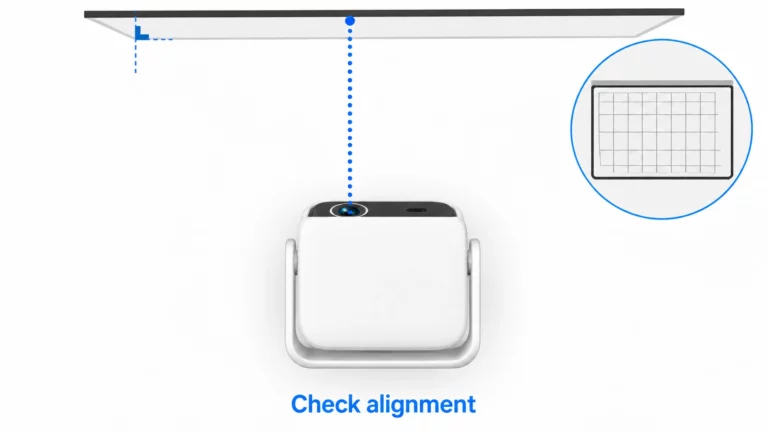
- Nine-Point Grid: The screen is divided into a grid of 3×3 equal rectangles in total 9 pieces.
- Light Meter Readings: A light meter measures brightness (in lux) at the center of each of the nine points
- Averaging: The nine brightness measurements are averaged together.
- Final Calculation: The averaged lux value is then multiplied by the area of the screen (in square meter) to obtain the ANSI lumen rating.
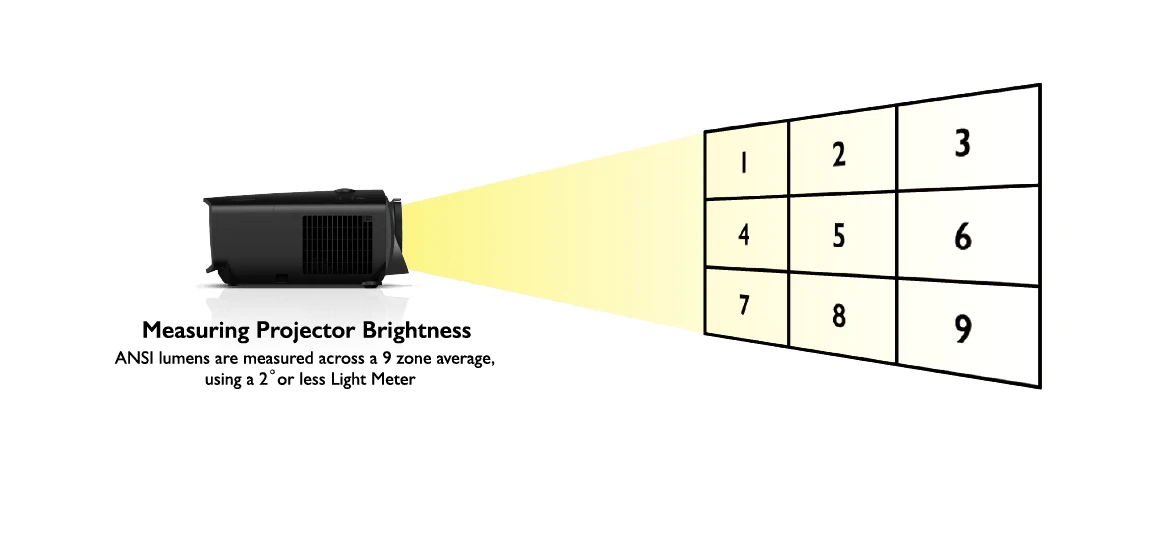
The thoroughness of the formula guarantees the measurement evaluates the brightness across the total image, not just one bright portion in the center. It is the only legitimate way to compare the brightness of projectors.
Why ANSI Lumens Are Critically Important for Your Business
For B2B clients, consistency and reliability are key. That’s why we believe that a projector's ANSI lumen rating is, without a doubt, its most important specification.
1.Ambient Light: The #1 Business Challenge
A notable difference between home and business environments is that they are rarely dark. You will be presenting in conference rooms with large windows, brightly lit trade show floors, client offices under fluorescent overheads, and impromptu spaces such as hotel lobbies and co-working spaces. These are all typical situations where ambient light is the enemy and can wash out your projected image. When using a projector with a low ANSI lumen rating, users will see a washed out, low contrast image. Text is unreadable, colors appear muted, and your audience will have difficulty remaining engaged.
A high ANSI lumen rating (especially for portable projectors anywhere in the 1000-2000 range) can overcome ambient light and will allow you to showcase a bright, vivid, and legible picture. Making this difference is the difference between a polished, impactful presentation and one that comes across as cheap and ineffective. ANSI lumens are the single specification that counts when shopping for a projector to use in daylight.
If your channel needs portable, smart, or high-brightness models, compare the full smart DLP projector range instead of relying only on marketing lumen claims. 2.Making Data Clear and Legible
Business presentations primarily focus on data – spreadsheets, charts, small type text, and complex diagrams. A weak projection will lose important details. A high ANSI lumen projector produces a bright high-contrast image which enhances the ability to see and read all numbers, all graph lines, and all bullet points clearly from anywhere in the room.
3.Flexibility, True Portability
Many B2B customers are looking for a projector that can be transported between offices, set-up temporarily in an exhibition booth, and set-up at regional meetings. Historically, to achieve a high brightness typically meant lugging a large heavy ground LCD projector (often 2-3 kg or more) around with you.
This is where modern DLP (Digital Light Processing) shines. Advanced DLP projectors, including those from Toumei, are able to pack a fantastic amount of brightness into a very compact and very lightweight form factor. As an example, the Toumei V8 Pro Portable Projector has a great brightness of 1600 ANSI lumens with a stunning 1080p resolution, all in a device designed for portability. You and your team can now be prepared for any lighting situation without the burden of a large heavy device.
For a sales team in a different location each day or a marketer paying for limited valuable booth space, this absolute power and portability creates a new significant level of flexibility
4.Representing Your Brand and Professionalism
The quality of your presentation reflects the nature of your brand. A fuzzy and dull image appears unprofessional and could subsequently suggest that you cut corners. A bright, clear and colorful presentation can create an immediate impression of competence and confidence. Your audience should feel you are serious about providing the right tools to adequately convey your message to them.
Effects of ANSI Lumens on Image Quality
When it comes to image quality, brightness is more than being able to see the image – brightness impacts every aspect of image quality.
- Contrast Ratio: The contrast of an image is dependent on the difference between the darkest black and the lightest white. If a room has ambient light and a low brightness projector is being used, even a deep black will appear muddy gray, and the same for the lighter colors. A high ANSI lumen projector will be able to produce bright brilliant whites which will help make the darker areas appear deeper in comparison. In this example, it is easy to see how the contrast is better and how the image actually contains depth and “pop” due to the projector's brightness.
- Color Saturation and Accuracy: The brightness level can be thought of as the canvas for color. Implicitly, if you have a dim image, the colors will always be dull, lifeless, and desaturated. With an adequate level of ANSI lumens, the colors will look vibrant, rich, accurate, and true-to-life, just like it was designed on your computer screen. This is particularly pertinent when showing branded materials that require accurate colors.
Perceived Sharpness: Even though resolution (like 1080p or 4K) determines the number of pixels, a bright image will always look sharper than a dim one. A bright high-contrast image is perceived by the human eye to be sharper and contain more detail than a dim low-contrast image at the same resolution.
Conclusion:
Don't Let Yourself Be Fooled–Look for ANSI Lumen Standards
When it comes to business presentation, clarity is everything. The ability to deliver a bright, sharp, and immersive visual presentation in any environment is not a bonus; it is a necessity.
When choosing your next projector, escape the confusing terms of marketing and focus on one metric that guarantees dependable performance: ANSI Lumens. ANSI Lumens is the only standardized, reliable measure of brightness that ensure what you are buying is what you see.
Investing in a high ANSI lumen rating portable DLP projector means investing in your team's performance, your brand's professionalism, and ensuring your ability to communicate your message effectively, wherever business sends you.
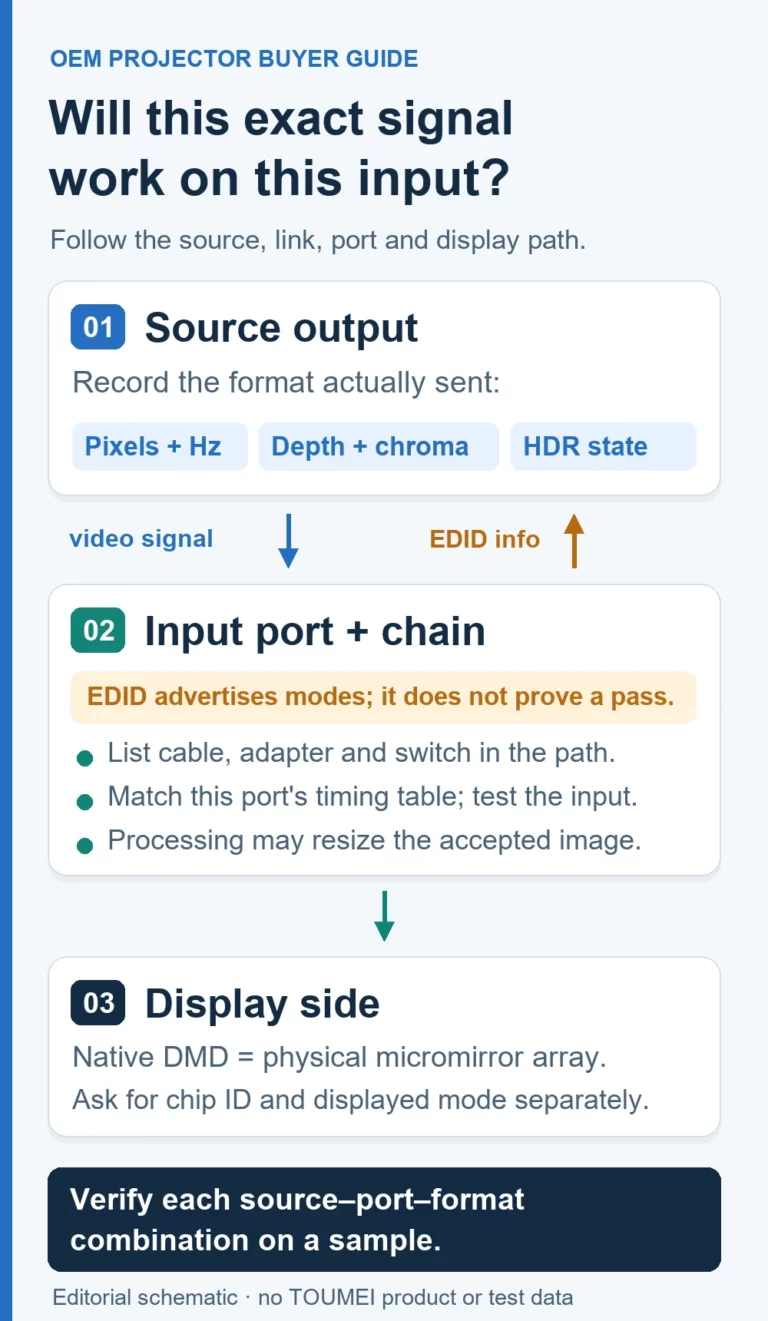
For private-label or OEM/ODM projector projects, ask the supplier which brightness standard is tested, how it is measured, and whether sample units can be verified before bulk orders.
FAQS: