The best projector brand for a consumer is not always the best manufacturing partner for a distributor or OEM buyer. When evaluating projector manufacturers in 2026, buyers should compare product range, DLP technology experience, customization support, supply stability, and after-sales response. This guide turns a brand list into a practical sourcing checklist for long-term cooperation.
The projector market in 2025 is bigger, more competitive, and more segmented than ever before. Whether you are building a home theater line, supplying schools and offices, or launching your own smart projector brand, choosing the right manufacturer matters more than any single specification. A good projector manufacturer directly determines long‑term reliability, product roadmap, and how smoothly you can scale your business.
If your goal is private label or long-term supply, the more important decision is choosing an OEM/ODM projector manufacturer that can support product planning, customization, and stable delivery.
This guide is written for importers, distributors, brand owners, and e‑commerce sellers who want to understand the leading projector brands of 2025 and how to choose a dependable projector manufacturer or OEM/ODM partner behind them. You will learn what makes a top projector manufacturer today, which brands lead in different market segments, and how a specialized DLP manufacturer like Toumei can support your own projector projects.
The projector market in 2025 is larger and more complex than ever. For immersive home theaters, critical business presentations or portable entertainment on the go, projectors are the key to a gigantic, smart and flexible viewing experience.
What Makes a Top Projector Manufacturer in 2025?
Before comparing brand names, it is more important to understand what separates a true projector manufacturer or OEM partner from a simple trading company or reseller. For B2B buyers, the following pillars are critical.
Imaging Technology & Product Roadmap
Top projector manufacturers invest heavily in R&D for core display technologies such as DLP, 3LCD, and advanced laser or LED light engines. They are able to provide a clear product roadmap for resolutions (Full HD, 4K, 4K‑enhanced), brightness ranges, and new features so that your product lineup can stay competitive over several years.
Buyers who focus on compact smart models should also review the supplier's DLP projector product range before comparing only global consumer brands.
When you evaluate a supplier, ask:
Which imaging technology do they specialize in (DLP, 3LCD, LCoS, etc.)?
Do they offer 4K or 4K‑compatible options for your higher‑end models?
How frequently do they update chipsets, optics, and smart OS platforms?
Smart System, Connectivity & Software Support
In 2025, a modern projector is a smart device, not just a simple light engine. Leading manufacturers integrate stable Android TV, WebOS‑style, or Linux‑based systems, with built‑in Wi‑Fi, Bluetooth, and casting functions that work reliably with phones, tablets, and laptops.
For OEM/ODM projects, you should focus on:
Whether the manufacturer can customize UI, pre‑installed apps, and languages
How they manage firmware updates and bug fixing over the product lifecycle
Compatibility with major streaming platforms and screen mirroring standards
Quality Control, Certification & Reliability
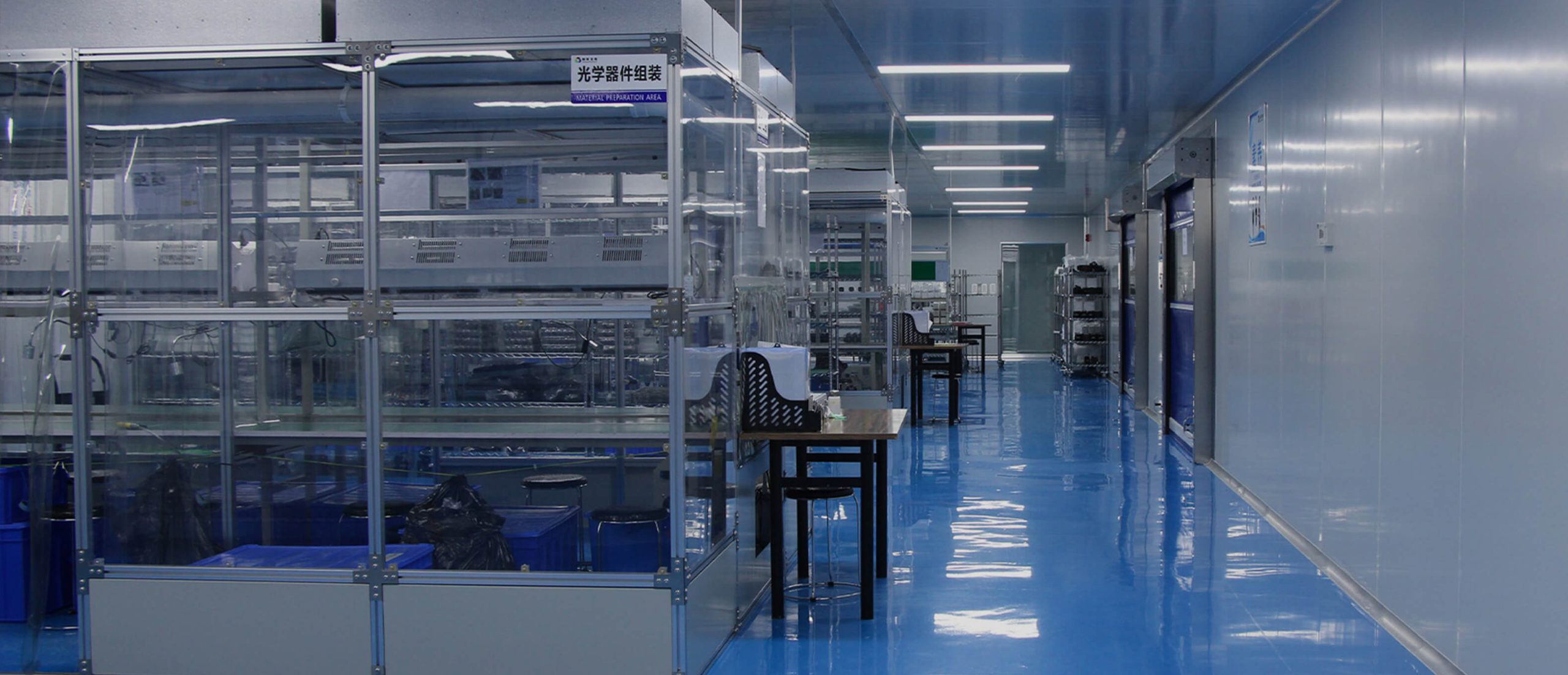
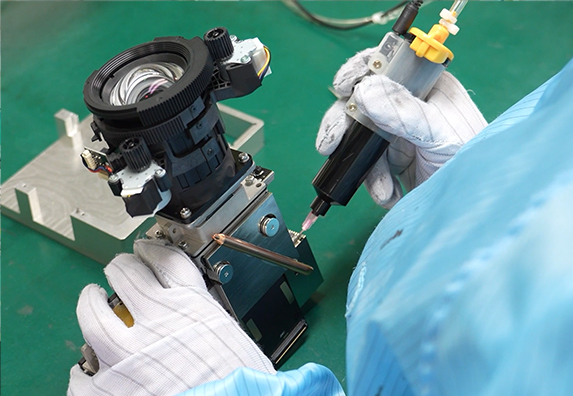
For brands and distributors, after‑sales issues are one of the biggest hidden costs. A real projector manufacturer will have clear quality control processes such as aging tests, drop tests, temperature and humidity tests, and detailed inspection reports.
Key points to verify:
RMA (return) rate in your target markets
Available certifications (CE, FCC, RoHS, CB, etc.) for each model
Warranty policy, spare parts availability, and repair or replacement procedures
Supply Capability, Customization & Global Support
Beyond technology and QC, a strong manufacturer also needs to support your business model. This includes flexible MOQ for new projects, stable lead times, and the ability to customize ID design, packaging, user interface, and even exclusive models for your brand.
For international buyers, it is important to confirm:
Monthly or annual production capacity for your target model
Experience shipping to your region and handling logistics documents
Availability of English‑speaking support for project planning and after‑sales
Top Projector Brands of 2025 by Use Case
Different brands and manufacturers lead in different segments. Below is a practical look at well‑known consumer brands, as well as manufacturing‑focused partners, so you can position your own product line correctly.
Epson – Strong in 3LCD for Business & Education
Best for: All‑around performance in bright rooms, education and business
Why: Epson is a dominant 3LCD brand with strong brightness and color performance, especially in classrooms and conference rooms with high ambient light. They offer a large portfolio from entry business models to high‑end installation projectors.
For B2B buyers: Epson is ideal for integrators and institutions that need branded equipment, but they are generally not an OEM/ODM partner for small or mid‑sized private label projects.
BenQ – Home Cinema & Gaming Specialists
Best for: Home theater and gaming performance
Why: BenQ is known for accurate color calibration and high‑quality 4K HDR projectors, with gaming‑oriented features such as low input lag and dedicated game modes.
For B2B buyers: Great choice for dealers who resell branded home cinema projectors, but not suitable as a flexible OEM manufacturer for new brands.
Optoma – Versatile DLP Portfolio
Best for: Good value across many segments
Why: Optoma offers a wide range of DLP projectors from portable to professional installation models, often with attractive pricing versus other big brands.
For B2B buyers: Strong for distribution of existing branded products; OEM/ODM collaboration opportunities are limited for smaller brands.
LG – Smart Home & Lifestyle Design
Best for: Smart home integration and stylish living room setups
Why: With WebOS and built‑in apps like Netflix and YouTube, LG projectors are highly integrated entertainment hubs, designed to blend into modern interiors.
For B2B buyers: Suitable for retailers focusing on lifestyle electronics, but not focused on white‑label or low‑MOQ custom projects.
Sony – High‑End Cinema & Professional
Best for: High‑end home cinema and professional installations
Why: Sony’s SXRD projectors deliver native 4K, deep contrast, and reference‑grade picture quality for dedicated cinema rooms and high‑end venues.
For B2B buyers: Ideal for premium integrators and custom installation firms; not realistic as an OEM manufacturer for new or smaller brands.
ViewSonic – Education & Corporate Workhorses
Best for: Education and business environments
Why: ViewSonic is known for durable, easy‑to‑use projectors that handle heavy daily usage in classrooms and offices.
For B2B buyers: A reliable choice for institutional tenders; however, like other major brands, they are not primarily structured as a flexible OEM/ODM partner for private labels.
Anker Nebula – Mobile & Outdoor Entertainment
Best for: Portable and outdoor use
Why: Anker’s Nebula line focuses on battery‑powered, compact smart projectors with built‑in speakers and Android TV, very popular for camping and backyard cinema.
For B2B buyers: A strong consumer brand reference if you want to build a similar product line, but they do not typically operate as a contract manufacturer for third‑party brands.
Toumei – DLP Projector Manufacturer in China for OEM/ODM Projects
While the brands above are powerful in retail channels, most of them do not support small or mid‑sized brands that need OEM/ODM services. For importers and brand owners who want their own projector line, working directly with a specialized Chinese projector manufacturer can be a more realistic and profitable path.
Who Is Toumei?
Toumei is a DLP projector manufacturer based in China, focused on the R&D and production of compact smart projectors for home, outdoor, and portable use. Instead of only selling finished consumer products, Toumei works with international partners as an OEM/ODM supplier, helping them build and customize their own projector brands.
Typical product categories include:
Portable DLP smart projectors for home and outdoor use
Compact office/education projectors for small rooms and meeting spaces
Customized models for e‑commerce brands, distributors, and retail chains
Why Toumei Fits OEM/ODM Buyers
For B2B buyers, Toumei’s strengths are aligned with OEM/ODM needs rather than pure retail branding.
Key advantages include:
Focus on DLP technology, providing bright, sharp images in a small form factor
Flexible MOQ options for new projects and pilot orders
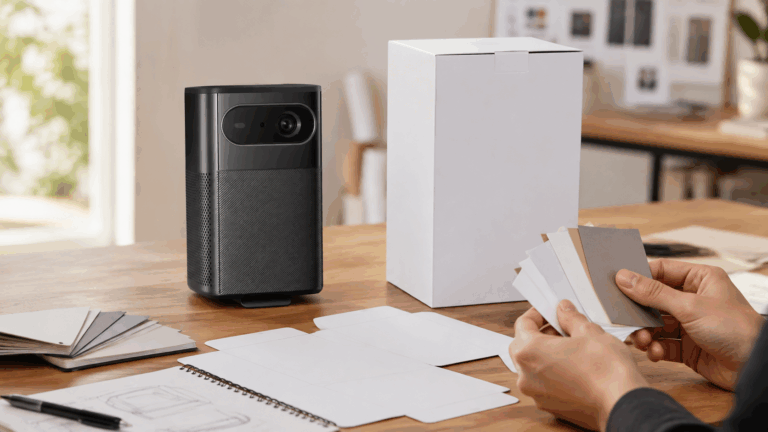
Support for ID design, housing color, packaging, and branding customization
Ability to modify software UI, add or remove apps, and localize languages for target markets
Experience cooperating with overseas clients and shipping to multiple regions
This combination makes Toumei a practical choice for Amazon sellers, online brands, importers, and distributors who want to develop their own portable smart projector series without building a factory from zero.
Typical OEM/ODM Cooperation Scenarios
Toumei can support different business models:
Importers and distributors launching a private‑label projector line in their local market
E‑commerce brands upgrading from generic projectors to customized designs with better quality and features
Companies seeking exclusive models for specific sales channels or campaigns
In each case, Toumei can provide sample testing, small‑batch trial orders, and then scale up once the product and market fit are validated.
How to Choose the Right Projector Brand or Manufacturer for Your Business
Use the following simple framework when deciding which brand or manufacturer to work with in 2025.
Clarify Your Business Model
If you are a retailer or system integrator:
Working with big international brands (Epson, BenQ, Sony, LG, ViewSonic) can give you strong brand recognition and stable product lines for resale.If you are building your own brand or private label:
You need an OEM/ODM projector manufacturer who can customize products under your brand name, such as Toumei and other specialized Chinese manufacturers.
Define Your Main Use Cases
| Use case | What to prioritize | Typical partner type |
|---|---|---|
| Home theater & gaming | 4K, HDR, contrast, low input lag | Branded: BenQ, Sony; OEM: DLP manufacturers in China |
| Education & corporate presentations | Brightness, reliability, simple connectivity | Branded: Epson, ViewSonic; OEM projectors for tenders |
| Portable & outdoor entertainment | Battery, size, built‑in OS, rugged design | Anker Nebula, Toumei, other DLP OEM partners |
| Entry‑level home & living room usage | Smart OS, design, price, ease of setup | LG, BenQ, and OEM portable smart projectors |
By mapping your main applications to the right partner type, you can avoid choosing a brand that is strong in retail but cannot support your OEM/ODM requirements.
Key Questions to Ask a Projector Manufacturer
When you talk with potential OEM/ODM suppliers, ask concrete questions such as:
What is your monthly capacity for this model, and what are the standard lead times?
What is the typical failure rate in the field and your RMA policy?
Can you support custom housing, branding, packaging, and software UI?
Which certifications do your products already have for my target markets?
Can you share reference projects or partners in similar regions?
A professional manufacturer will answer these clearly and provide supporting documents such as test reports and certificates.
Conclusion
In 2025, buying a projector is no longer just about lumens and resolution; for B2B buyers, it is about building a sustainable product line with the right manufacturing partner behind it. Big consumer brands like Epson, BenQ, LG, and Sony are excellent for distribution and integration projects, but they are rarely flexible OEM/ODM partners for new or smaller brands.
If you are planning to launch or upgrade your own projector brand, working with a dedicated projector manufacturer in China, such as Toumei, can give you more control over product design, cost structure, and long‑term differentiation in the market. By focusing on imaging technology, smart system stability, quality control, and practical business support, you can select a projector manufacturer that supports your growth for many years instead of just one product cycle.
To discuss model selection, customization options, or distributor cooperation, contact Toumei with your target market and product requirements.