Picture this. It's Friday evening. The living room lights dim. Your family settles in for movie night. The screen flickers to life. But instead of sharp details and deep hues that pull you right into the story, the image looks pale. Colors feel dull. Shadows lie flat. The whole scene starts to fade after just a few hours of use. What went wrong? Often, it's not the bulb's raw power. The real issue runs deeper. It's in the type of light source that drives your projector. Sure, brightness gets all the attention. But that light source? It shapes color punch, contrast edge, and the staying power of your pictures. In home setups these days, picking the right one turns a basic rig into a real theater feel.
This goes beyond just reading specs on a carton. Smart homes keep growing. Projectors sit at the heart of those deep dives now. Think endless series binges or easy game nights. Still, lots of folks miss how the light source touches every single frame. We'll pull from market shifts here. And we'll unpack it step by step. How do these parts hand over real-life looks? How do they hold up over time? By the close, you'll get why skipping past brightness counts big for anyone setting up a solid, gripping projection game.
The Foundations: What Powers Your Projector's Light
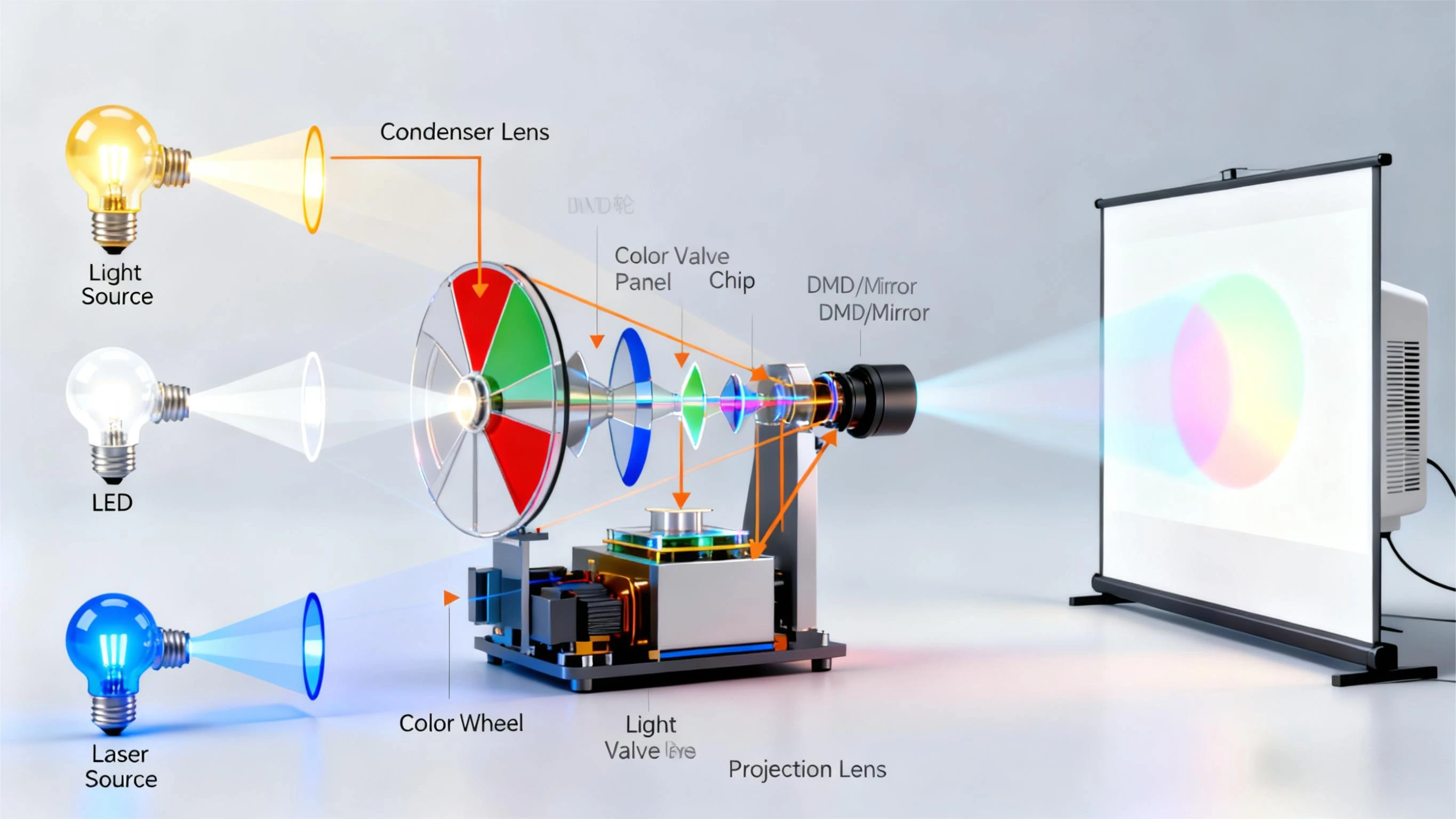
At its heart, a projector turns light into pictures. It does this through lenses and chips. But it all kicks off with the source. Old-school rigs leaned on high-pressure mercury lamps. Those kicked out strong beams. Yet they came with a price. Now, choices like LED and laser diodes have flipped the script. They bring balances in power use, evenness, and picture quality.
Key Types of Light Sources in Modern Projectors
To get the gaps, think about the big names. Each packs perks suited to home spots. There, steady wins over rare power blasts.
Light Source | Typical Lifespan | Brightness Stability | Heat Output | Best For |
UHP Lamp | 2,000–4,000 hours | Declines over time | High | Budget setups with infrequent use |
LED | 20,000–30,000 hours | Consistent throughout | Low | Everyday home theaters, energy-conscious homes |
Laser | 20,000–30,000 hours | Uniform from start to finish | Moderate | Bright rooms, long sessions without fade |
UHP lamps ruled early days. They delivered big lumens hits. But their quick burnout meant swaps every few months. Picture that during heavy streaming stretches. LEDs switched things up. They shine even. They sip power. And they run cool. That keeps things hush and safe in kid zones. Lasers push it more. They shoot tight beams. Those hold firm after tons of hours. Perfect for those all-weekend runs.
Across the market, this change keeps rolling. The whole projector world hit $18.48 billion in 2024. It eyes calm climbs through tweaks like these sources. For smart home projectors in particular, need jumps with a forecast yearly growth of 10.77%. That lifts the slice from $2.1 billion in 2023 to $3.9 billion by 2029. Folks at home aren't grabbing toys anymore. They're sinking cash into bits that stick around.
Color That Pops: The Light Source's Role in Reproduction
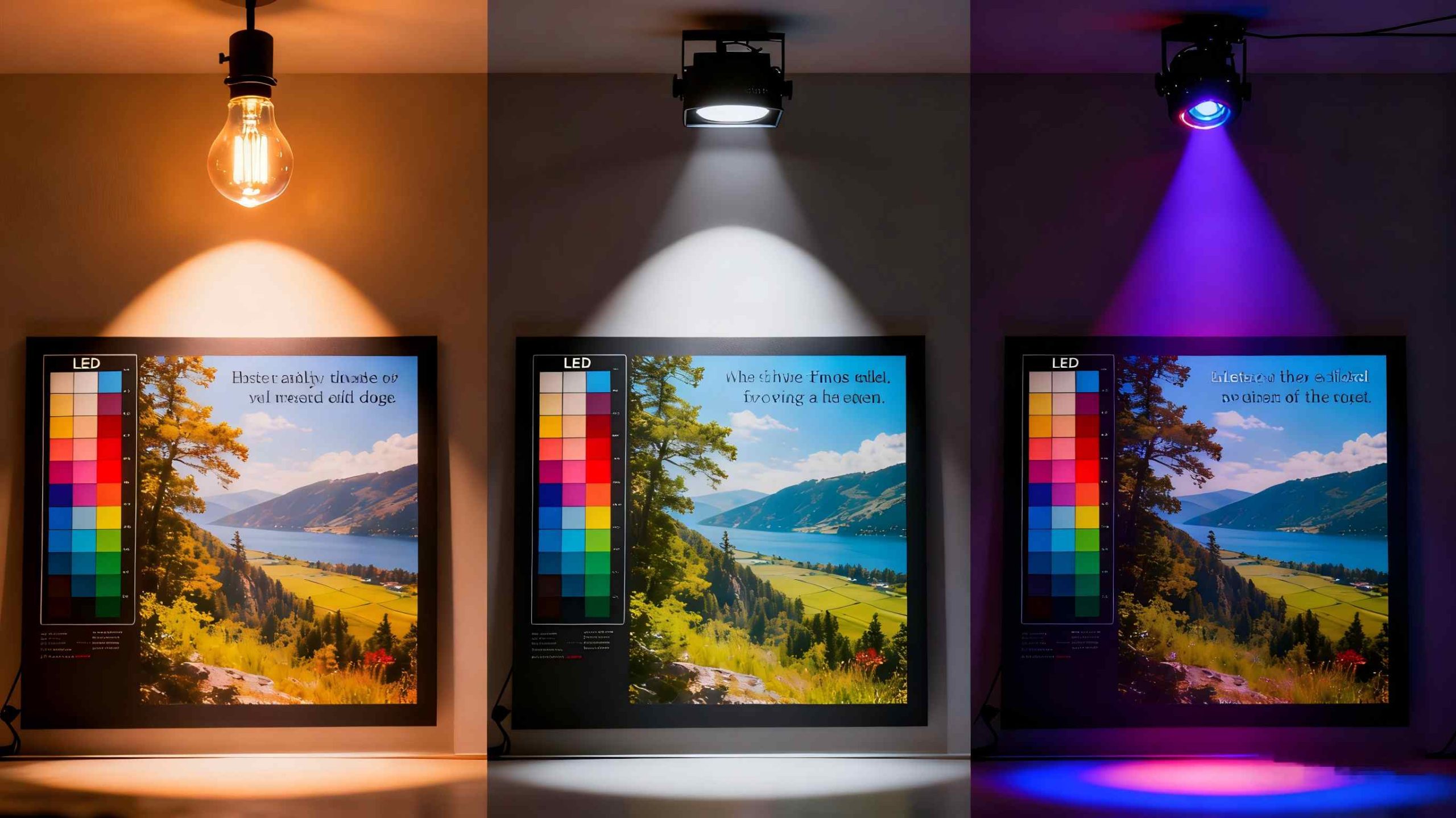
Ever caught a sunset bit on screen and sensed the oranges turn to a flat peach? That's a light source cutting corners on wave coverage. Color in projectors stems from how the source breaks light into red, green, and blue paths. Then it mixes them back for your eyes. A tight range spells bland shades. A full one adds layers.
LED sources stand tall here. They throw light over a broad spread. Often, they nail past 90% of the Rec.709 bar for HD stuff. Grab a wildlife flick. With LED, those forest greens come alive. They show real variety. Not just one flat olive tone. Lasers nudge past for clean lines. Their single-color blast lets for tighter grip. It pulls hues nearer to the original tape. Like that bright blue on a hero's getup. It stays spot-on, even in low-light cuts.
Lab runs prove it. In tight tests, laser rigs keep hue truth inside 5% off over 10,000 hours. Lamps wander by 15% in half the run. For clans flipping from kid shows to grown-up tales, this spells smooth shifts. No need for tweaks each time. And in lit spaces, where stray glow blurs it all, lasers slice clean. They save those fine face shades in a chat that turns to a flick pause.
It's straight science in action. Wider bands mean extra waves smack the display part. That hands fuller ranges. As stream spots drive 4K with bigger color zones, like DCI-P3, rigs on fresh sources match stride. They hand the zip that makers meant.
Depth in Every Shadow: Boosting Contrast Through Light Control
Contrast lifts a solid picture to a standout one. It's the spread from peak white to full black. That builds the fake depth on a plain wall. A soft source spills light. It turns blacks to ash. A firm one pins it down. It etches marks in the shade.
This spotlights where source picks turn smart. Lamps swamp the works with warmth and loose rays. They top contrast at about 1,000:1 for real. LEDs bump to 2,000:1 or more. Why? Their aimed throw keeps light boxed. Shadows stay deep. But lasers? They reset the word. Paired with moving iris gear, they strike 100,000:1 spreads. Night backdrops in space yarns gleam with exact stars on soft dark.
Think a chase in a nail-biter. Strong contrast from a laser lets you catch headlight flashes in full night. It ramps the thrill. Polls from users say rigs with these score 25% up in dive feel. In work nooks that double as watch spots, this bite helps all. From charts to chills, blacks won't run. Lines hold keen.
As time ticks, evenness locks it. Lamps dim spotty. That chews contrast as coat wears. New sources grip tight. Your five-year-old box runs fresh as launch. For wired homes with voice pulls and app steers, this ties with glow checks. It means auto shifts. Always hitting that sweet spot.
Built to Last: Extending Lifespan for Worry-Free Viewing
No one craves a projector that taps out mid-finale. Lifespan isn't plain clock ticks. It's how pictures weather without hue drifts or glow dips. A waning source doesn't just trim hours. It wears quality slow. It shifts clear 1080p to a foggy recall.
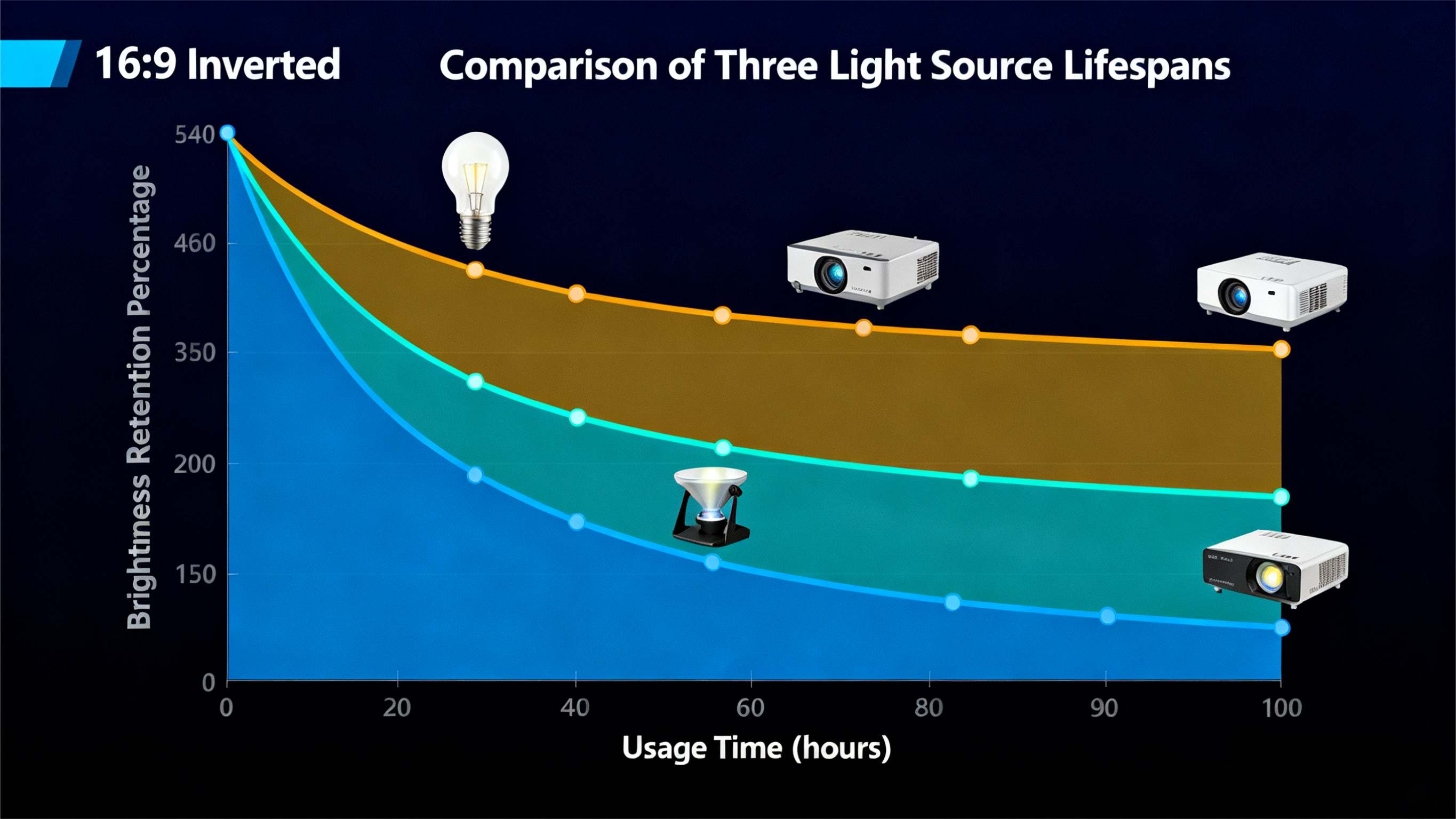
Step in the long-haul perk of LEDs and lasers. Lamps flame after 3,000 hours. These others reach 25,000. Often backed for 20 years of light runs. That's tenfold the plays before fixes. Crunch it: A home at five hours a week tags lamp swaps yearly. LED? Once every ten.
But the picture grit shines most. Lasers dodge “arc drop.” That's where punch halves over stretch. Users note flat runs. Hues hold 95% real past 15,000 hours. LEDs tag along. Their no-move build shakes off buzz from close sound gear. See it ceiling-hung in a kid cave. No more dust from bust bulbs. Just sure shine through lessons and laughs.
Market turns highlight it. With desk jobs mixing fun, tough sources trim bills. Lasers cut run costs 40% sans swaps. For green-leaning buyers, slim power pull—under 100W for LEDs—adds draw. It fits clean home waves.
Spotlight on Toumei Projector: Crafting Smart Home Projection Excellence
When it comes to reliable smart home projectors, Toumei Projector stands out as a dedicated supplier blending innovation with everyday practicality. With roots in precision manufacturing, the company specializes in DLP-based models that integrate seamlessly into connected ecosystems—think voice-activated setups syncing with your smart lights or streaming directly from apps. Toumei Projector's lineup emphasizes advanced light sources, like efficient LEDs and robust lasers, to deliver consistent color depth and contrast without the hassle of frequent upkeep. Whether through custom OEM solutions or ready-to-deploy units, they focus on high-resolution outputs that fit modern living rooms, backed by rigorous testing for longevity. Homeowners turn to Toumei Projector for projectors that don't just project—they enhance the flow of daily life, from quiet evenings to lively gatherings.
Wrapping It Up: Illuminate Your Choices Wisely
Diving into a projector's light source reveals layers beyond the lumens chase. From sparking vivid colors that draw you in, to forging contrasts that add drama, and securing lifespans that promise years of clear viewing, it's the quiet engine of quality. As markets expand—with smart home segments racing ahead at double-digit growth—opting for LED or laser tech positions you for hassle-free immersion. Next time you scan options, look past the glow. Focus on what sustains it. Your next big screen moment depends on it.