The future of the portable projector market is likely to be decided by useful portability, not by making every enclosure smaller at any cost. Buyers will expect a projector to balance image quality, setup speed, power use, heat, noise, software support, and honest scenario guidance. Products that solve one real viewing job should be more durable than devices built around a disconnected list of features.
This is a direction-based outlook, not a market-size forecast. For brands, distributors, and product teams, the practical value lies in identifying which forces can change the product brief, which risks can damage a category, and which signals should trigger the next investment.
Portable Projector Market Outlook: What Is Actually Changing?
Portable projection used to be defined mainly by size and transport. That definition is too narrow for the next product cycle. A projector may fit in a bag yet fail as a portable product if it needs a complicated setup, loses usability outside a dark bedroom, relies on unsupported software, or cannot maintain stable performance within its thermal limits.
The category is moving toward a whole-system question: how much useful screen experience can a device deliver within limits on size, power, heat, noise, and cost? The portable projector wholesale guide for B2B buyers provides a commercial starting point for separating entry, mid-range, premium, and custom programs. The future will not erase those bands; it will raise the minimum experience buyers expect within each one.
Six Forces Shaping the Future of Portable Projectors
Smaller Optical Systems With Better Power Discipline
High optical efficiency has already enabled smaller, lower-power, higher-resolution pico-projection systems. The next useful step is not simply another reduction in dimensions. Engineers still have to allocate space and power to the light source, optics, processing, cooling, speakers, wireless functions, and battery where included.
That makes system balance a competitive skill. A slightly larger portable projector may deliver a better experience if the enclosure supports quieter cooling, stronger speakers, or more stable brightness. Portability should be measured by how easily the complete setup moves and works, not by the smallest edge length on a product page.
Brighter Images Without Ignoring Heat and Noise
Optical design can improve efficiency under small-size and low-power constraints, but brightness is never isolated. More light can change power draw, thermal load, fan behavior, color decisions, battery runtime, and enclosure requirements. A future-ready product brief must set the viewing environment and image size before selecting a headline lumen target.
The winning question is likely to become “How clear is the image in the intended scenario, at an acceptable noise and power level?” Brands that communicate those conditions honestly can reduce disappointment and returns. Brands that advertise one maximum value while hiding the operating mode will make the market harder for everyone.
Faster Setup and More Useful Automation
Auto focus, keystone correction, obstacle handling, screen alignment, and quick resume can make a portable projector feel dramatically easier to use. Their future value will depend on reliability, not the number of automation labels on the box.
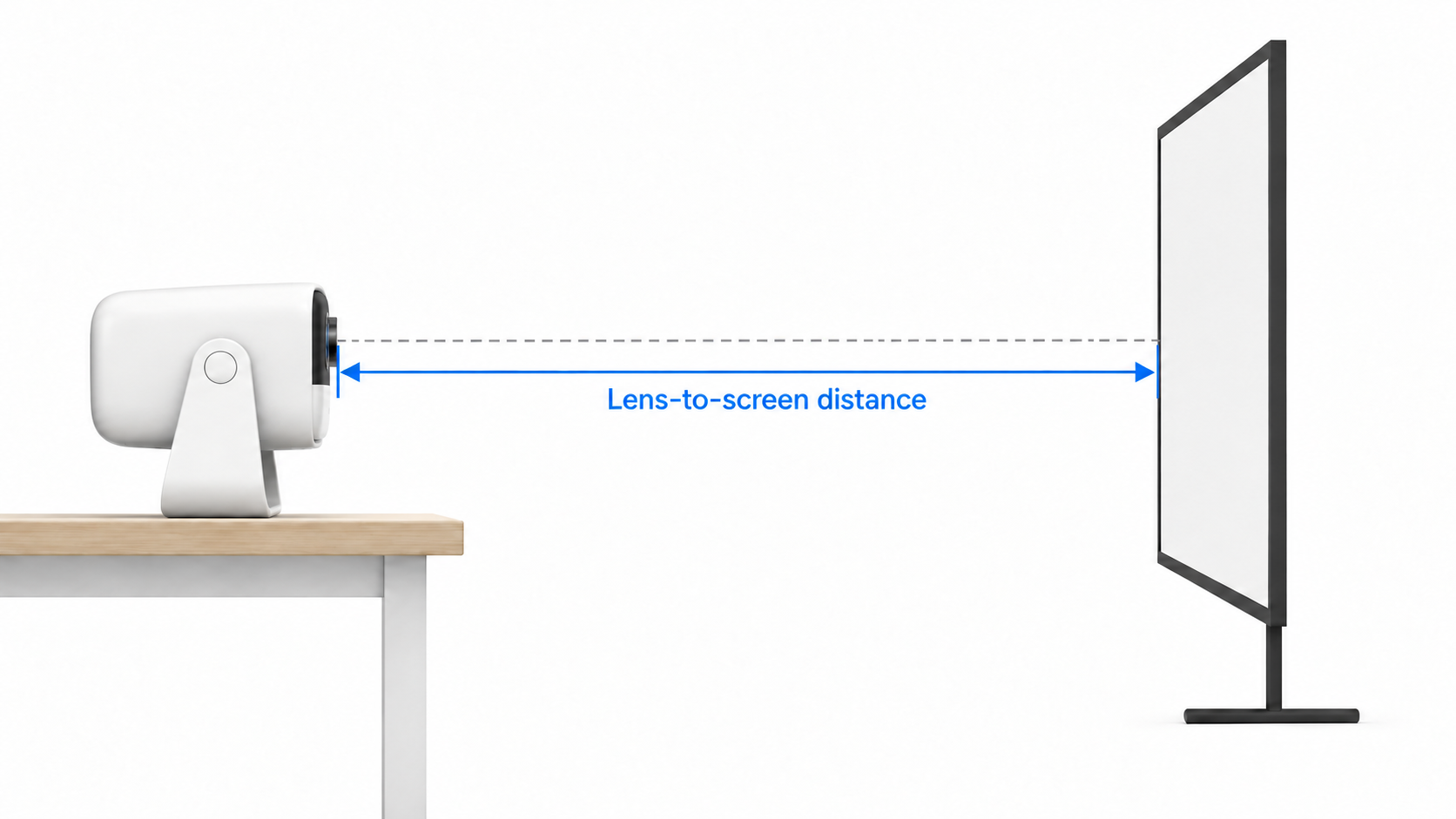
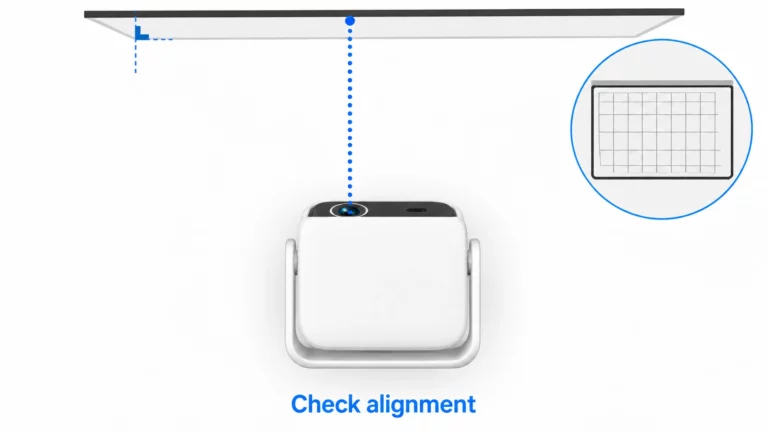
Automation should be tested after moving the projector, at an angle, on different wall or screen surfaces, and after the device warms up. It should also allow manual correction when the algorithm chooses badly. Buyers will reward setup functions that remove friction; they will quickly notice functions that create a new correction loop.
Connected Software That Must Remain Supportable
Smart systems can reduce the need for an external streaming device and make a projector more self-contained. They also add long-term responsibilities: app compatibility, account behavior, updates, region settings, storage, permissions, wireless stability, and clear fallback connections.
The future smart portable projector should not be judged only on the software shown at launch. Product teams need to ask which functions must keep working, who provides updates, how a user connects an external source if an app changes, and whether the hardware has enough headroom for the intended support period.
Scenario-Specific Portable Projector Designs
One generic mini projector cannot serve every portable scenario equally well. A camping-oriented product may prioritize battery strategy, rugged transport, simple controls, and outdoor accessories. A bedroom projector may emphasize quiet operation, ceiling-friendly placement, and fast night-time setup. A mobile training projector may need readable text, dependable wired input, and repeatable deployment.
Product planning should begin with one of these jobs, then choose brightness, resolution, throw behavior, interfaces, sound, power, and software accordingly. The guide to where portable projectors can be sold also shows why channel and product position must be planned together. Retail, marketplaces, direct websites, and B2B projects require different proof, content, and support.
OEM/ODM Ecosystems That Shorten Product Iteration
The portable projector is a system assembled from optical modules, electronics, software, enclosure design, power components, and production processes. A functioning supplier and ODM ecosystem can simplify design work and help product developers move more quickly.
Speed, however, should mean fewer blind steps, not fewer checks. A mature platform can reduce reinvention, while a controlled OEM/ODM program can focus engineering on the differences users will notice. Every deeper change still needs a requirement, an owner, a sample, and a verification plan.
Three Scenarios for the Next Portable Projector Product Cycle
These scenarios are planning tools. They are not assigned probabilities, and more than one may appear in different price bands at the same time.
Base Case: Better Balance Becomes the Main Upgrade
In the base case, brands improve optical efficiency, setup behavior, software stability, acoustics, and power management without radically changing the category. Buyers compare total experience rather than one specification, and product pages become clearer about room light, screen size, power mode, and recommended use.
The signal for this case is incremental but consistent improvement across several functions. Product teams should prioritize stable platforms, remove recurring support problems, and make each SKU's job easier to understand.
Upside Case: Portable Projection Expands Into New Service Models
In an upside case, easier setup and stronger scenario design allow portable projectors to move beyond occasional home entertainment. Hospitality, mobile education, events, travel services, and bundled outdoor experiences could create repeatable programs rather than one-off device sales.
The signal is not social attention alone. Look for repeat orders, accessory attachment, lower setup support, and customers who use the projector frequently in a defined workflow. That evidence can justify deeper industrial design, software, or bundle development.
Constrained Case: Trust and Support Costs Hold the Category Back
In a constrained case, unclear brightness language, weak software support, noisy thermal behavior, and nearly identical products increase returns and price pressure. Consumers struggle to distinguish useful differences, while distributors face higher support costs and shorter product lives.
The response is discipline: reduce unsupported claims, narrow the SKU range, improve manuals and fallback connections, and validate the projector in the setting promised by the listing. A category does not need more features if buyers cannot trust the existing ones.
What Future Portable Projector Buyers Will Expect
Future buyers are likely to ask practical questions earlier:
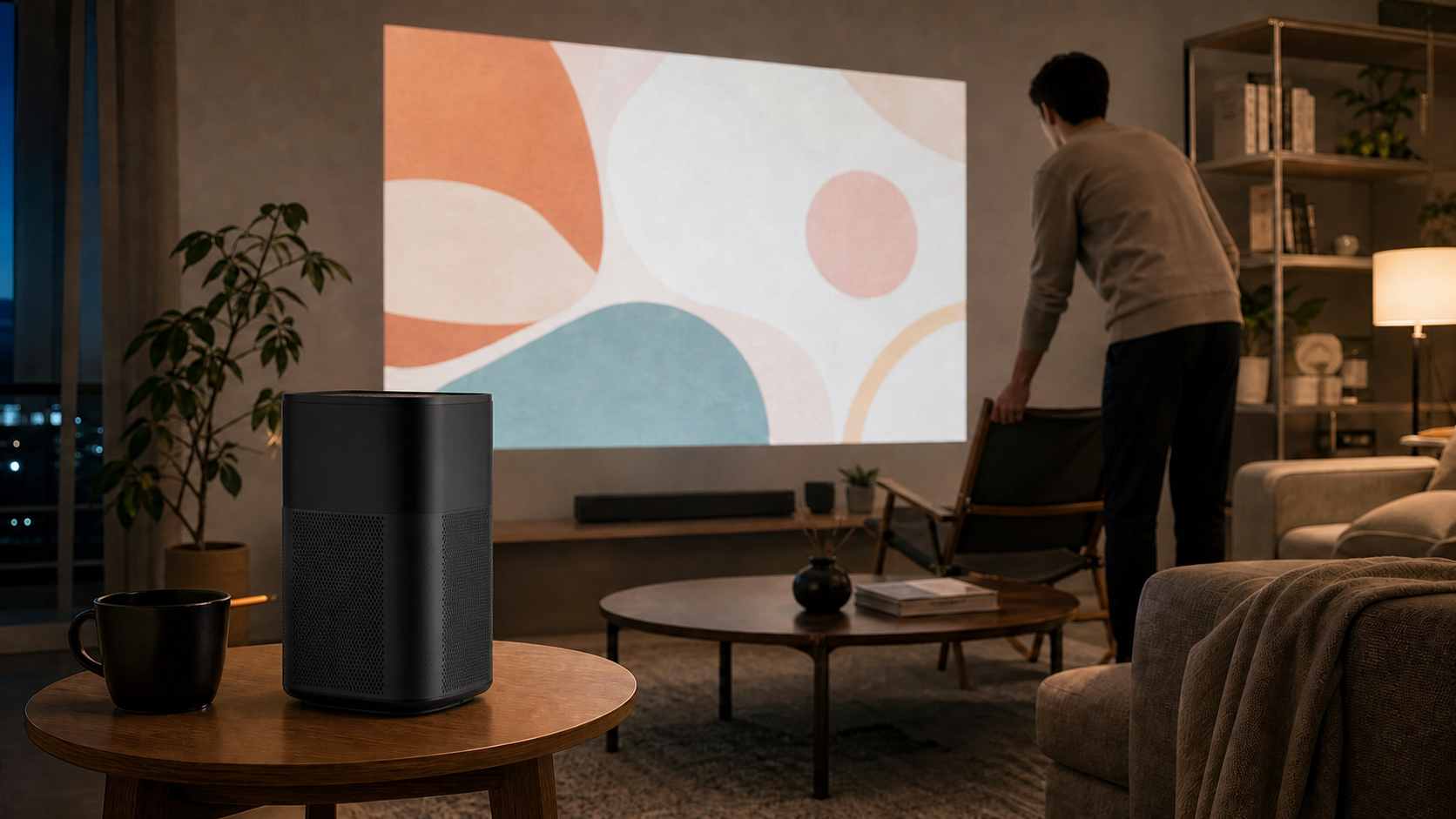
- What room light and screen size suit this projector?
- Does the device remain usable at the noise and power mode I will select?
- How quickly can I set it up after moving it?
- Which wired and wireless fallback connections are available?
- What happens if a smart app or service changes?
- Is the battery, if present, replaceable or serviceable under the product policy?
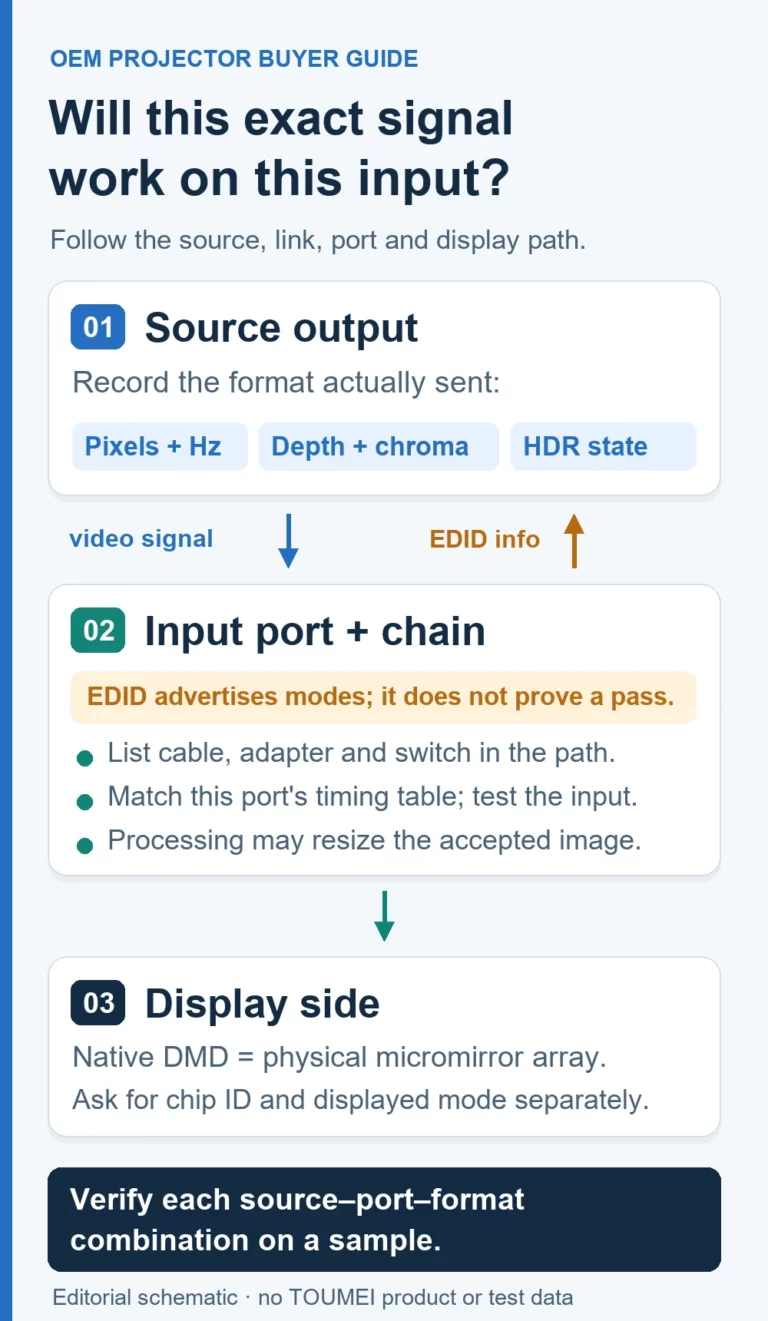
- Can I understand native resolution, input support, and brightness without decoding marketing terms?
- Is the accessory bundle designed for the stated portable scenario?
Brands that answer these questions before purchase can compete on confidence. Brands that leave them to reviews will compete mainly on price and damage control.
Risks That Could Slow Portable Projector Market Growth
The category has several correctable risks.
Specification distrust: inconsistent brightness or resolution language makes product comparison unreliable. Clear definitions and sample-based evidence are the remedy.
Software aging: a smart interface can become a liability when apps, security requirements, or regional services change. Maintainable software and external-input fallbacks reduce the risk.
Thermal and acoustic shortcuts: compact enclosures can expose trade-offs after extended viewing. Validation must include warm operation, not only a brief demonstration.
Feature sameness: if many projectors use similar platforms, undirected feature additions produce weak differentiation. Scenario, service, design, and support can matter more than another checkbox.
Channel mismatch: a product that works in a direct-to-consumer listing may not meet the documentation, consistency, service, or bundle needs of a distributor or project buyer.
Inventory-led roadmaps: adding SKUs before demand is understood can lock cash into products with unclear roles. Product lines should grow from evidence, not from catalog pressure.
About Toumei Projector
DLP Smart Projector Focus and B2B Positioning
Toumei Projector is based in Shenzhen. Company materials state that the business was established in 2013, integrates production, sales, and research, and focuses on DLP smart projection and related solutions. Its current public service page positions the company as an OEM/ODM manufacturer serving brands, distributors, importers, and wholesalers.
That B2B focus is relevant to the future portable projector market because product development is not finished when a sample turns on. A commercial line also needs positioning, repeatable production, market adaptation, documentation, and a support path.
Portable, Outdoor and Home-Entertainment Product Directions
The current service information presents portable, outdoor, and home-entertainment projector directions for OEM/ODM discussion. These are useful starting points because they organize the product around a viewing job rather than around one isolated specification.
A brand can use those directions to decide whether its first priority is small-room entertainment, outdoor movement, or a broader home experience. The next step is to customize the smart projector around the target market, including the room, channel, price position, interfaces, software, and physical design.
OEM/ODM Development From Optics to Software
Toumei's company materials describe OEM/ODM work spanning optical design, software development, mainboard hardware, structural design, mold development, production assembly, and aging tests. The current projector OEM/ODM service page also frames the service for global B2B buyers and multiple application fields.
For a future-ready project, buyers should not activate every layer at once. A mature base platform can be validated first. Packaging, language, interface presentation, and accessories may form the initial market adaptation. Deeper hardware, enclosure, or software work should follow a validated customer need and a new approval cycle.
Quality Control and Product Feedback Support
The materials describe quality inspection and control across production links. They also assign product development, software design, quality control, after-sales work, and technical issue support to the R&D team.
This creates the possibility of a useful feedback loop, but each buyer should define it for the project. Agree on the approved sample and software build, inspection points, fault categories, change approval, and the information needed to investigate a field problem. The future of a projector line depends on what the team learns after shipment as much as on what it specifies before launch.
A practical pilot can keep the feedback structure simple. Record the room and screen, connection method, software version, operating mode, setup difficulty, repeated fault, and corrective action. Review those fields before adding a feature or opening another SKU. This helps the buyer and the manufacturer distinguish a product problem from a listing, accessory, setup, or support problem, while keeping the next revision tied to observable projector use.
Planning a Future-Ready Portable Projector Line
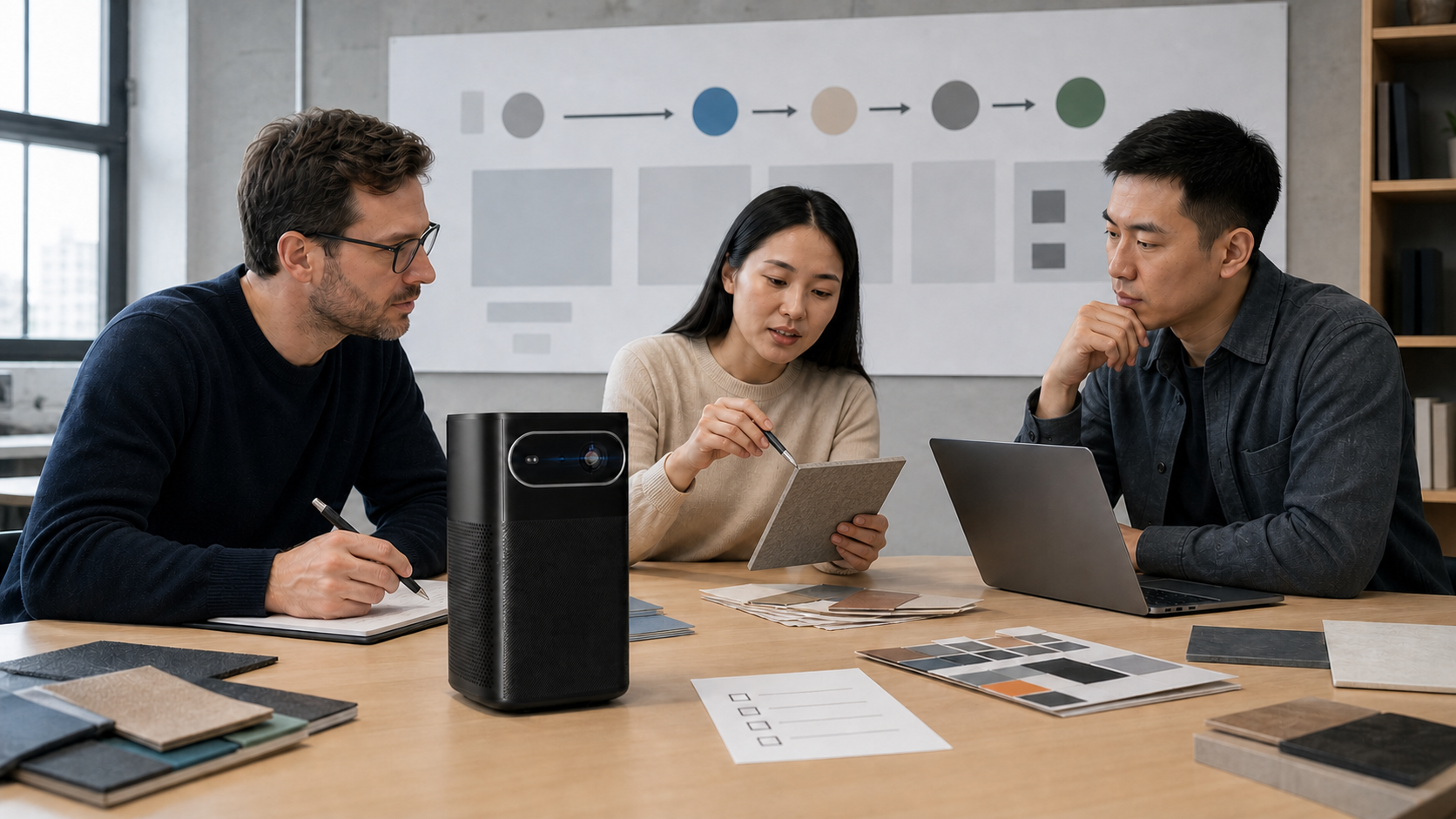
Use a staged roadmap so investment follows evidence.
- Choose one job: define the room, user, image size, light level, connection path, portability need, and channel.
- Set system limits: decide acceptable size, power source, noise, setup time, software role, and target cost before maximizing specifications.
- Evaluate a mature platform: test image behavior, heat, fan operation, controls, wireless and wired inputs, sound, and software in the real scenario.
- Freeze a controlled pilot: approve the physical sample, software build, packaging, accessories, manuals, and claim language.
- Measure the field: track setup questions, returns, repeated faults, app problems, use frequency, and channel feedback by cause.
- Choose the next investment: improve support, firmware, accessories, enclosure, optics, or product range only when the evidence identifies the constraint.
This route does not depend on guessing one winning future. It creates a product organization that can react when the signals become clear.