Introduction
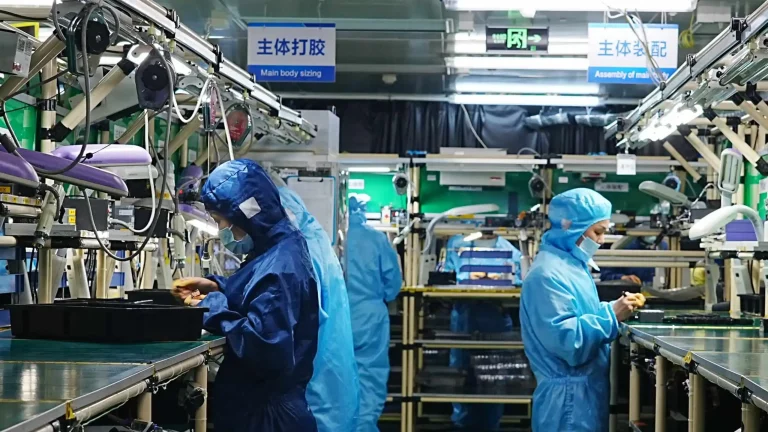
Folks who spend time around projection gear know that stepping inside a modern projector factory in Shenzhen, especially one focused on DLP technology, shows a tightly run mix of high-precision work and high-volume throughput that really separates these operations. Shenzhen DLP manufacturers stand out because they handle Texas Instruments micromirror systems with tight control, back everything with thorough quality routines, and keep pushing forward on new capabilities. The lines move everything from careful DMD chip seating to extended burn-in runs, turning out units that deliver solid contrast, clean resolution, and dependable behavior under real load. Distributors and spec developers keep coming back to this kind of openness when sizing up suppliers, pulled in by the tight-knit parts networks and experienced crews that keep output steady. Sites here regularly push past 20,000 units a month, running on automated stations and layered checks at every turn. That setup feeds steady progress in optical tuning and heat handling, opening the door to models with quick laser focus and longer run times on battery. The whole flow strikes a practical balance between pace and standards, which draws in companies hunting for steady collaborators in a fast-moving projection space. The sections that follow lay out the main stages, point out the real drivers behind the edge, and give straightforward ways to size these places up.
Understanding User Needs and Search Intent in Exploring Shenzhen DLP Factories
Teams that dig into Shenzhen DLP factories usually chase clear pictures of the steps that directly touch reliability and the room for custom tweaks. Importers want proof that standards stay even across big runs, while developers zero in on how fresh ideas turn into standout elements like Android support or stereoscopic playback. Queries often grow out of the need to double-check brightness claims or failure numbers, particularly after running into units that fade or shift color too soon. A distributor might run searches on the DLP projector manufacturing process to get a handle on DMD placement details, looking to confirm certified parts and narrow tolerances are in play. That drive comes straight from sourcing headaches—steering clear of gear that runs hot or drifts after limited hours.
Engineers and buying groups researching modern projector factory flows want more than quick walkthroughs; they look for specifics on heat paths and end-of-line stress tests that shape durability. In the field, a label gearing up for a tailored series often weighs whether a site’s development side can adjust throw distances or focus methods without throwing off yields. Experience from past deals shows skipping those checks bumps return numbers, especially on portable types that see dust, bumps, and temperature swings. Shenzhen lines counter that with uniform workflows and controlled environments that hold performance steady in units rated at 1600 ANSI lumens or full HD resolution.
Curious technical buyers or sourcing leads poke around to figure out the real reasons these factories pull ahead, driven by the need to stack them against setups elsewhere. They balance clean-room levels for optical work against burn-in lengths that mimic heavy field use. Getting a grip on those demands turns broad interest into sharp comparisons of capacity and engineering depth.
The Shenzhen Advantage: Why DLP Manufacturers Here Lead in Quality and Innovation
The edge Shenzhen holds in DLP production comes from the thick cluster of suppliers and engineering hands right there, which cuts cycle times and lifts the floor on accuracy. Close access to components lets teams iterate fast on light paths and cooling setups that keep units stable over long sessions. Plenty of operations carry stacks of patents centered on modulation tweaks and firmware reliability, giving them room to stretch features like full-scene motion smoothing or time-of-flight alignment.
Quality builds on consistent rules applied end to end. Tight air monitoring in build zones blocks dust from settling on DMD faces, while robotic placement keeps chip seating uniform. Heat control stands as a standout strength—specially shaped sinks and guided airflow hold parts in safe bands during heavy draws, cutting breakdowns in brighter models. That discipline drives defect counts down, frequently sitting under one percent, thanks to checks stacked at multiple points.
Fresh thinking comes from focused R&D crews that dig into optical layouts, code stability, and frame mechanics. Those groups test laser paths for extended run times and better power use, lining up with calls for brighter, quieter boxes. The mix of volume and know-how lets facilities shift quickly on emerging patterns, folding in newer OS builds for app access or beefed-up audio for richer soundstages.
Practical scale adds another layer—sprawling plants with robotic assist handle large lots without loosening grip on tolerances, perfect for labels moving from small trials to thousands. Official stamps back up the dependability, showing alignment with global benchmarks. All these pieces together shape a production setting that reliably hits technical targets.
Infrastructure plays its part too, with wide footprints—38,000 square meters in leading cases—housing exact gear for big runs. That size avoids choke points, a common snag in smaller setups. Export figures from the sector show steady climbs year over year, tied to adjustable specs that fit different climates and uses, from humid outdoor spots needing rugged builds to tight indoor spaces favoring short-throw optics.
Step-by-Step Walkthrough: Inside a Modern Shenzhen DLP Projector Factory
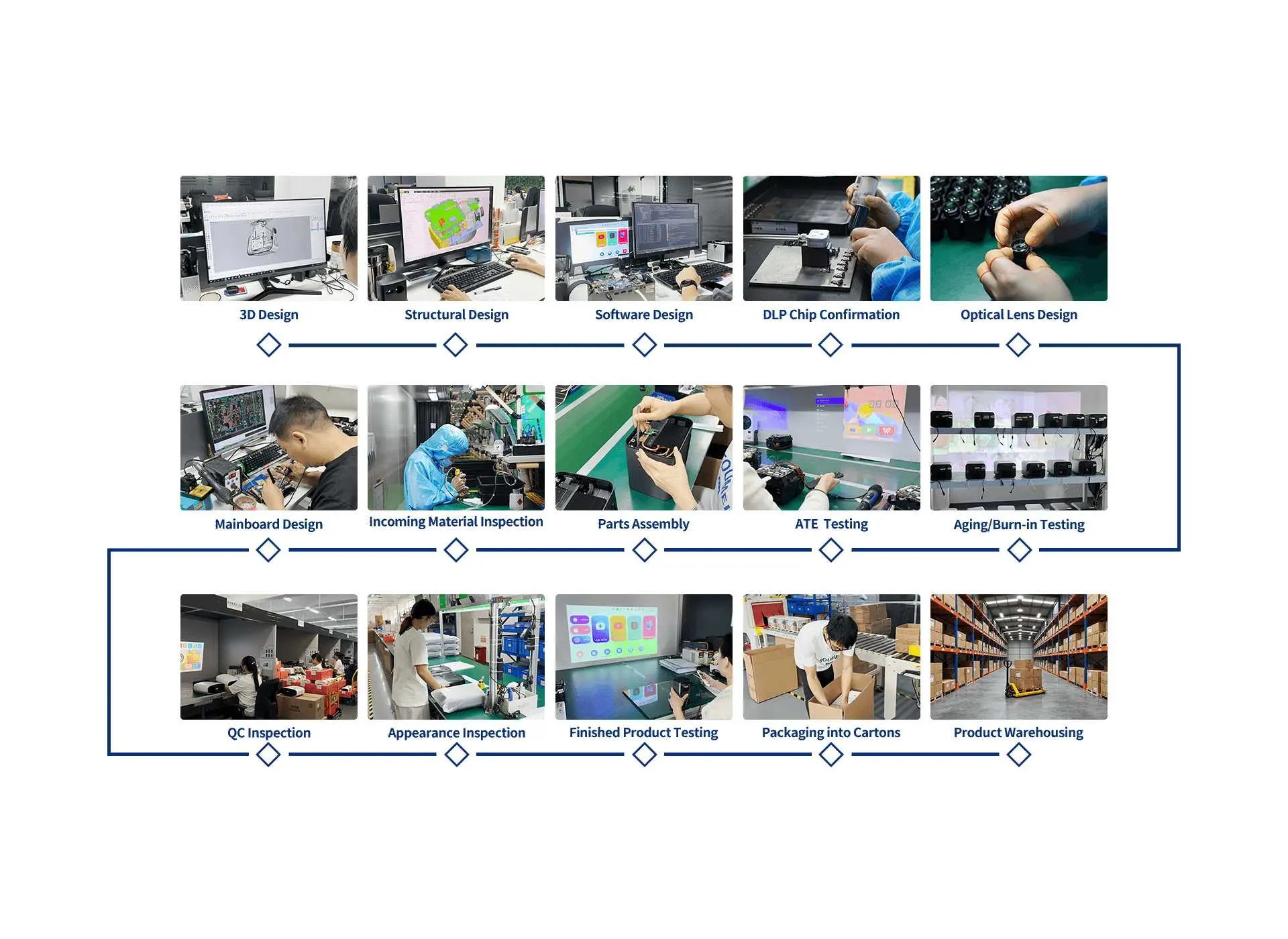
Production kicks off in the research and design phase, where crews sketch optical routes and structural frames. Engineers fine-tune DMD positioning for peak light use, pulling from protected designs to lift contrast and hue accuracy. Early mockups run through thermal modeling to forecast heat spread, laying groundwork for steady behavior in shipped units.
Parts intake and board population come next, with surface-mount stations loading circuits at high pace. Automated arms place chips and passives with tight precision, keeping joint flaws to a minimum. Boards then hit basic function checks, running voltage sweeps to catch wiring issues before moving upstream.
The DLP core build stands as a pivotal step. Staff seat the DMD—typically a 0.45-inch or 0.47-inch type—onto the light engine, dialing in alignment to dodge pixel shift. Controlled clean zones shield the mirrors from contaminants, while calibration rigs tweak mirror angles for uniform focus across the field. That phase directly shapes image crispness, since small offsets can introduce visible noise.
Integration continues down the line, joining lenses, illumination, and cooling assemblies to the core. Connections get made for harnesses and fans or heat pipes built for effective exhaust. Tuning bays adjust angle correction and focus drives, frequently using beam or sensor methods for fast, precise results.
Testing takes over the next block. Devices cycle through light and contrast reads in calibrated rooms, confirming ANSI lumen figures—600 or 1600—across grid patterns. Color fidelity gets measured against reference charts, and sound channels run playback sweeps for balance. Aging rooms push units through simulated weeks of nonstop work, surfacing weak spots in heat flow or power delivery.
Final inspection closes the loop. Each piece goes through complete checks, covering surface looks and full operation for code steadiness. Packing happens in sealed areas to avoid transit marks. The entire chain reflects the close attention that marks these lines.
Data trails follow every unit, letting teams trace back to batches or vendors. In one instance, a plant caught a repeating solder pattern through records, pinned it to a material shift, and tightened incoming specs—heading off wider issues down the road.
Quality and Innovation Factors That Set Shenzhen DLP Factories Apart
Quality routines rest on stacked verification that spots drifts at multiple points. Incoming stock faces sampling for size and finish, while running checks watch solder quality and seating. End stations deploy automated vision scans for flaws the eye misses. That coverage keeps field returns down and builds trust for repeat business.
Innovation shows up in smart thermal approaches. Heat pulled from the DMD and source gets routed through tailored sinks and directed channels, holding stable temps even in slim portable frames. Teams test materials that move heat faster without bulking up, stretching life in battery-driven models.
R&D spending fuels advances in software-hardware pairing. Crews craft firmware for clean OS upgrades and motion processing, smoothing fast video without stutter. Protected designs cover light control and focus tweaks, carving out advantages in tight spec races.
Capacity keeps quality even at scale. Robotic help on routine jobs cuts variation, while skilled hands manage fine work. The outcome is output that hits narrow specs across big volumes.
These pieces work together to ship gear that holds up across different settings, from conference tables to backyard screens.
Best Practices for Evaluating and Partnering with Shenzhen DLP Manufacturers
Kick evaluations off with thorough site walks—ask for remote or direct views to see air control levels and test setups. Probe burn-in lengths and tracking methods to judge durability under load.
Pull paperwork on stamps and patent lists right away. Trace DMD origins through numbers to verify real parts. Run samples in actual conditions—checking true lumens and heat behavior—to match promises against results.
Hammer out clear terms around quality gates and concept safeguards. Build in provisions for regular reviews and code maintenance to keep performance sharp over time. Set up steady lines for fast issue fixes.
Watch early deliveries closely, recording run data to catch trends. That forward step cuts exposure and solidifies working ties.
One sourcing group that rolled phased trials and heat stress runs sidestepped a lot with drifting focus, saving expense and keeping end-user confidence intact.
Introducing a Leading Example: Shenzhen Toumei Technology Co., Ltd.
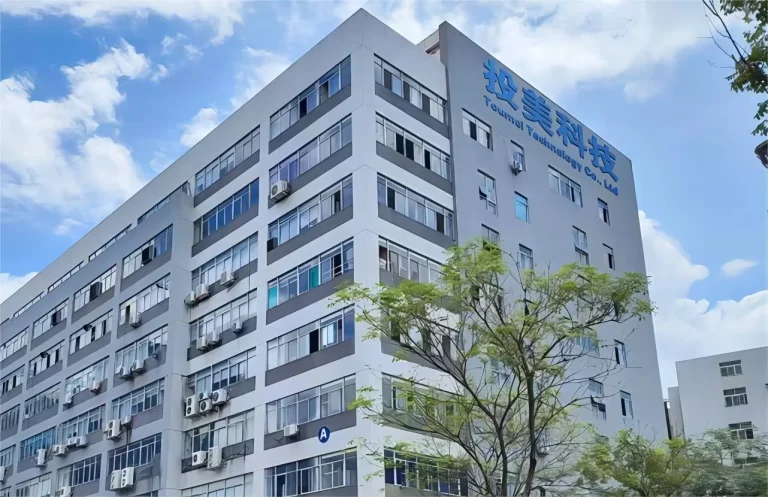
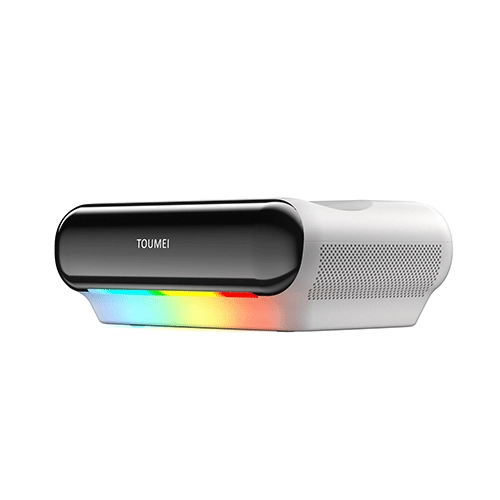
Shenzhen Toumei Technology Co., Ltd. runs as a high-tech operation launched in 2013 in Shenzhen, China, combining research, output, and distribution with a core in DLP intelligent projection and 3D imaging answers. The site backs monthly runs over 20,000 units via established assembly paths and dedicated machinery. Holding more than 50 patents, the outfit secured National Quality System Certification in 2025. The development team spans optical layout, code work, and build engineering, while full-stage checks lock in high marks. Units carrying 1600 ANSI lumens, Android 13 support, and TOF focus have earned strong placement, including top-seller ranks on key platforms. OEM services cover tailored builds for varied fields, showing steady standards and forward technical reach.
Conclusion
Shenzhen DLP manufacturers carve out their position through careful workflows, strong quality frameworks, and continuous technical pushes that produce dependable, capable projectors. Operations that put precision into build and validation stand ready as solid allies for companies chasing consistent performance in projection gear.