If you scroll through Amazon’s projector category in 2026, you will notice a clear shift: more and more serious sellers are moving away from basic LCD projectors and adding DLP models to their lineup. At first glance, both technologies can deliver a big screen and HD picture, but for Amazon brands that care about reviews, returns and long‑term profits, the differences are becoming more important than ever.
This guide is written from the perspective of a projector factory that serves Amazon sellers, not just from a tech reviewer’s point of view. We will walk you through why so many sellers are switching from LCD to DLP, when LCD still makes sense, and how to plan a smooth transition for your own Amazon business.
LCD vs DLP in simple words
Before looking at Amazon strategy, it helps to understand what is really different between LCD and DLP projectors in everyday language.
LCD projectors use three small LCD panels to let light pass through and create the image. This design is very efficient at pushing a lot of light, which is why LCD models often look brighter at the same price point. However, the pixel structure can be more visible and the black levels tend to look a bit gray.
DLP projectors use a chip with thousands of tiny mirrors (DMD) that reflect light to form the picture. Because these mirrors switch extremely fast and the pixel gaps are very small, DLP images usually look sharper, with higher contrast and smoother motion.
You can think of LCD as the “bright, affordable” choice and DLP as the “sharp, cinema‑style” choice. Both have their place, but Amazon sellers are starting to see that image quality and perceived premium value are critical for long‑term success.
Quick comparison table
| Aspect | LCD projectors | DLP projectors |
|---|
| Aspect | LCD projectors | DLP projectors |
|---|---|---|
| Image sharpness | Can show visible pixel grid or “screen‑door effect” at close distance | Very sharp edges with high pixel fill rate, less screen‑door effect |
| Contrast & blacks | Blacks often look gray, lower native contrast | Deeper blacks and higher perceived contrast, more “cinema‑like” image |
| Brightness | Often higher lumen output at similar price | More efficient in dark rooms, good perceived brightness with deep contrast |
| Colors over time | Possible color shift or panel degradation after long use | Stable color and image quality for years thanks to sealed DMD chip |
| Size & portability | Usually larger chassis for the same performance | More compact and lightweight, ideal for portable and mini designs |
| Maintenance | May need filter cleaning, more sensitive to dust | Sealed imaging chip, low maintenance, less dust issues |
| Price positioning | Lower bill of materials and retail price | Higher cost, but easier to position as premium on Amazon |
Why many Amazon sellers are hitting the limits of LCD
For years, low‑cost LCD projectors have been the easiest way to enter the projector category on Amazon. Factories and trading companies offered many similar models, sellers could quickly private‑label them, and aggressive pricing often brought fast sales. But as the category has matured, the weaknesses of this approach are becoming more obvious.
More negative reviews on image quality
If you read through review sections of typical low‑priced LCD projectors, you will see recurring complaints.
“Black scenes look washed out.”
“Text is not very sharp.”
“Colors don’t look as rich as in the photos.”
“The picture was fine at first, but after a year it seems dimmer.”
These are not just individual user preferences; they are direct consequences of how LCD technology handles contrast, pixel structure and long‑term stability.
A race to the bottom on price
Because so many sellers use similar LCD hardware, listings quickly become hard to differentiate. The easiest way to get more clicks is to cut the price a little further, but this puts pressure on profit margins, advertising budgets and after‑sales service.
When your entire positioning is “cheap projector,” it is very hard to raise your price later without losing the Buy Box or search ranking. At some point, many brands realize they need a way to move up in price and perceived quality.
Limited room for true brand building
Finally, basic LCD models make it difficult to build a lasting brand story. Even if you optimize your listing and images, buyers will still compare your product side‑by‑side with many nearly identical options.
In contrast, DLP projectors naturally support a more premium narrative: sharper image, deeper contrast, compact design and long‑term reliability. That is why more Amazon sellers who want to grow beyond the entry level are experimenting with DLP.
Key reasons Amazon sellers are switching to DLP
https://www.toumeipro.com/more-than-projection-dlp-technology-with-texas-instruments-in-industrial-solutions/So why exactly are so many sellers adding DLP models? There are four main reasons that come up repeatedly in real Amazon cases.
Sharper, higher‑contrast images mean better user content
DLP technology offers very high pixel fill rate and excellent contrast, which translates into crisp edges, deep blacks and a more immersive picture. For home entertainment and portable use, this has a direct impact on how customers feel about the product.
When buyers watch movies, sports or games on a DLP projector, dark scenes hold more detail and subtitles remain sharp. This not only improves their overall experience, but it also improves the photos and videos they upload in reviews and social media posts.
Better user‑generated content tends to support higher conversion rates and more organic traffic for your listing over time. In other words, image quality is not just a spec—it is part of your marketing engine.
Easier to justify a higher price point
Because DLP hardware is more advanced and usually costs more to produce, the market naturally accepts DLP projectors at a higher price level. Buyers often associate DLP with “cinema experience,” “premium home theater” or “professional‑grade image.”
For Amazon sellers, this is an opportunity:
LCD models might sit mostly in the low to mid price bands.
DLP models can be positioned one or two tiers above, with more margin to cover ads, logistics, and after‑sales.
Instead of fighting on the cheapest price in the category, you can compete on perceived quality and features. In many cases, sellers find that even if DLP volume is smaller than LCD volume, the overall profit contribution is healthier.
Compact, portable designs fit trending use cases
One of the biggest trends in recent years is the rise of portable and mini projectors for outdoor and casual use. Camping nights, backyard movies, dorm rooms and travel entertainment are all fast‑growing niches.
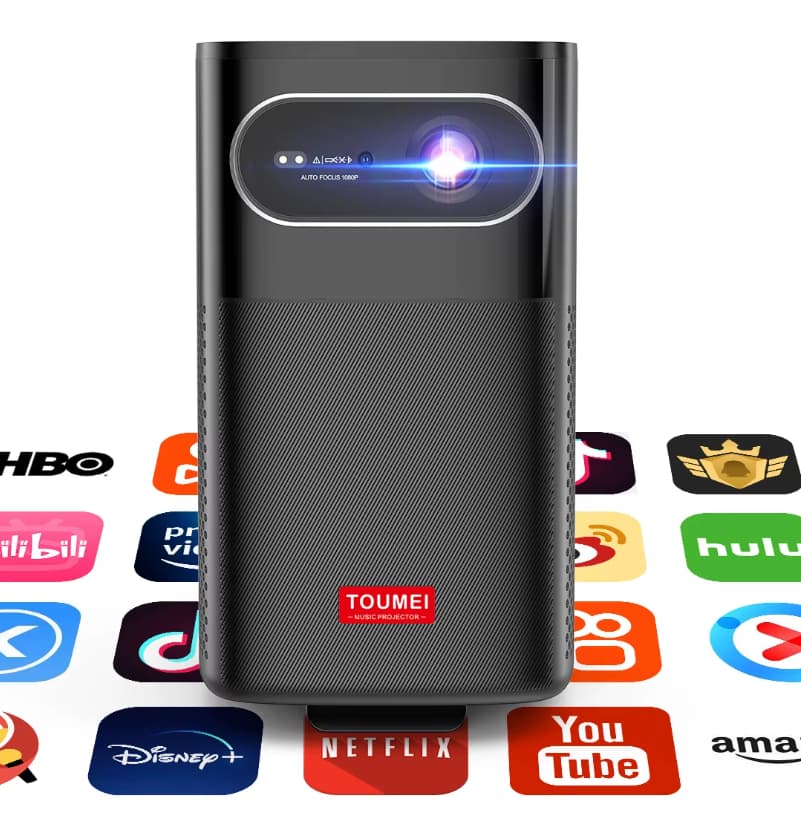
DLP technology is naturally suitable for compact designs because it can deliver strong image quality from a single chip in a small chassis. Many popular portable projectors on the market today use DLP chips to balance size, brightness and picture quality.
For Amazon sellers, this means you can create highly portable DLP models that:
Look and feel more “high‑tech” than bulky LCD designs.
Fit lifestyle photography and social media‑friendly marketing.
Justify a price that is higher than simple “toy‑like” projectors.
Better long‑term stability, fewer surprises
Another important factor is reliability. DLP projectors use a sealed digital micromirror device, which is highly resistant to dust and heat. This helps DLP projectors maintain consistent image quality for many years with minimal maintenance.
In contrast, LCD projectors can sometimes suffer from color fading, panel misalignment or dust spots over time. For Amazon sellers, especially those shipping globally with long logistics paths, this difference can mean:
Fewer sudden spikes in returns due to image issues.
More stable review scores over the product’s lifecycle.
Less stress about how the projector will look after one or two years in real user homes.
When LCD projectors still make sense
None of this means LCD projectors are “dead.” LCD technology still has its place in the market, and many successful sellers continue to run LCD lines alongside newer DLP models.
LCD can still be a good choice when:
You are testing the projector category for the first time with a very limited budget.
Your main users watch mostly in brighter rooms where pure lumen output matters more than deep blacks.
You want to keep an ultra‑low entry price to attract cost‑sensitive buyers.
However, as competition increases, staying only in the low‑end LCD space usually means fighting for smaller and smaller margins. That is why hybrid strategies are becoming popular: keep one or two proven LCD models, but add one or more DLP models to build a higher‑value tier in your brand.
How to plan an LCD‑to‑DLP transition on Amazon
If you are ready to explore DLP, it is important to treat it as a controlled experiment rather than a sudden jump.
Step 1: Start with one or two DLP hero models
Instead of replacing all your LCD SKUs, pick one or two DLP models that match your brand positioning. For example:
A compact portable DLP projector designed for camping and travel.
A smart home theater DLP projector with stronger contrast for living rooms.
Launching one or two “hero” DLP products lets you learn about demand, reviews and operational details while keeping your existing LCD revenue.
Step 2: Build listings that clearly explain DLP benefits
Do not assume buyers understand the term “DLP.” In your listing title, bullet points and A+ content, explain in simple words:
Sharper image and smoother motion.
Deeper blacks and more cinematic contrast in dark rooms.
More compact, premium design for home and outdoor use.
Use comparison images and short explanations to show how DLP differs from typical low‑cost projectors buyers may have seen.
Step 3: Watch the data and reviews
Give your DLP listing time to collect real user feedback:
Compare click‑through rate and conversion rate against your LCD models.
Monitor how customers talk about image quality, noise, portability and build quality.
Look at the photo and video reviews to see whether the DLP image stands out.
If the DLP model shows stronger engagement and more positive comments on picture quality, that is a signal you can lean more into this direction.
Step 4: Adjust your product mix based on results
Once your DLP models are established, you can gradually adjust inventory planning:
Reduce restocks of underperforming LCD SKUs.
Develop more DLP variants to cover different price points and use cases.
Use DLP models as flagship products to pull your brand image upward.
This step‑by‑step transition allows you to benefit from DLP without taking unnecessary risk.
What to look for in a DLP projector manufacturer in China
Choosing the right DLP partner is just as important as choosing the right technology. Not every projector supplier has deep experience with DLP, especially when it comes to Amazon‑focused requirements.
Here are key factors to consider:
True DLP experience – Ask whether the factory has its own DLP optical engine and mainboard development, or if they simply buy ready‑made units.
Amazon‑ready design – Look for suppliers who understand FBA packaging, safety certifications, voltage standards and labeling requirements for major markets.
OEM/ODM flexibility – Serious brands often need custom UI, casing colors, remote controls, and even app integration. A good DLP factory should be able to support this.
Stable quality and after‑sales support – Confirm that they have clear testing procedures, aging tests and a process to handle potential defects.
Transparent lead times and communication – Long development delays can hurt your launch timing, so make sure the partner can give realistic schedules and respond quickly.
Working with a specialized DLP manufacturer can help you avoid many early mistakes and build products that really match Amazon buyers’ expectations.
Example: How a Shenzhen DLP factory supports Amazon sellers
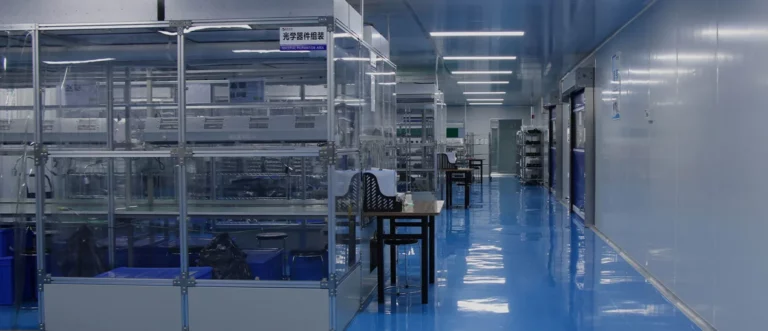
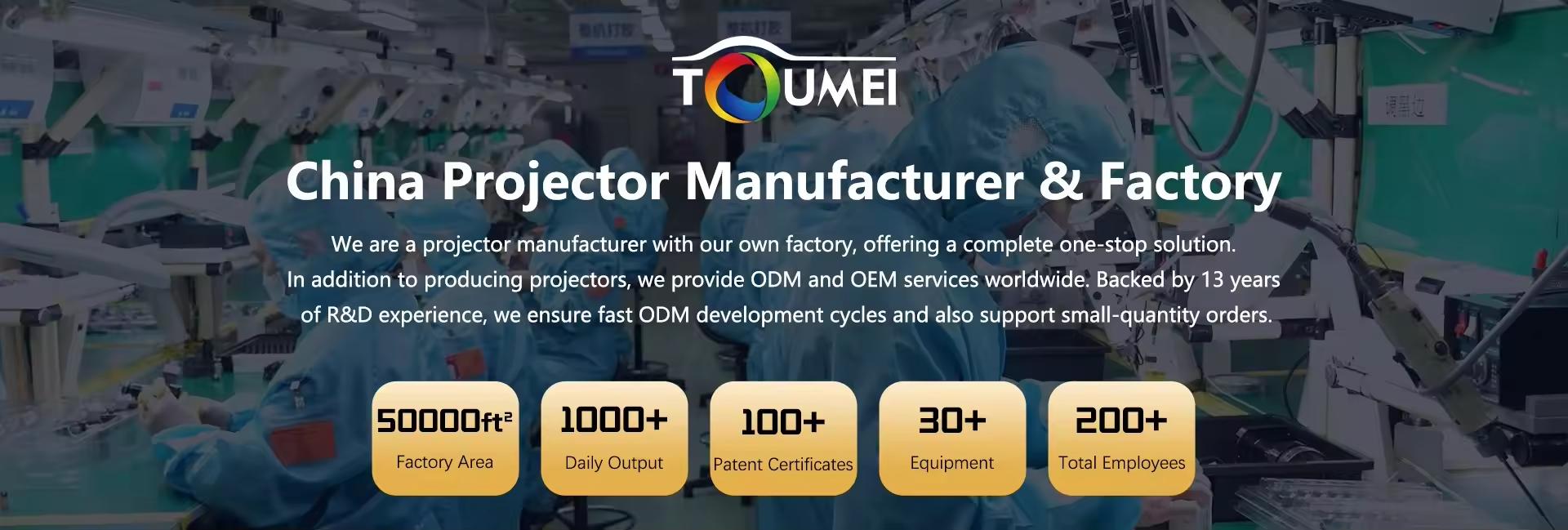
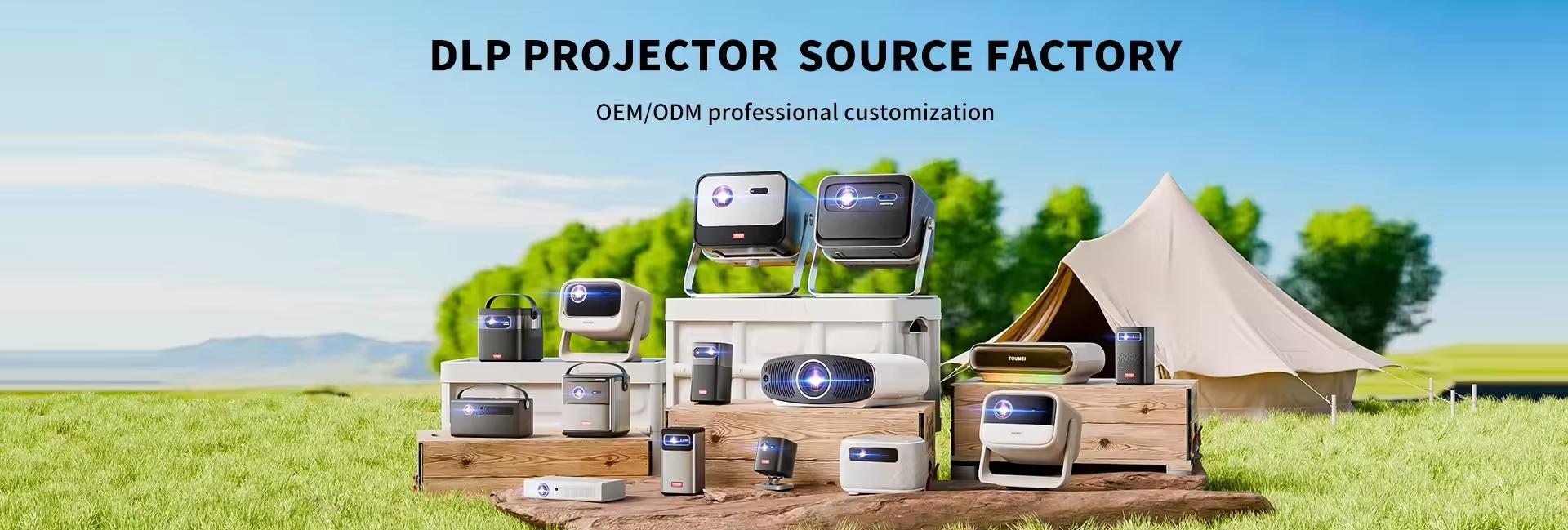
Toumei is a Shenzhen‑based smart projector OEM/ODM manufacturer focused on Texas Instruments DLP digital micromirror technology. Over the years, Toumei has supplied projectors to overseas brands, distributors and e‑commerce sellers, including many who sell primarily on Amazon.
For Amazon sellers, a factory like Toumei can provide:
Portable and home‑use DLP designs that are optimized for real consumer scenarios.
Custom branding, including logo printing, UI design, packaging, and accessories.
Engineering support to balance brightness, battery life (for portable units), noise level and cost.
FBA‑ready packaging and guidance on certifications for major regions.
Because the factory understands both the technical side of DLP and the operational needs of Amazon businesses, it can help sellers choose the right configuration instead of just selling a random catalog model. This kind of partnership is often the difference between a one‑time launch and a long‑term, scalable projector business.
If you are considering adding DLP projectors to your catalog, you can share your target market, monthly volume and price range with a Shenzhen DLP factory like Toumei and receive tailored suggestions.
Final checklist for your next projector launch
When you plan your next projector SKU on Amazon, use this quick checklist:
Are you positioning your brand purely on low price, or do you want to move into a more premium segment?
Do your buyers care more about raw brightness, or about deeper blacks and sharper details in movies and games?
Could a portable DLP model help you tap into outdoor, travel or dorm‑room demand in your main markets?
Have you talked to at least one experienced DLP OEM/ODM factory in China and compared samples, communication and lead times?
For many Amazon sellers, the answer in 2026 is clear: LCD still has a role at the entry level, but DLP projectors are becoming the core of their long‑term strategy. If you want to build a projector brand that survives beyond the next price war, now is a good time to start planning your own LCD‑to‑DLP upgrade path.