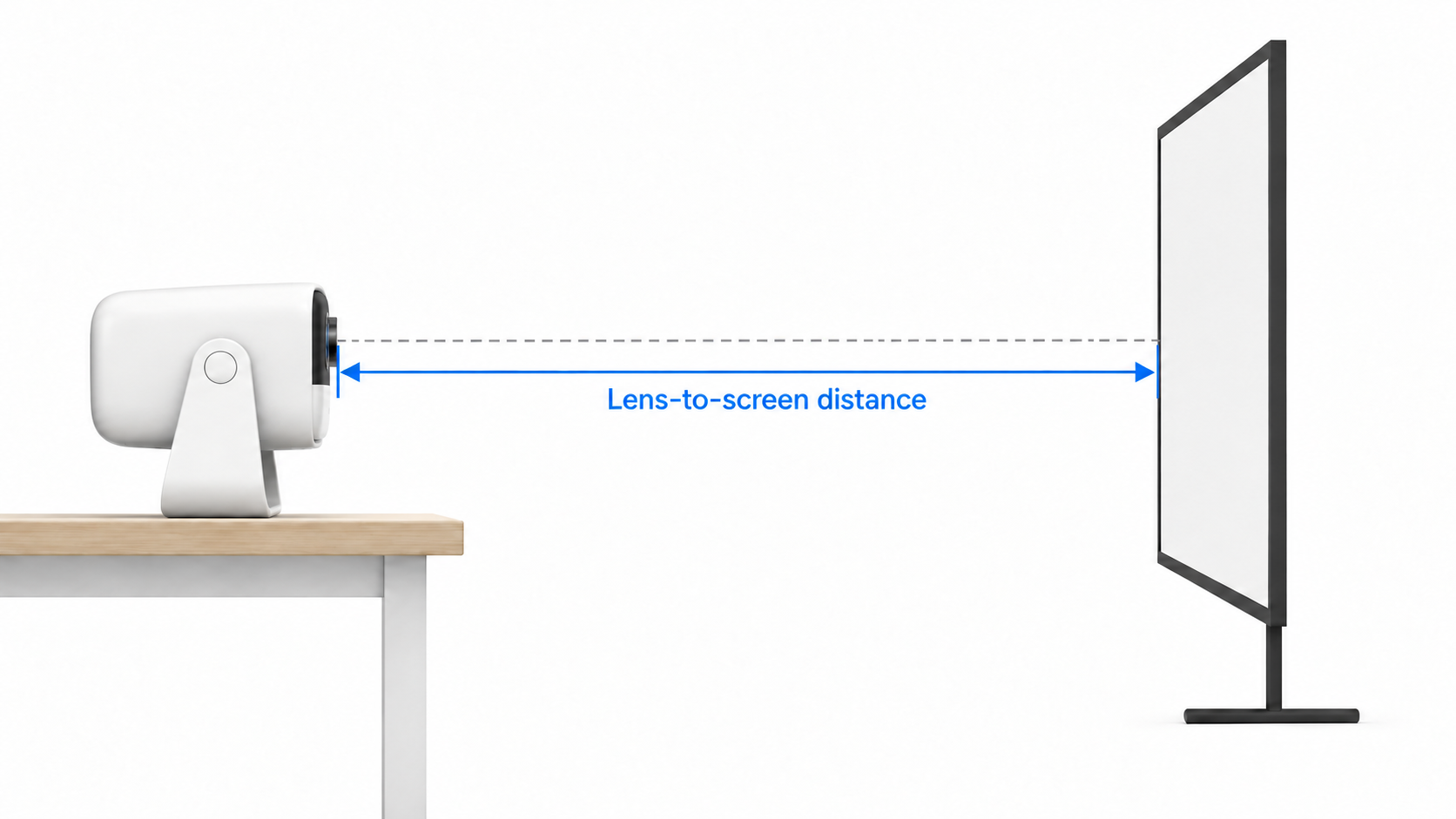
Tricolor laser projectors are reshaping the visual display industry with their clever light source design. Unlike outdated lamp-based or single-laser projectors, a tricolor laser projector relies on three distinct lasers—red, green, and blue—to create images boasting excellent color purity and brightness. This approach eliminates numerous drawbacks of earlier projection technologies. It enables finer control of image formation.
The Core Principle of Tricolor Laser Technology
The basic concept behind a tricolor laser system centers on dividing light into its three primary elements. Each laser aligns with one core color—red, green, or blue. That allows for accurate color reproduction. Each wavelength arises from its dedicated source. As a result, these systems bypass mechanical color wheels or filters. Such components might degrade with use or trigger alignment errors. The RGB beams merge optically instead. Adjustments shape them to cover the full visible spectrum directly on the projection surface.
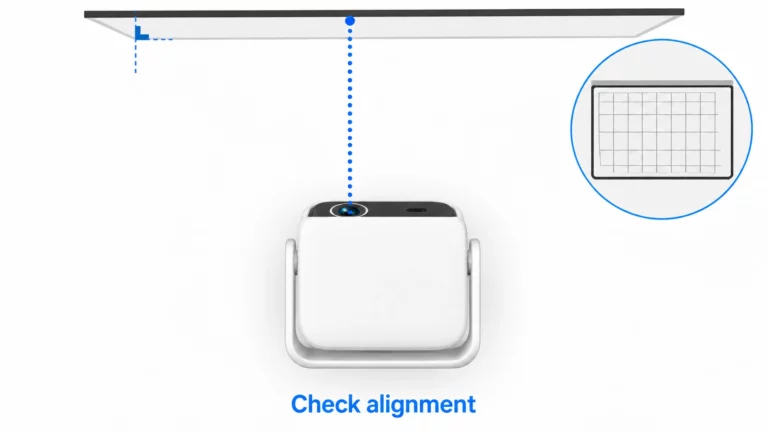
This division offers several vital advantages. It ensures each color channel maintains consistent intensity and phase synchronization. Images therefore display minimal color fringing or halo effects. Laser diodes emit light within narrow spectral bands. That results in deeper color saturation compared to phosphor-based systems. Optical alignment precision plays a big role too. Slight deviations in RGB beam paths can disrupt their overlap and uniform spread on the screen. Manufacturers employ advanced calibration techniques in production. They strive for micrometer-level accuracy in beam positioning.
Comparison with Single-Laser and LED Projectors
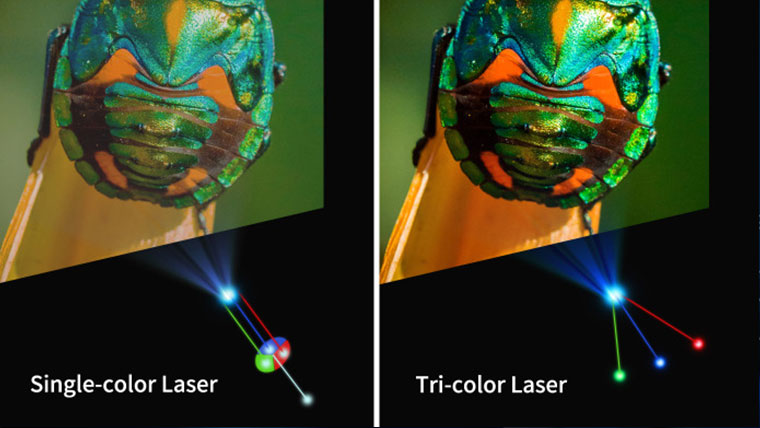
Single-laser projectors often depend on one blue laser with phosphor conversion. Tricolor lasers surpass them in light efficiency and color spectrum width. Discrete RGB sources allow these systems to nearly span the entire Rec.2020 gamut. Phosphor conversion setups cannot achieve that.
LED projectors stand out for energy savings and compact builds. They fall short of the intense illumination from tricolor lasers, however. LEDs produce broader light spectra with less coherence and reduced intensity along the optical path. Overall brightness drops as a consequence. Those levels suit only small rooms.
Maintenance requirements differ widely across these technology types. Traditional lamp projectors demand frequent bulb replacements. Their brightness declines rapidly after a few thousand hours. Tricolor lasers incorporate solid-state diodes. These last over 20,000 hours with minimal power loss. The extended lifespan minimizes downtime and operational expenses. The upfront cost increases, though, because of the complex optical arrangement.
How Does Tricolor Laser Projection Enhance Image Quality?
A key strength of tricolor laser projection is its ability to produce vivid images from pure wavelength emissions. These systems employ three precise laser sources tuned to red (638 nm), green (520 nm), and blue (~450 nm) wavelengths. They deliver outstanding fidelity in color accuracy and contrast handling.
Color Accuracy and Gamut Expansion
Tricolor lasers replicate colors closer to the peak sensitivity of human vision. Their output wavelengths match the primary response peaks of human color receptors. Lifelike hues appear that older lamp systems cannot replicate easily. Those systems output wider spectral ranges.
The expanded color spectrum of tricolor lasers meets or exceeds Rec.2020 standards. This benchmark matters for ultra-high-definition displays in professional filmmaking and TV broadcasting. The broad-spectrum capability preserves subtle tonal shifts in skin tones, natural scenes, or digital content. Oversaturation or lost details do not arise.
Wavelength consistency serves as another essential factor for dependable performance. Lamps change their spectral characteristics with age. Semiconductor lasers maintain stable emission frequencies throughout their operational life. Color equilibrium stays constant over thousands of hours. Recalibration becomes unnecessary.
Brightness Stability and Contrast Control
Consistent brightness highlights another major asset of tricolor projection technology. Each RGB component operates independently. Light intensity receives precise adjustments per frame or pixel through electronic means. Adaptations respond to scene content. Shadow details improve in dim areas. Highlights remain distinct in bright zones at the same time.
Elevated contrast ratios from this adjustment capability greatly enhance depth perception. Viewers perceive deeper blacks and crisper details even under ambient room lights. Older projectors appear dull in such situations.
Intelligent cooling systems fit into projector housings to sustain light uniformity during prolonged operation. Liquid coolers or thermoelectric devices effectively dissipate heat from powerful diodes. Even light output continues without thermal fluctuations. Professional venues like cinemas or training facilities require this feature.
What Are the Technical Challenges or Disadvantages of Tricolor Lasers?
Tricolor laser projectors possess impressive capabilities. They encounter certain engineering challenges. Solutions must emerge before broad, affordable adoption.
Cost Implications and System Complexity
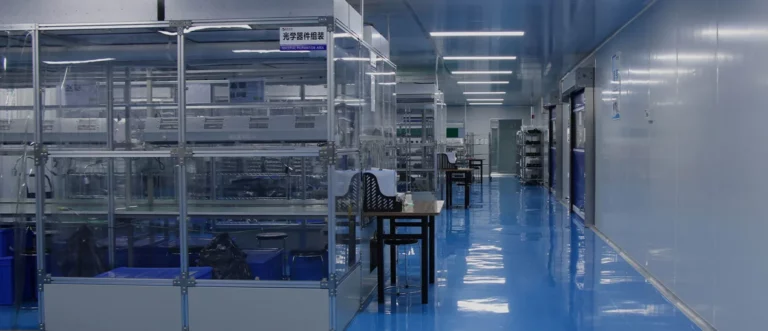
A significant limitation is the manufacturing cost. Aligning three robust lasers requires highly precise optics and meticulous calibration steps during assembly. Needs for multiple beam combiners, dichroic mirrors, and control circuits raise both material costs and production complexity beyond single-source designs.
Every component must retain precise alignment over time. Thermal expansion or vibration stresses persist. Sturdy enclosure materials and vibration-dampening mounts become necessary. They elevate the price further.
Maintenance shifts away from traditional methods. Solid-state parts reduce replacement frequency. Disruptions in the optical path typically call for skilled repairs. Field technicians may lack tools for accurate RGB realignment.
Potential Visual Artifacts and Safety Considerations
Speckle noise presents another concern. It appears as a granular pattern from coherent light sources like lasers. Speckle occurs when reflected waves interfere constructively or destructively on projection surfaces. Visible textural imperfections result. Some viewers find them annoying.
Methods exist to reduce it. Vibrating diffusers in the light path break up phase coherence. Multi-wavelength adjustments extend coherence length slightly. Coated screens with special properties diminish interference visibility. Complete elimination remains difficult.
Eye safety ranks as a critical matter. Intense laser beams might surpass safe limits without proper diffusion or direction outside intended paths. Manufacturers adhere to Class 1 laser safety guidelines. They integrate protective optics to prevent hazardous direct exposures in standard use.
Bright spots or flicker issues can arise if beam uniformity on the projection surface lacks adequate diffusion optics. Continuous improvements in the optical engine design address this.
Where Are Tricolor Laser Projectors Most Effectively Applied?
Tricolor laser projectors excel in professional environments. Their features include reliable light consistency, wide spectrum coverage, and long durability. These suit applications demanding maximum image authenticity over extended periods.
Commercial Cinema and Large Venues
Tricolor lasers deliver steady, bright images on large screens in cinema applications. No obvious degradation shows after numerous screenings. Their capacity to maintain even light output ensures uniform viewing for all throughout the theater's duration. It lessens maintenance interruptions seen with xenon lamps.
Support for HDR content boosts cinematic realism with accurate tone mapping from deep shadows to bright peaks. Modern digital cinema workflows following DCI-P3 or Rec.2020 standards depend on this.
Total costs decrease over time despite the higher initial investment. Bulb swaps every few thousand hours do not occur. Chain theater operators value this reliability paired with superior visuals.
Simulation, Education, and Industrial Visualization
Tricolor laser technology finds extensive use in training simulation sites beyond entertainment venues. Precise visual cues influence user immersion there. Flight simulators, for example, require realistic horizon lines under varying lighting conditions.
Educational settings like universities handling scientific visualization projects—planetarium shows or molecular models—benefit greatly. The ability to depict subtle light variations supports clear learning.
Industrial design teams also profit from accurate projection features. They cast CAD models onto physical prototypes in group review sessions. Dimensional accuracy combined with color precision accelerates decisions. It reduces prototyping expenses from misinterpretations due to poor display fidelity.
How Is the Future of Tricolor Laser Projection Evolving?
Current efforts in semiconductor materials promise further refinements for tricolor laser systems. Improvements aim at enhanced power efficiency and smaller footprints for innovative display solutions worldwide.
Integration with Emerging Display Technologies
Hybrid systems combining tricolor lasers with DLP micromirror arrays or LCOS panels demonstrate notable advances in resolution and response speed. Ultra-high-detail projections beyond 8K reach commercial feasibility.
Compact light engines using micro-lens arrays enable portable professional equipment for conference rooms or mobile displays. Core benefits like broad spectrum coverage, previously confined to large installations, endure.
Trends Toward Energy Efficiency and Miniaturization
Advances in diode materials such as gallium nitride variants steadily reduce power draw per lumen without compromising brightness evenness. This shift promotes sustainable practices in commercial markets seeking environmentally sound options aligned with global energy regulations.
Optical miniaturization developments permit integration of tricolor components into more compact housings. This extends to augmented reality headsets, where lightweight design and high luminance are essential. Next-generation immersive technologies progress in entertainment, education, and defense areas alike.
Conclusion: Evaluating the Role of Tricolor Lasers in Modern Projection Systems
Tricolor laser projectors represent a major leap in projection expertise. They combine strong light performance, durable structure, and precise alignment in one unit. This transforms how professionals view, present, and distribute complex images in current digital landscapes around the world. Experts evaluating applications should weigh benefits against projector drawbacks. These encompass high costs, demanding maintenance, and potential speckle issues. Technological momentum suggests ongoing solutions for simpler, scalable uses in various sectors. Such areas prioritize full image integrity, longevity, and seamless operation. The broader field of photonic display engineering advances accordingly. It molds future methods of worldwide visual communication.