ANSI lumens describe a projector’s light output measured using a defined projection-test method. The measurement covers the projected image, rather than the raw output of the light source. It gives buyers a useful starting point for comparing brightness—provided the ratings come with a clear measurement basis. 1
For a brand or distributor choosing a projector, the practical question is: Does the brightness claim describe the configuration and operating mode you plan to sell? A large number without that context can leave important questions unanswered.
This guide explains how to read the claim, compare the supporting conditions, and ask for useful evidence before approving your product specification.
What Do ANSI Lumens Measure?
The familiar ANSI measurement approach samples nine areas of the projected image. It accounts for light across the picture instead of treating the brightest center reading as the whole result. 1
Lux and lumens describe different quantities. Lux measures illuminance: one lumen per square meter. Lumens measure luminous flux, or light output. A helpful conceptual relationship is:
Estimated light output (lumens) ≈ average illuminance (lux) × image area (square meters).
This follows from the units; it is not a complete test procedure. A single center reading or an unverified phone reading does not establish a standards-based brightness rating. If the same light output is spread over a larger area, average illuminance falls. Changing image size alone does not rewrite the projector’s rated lumens. 2
Compare the Basis Behind the Brightness Number
Keep the unit or method label attached to every figure in your supplier comparison. This short table is a purchasing aid, not a conversion chart.
| Claim on the specification | What to request before comparing it |
|---|---|
| ANSI lumens | The stated test method, conditions, and result for the exact model. |
| ISO lumens | The exact standard and edition, plus the configuration and settings used. |
| LED lumens | The manufacturer’s definition and a separately reported measured-output figure. |
| Light-source lumens | A distinction between source output and the complete projector’s output. |
| CVIA lumens | The named method, version, and test conditions. |
| “Lumens,” without further explanation | Written clarification of what was measured and how. |
LED lumens and light-source lumens should not be treated as interchangeable with projected-image output. BenQ discusses an LED ÷ 2.4 comparison based on certain manufacturers’ published figures; that does not establish a universal conversion for other products. 1
For ISO claims, ISO’s public catalogue identifies ISO/IEC 21118:2020 as a specification-information standard for front-projection data projectors. Ask suppliers to identify their actual reference rather than assuming that the word “ISO” resolves every difference between reports. 3
If two suppliers use different methods, request a comparison under a mutually agreed method and configuration. Leave the comparison unresolved when the evidence is missing; do not fill the gap with a convenient multiplier.
Does an ANSI Label Mean the Projector Is Certified?
No. A measurement label is not a product certificate. ANSI—the American National Standards Institute—states that it does not certify products. A supplier’s brightness claim, a test report, and a product certificate are different documents with different purposes. 4
Request the report behind the claim. Check who issued it, which model was tested, the date, the method, and the settings. If independent verification matters to your purchase, specify that requirement and verify the testing body’s relevant scope separately.
Treat a missing report as an open question. It does not, by itself, prove that the projector fails your requirement.
Match the Mode and Power Supply Before Comparing Samples
A portable projector may operate differently on an adapter and on its battery. BenQ’s GV50 support documentation, for example, describes brightness behavior that depends on power and mode settings. That is a model-specific example, not a brightness reduction percentage to apply to TOUMEI or every portable projector. 5
For your own comparison, ask the supplier to complete the same information for each sample:
| Comparison field | Record in the sample file |
|---|---|
| Configuration | Model, sample identifier, hardware variant, and firmware version. |
| Power | Supplied adapter or battery operation; battery state where relevant. |
| Settings | Picture mode and any light-output, power-saving, or automatic setting. |
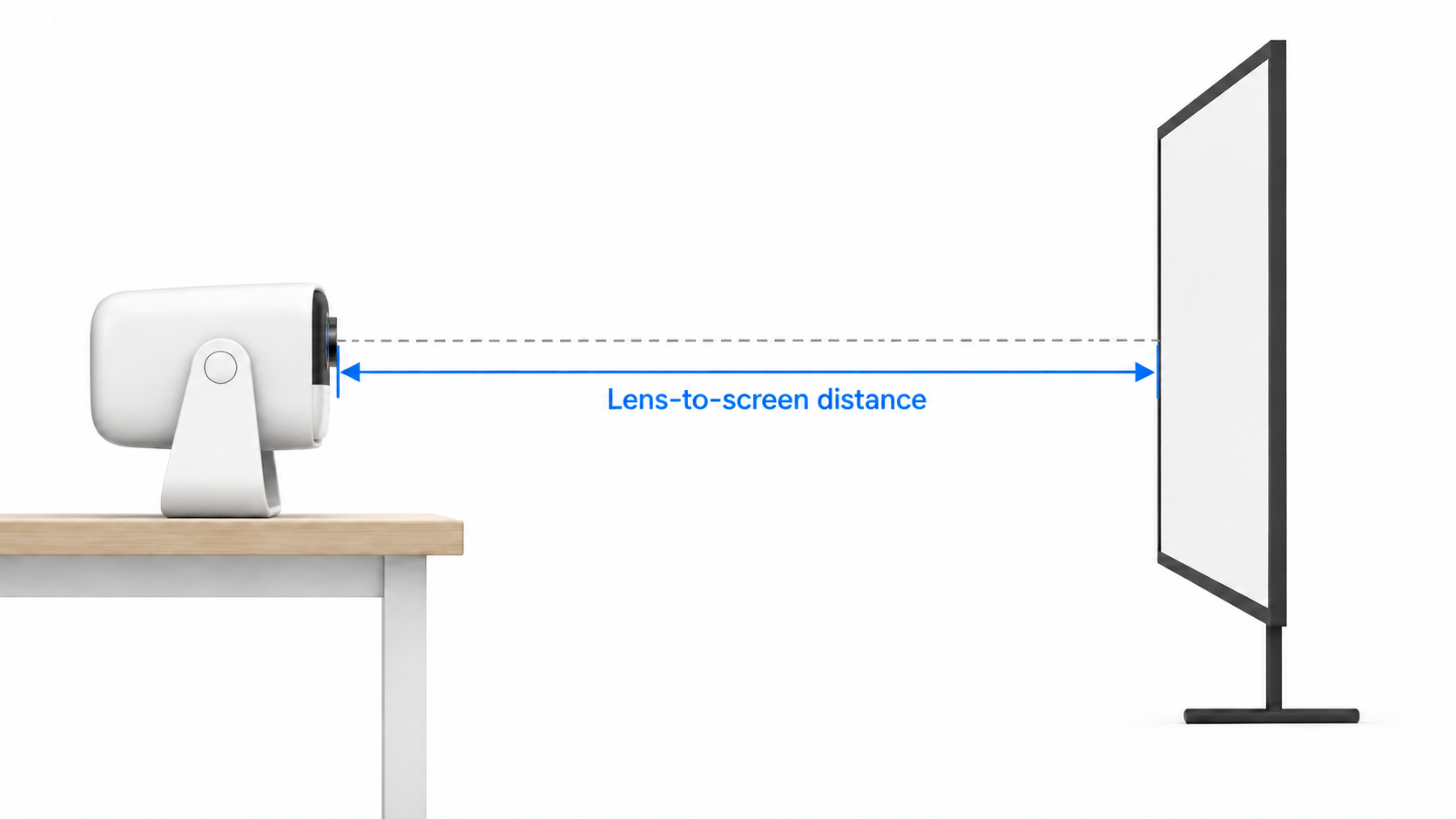
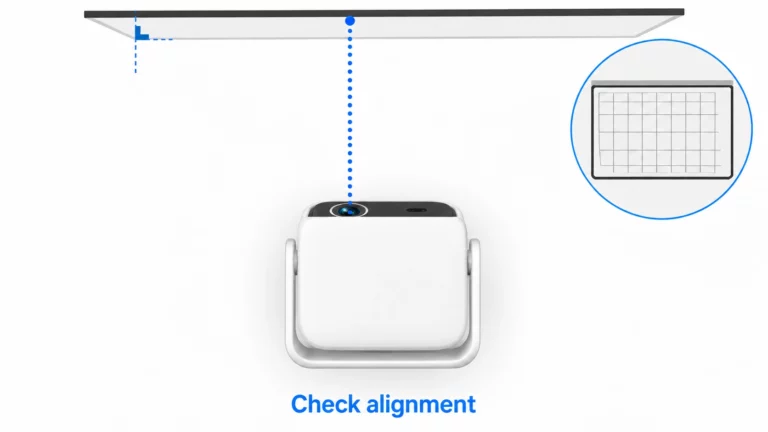
| Setup | Image size, projection geometry, screen, and room-light conditions. |
| Evidence | Method, report date, tester, recorded result, and supporting files. |
Keep the rated-output test and the customer-use demonstration as separate records. For the demonstration, use the same room, image size, source content, and viewing position where practical. Record each projector’s settings. A comparison from memory is difficult to reproduce.
A phone photo can help explain the setup, but exposure adjustments make it unsuitable as proof that one projector meets a lumen claim. Keep the measurement record alongside any photographs.

What Brightness Information Should a Private-Label Buyer Request?
Before approving a listing, packaging claim, or bulk order, connect the proposed brightness wording to the configuration you evaluated. The following is a suggested procurement brief; it is not a claim that a particular product has passed testing.
Please provide the brightness specification and supporting report for the proposed model and configuration. Identify the measurement method and edition, sample identifier, firmware, picture and power settings, power source, test setup, and report date. Please also confirm which figure and wording apply to our intended sales configuration, and identify any missing evidence.
Then resolve three decisions in writing:
- Which figure will your brand publish? Keep the method label and any essential operating conditions with it. Avoid copying the largest number from another configuration.
- What will count as acceptance? Agree the method, required result, responsibilities, and handling of differences before relying on the sample.
- What must be reviewed if the configuration changes? Ask the supplier to flag changes that may affect the approved brightness claim and define when another check is needed.
Brightness is one part of sample approval. Continue with evaluating a portable projector sample before a bulk order to record everyday-use observations, repeatable defects, and the approved configuration.
Turn the Brightness Requirement Into a Sample Brief
Planning a private-label model or distributor sample? Start with the configuration and intended use in our projector OEM/ODM service brief. Identify the image size, room lighting, and power source your customers will use, alongside the brightness method and evidence you expect.
Contact TOUMEI on WhatsApp to discuss a projector sample with that brief and your target market. Ask which brightness specification and supporting documents apply to the proposed configuration before approving the claim for your brand.
References
Sources accessed September 17, 2026. Manufacturer guidance below explains selected concepts or a named model; it is not a TOUMEI test report. Only the public ISO catalogue and abstract were consulted, not the complete paid standard.
- BenQ: ANSI, LED, and light-source lumen claims. Used for the measurement overview and the limits of the manufacturer’s LED comparison.
- BenQ: Units of projector brightness. Used for the lux unit definition and the area relationship.
- ISO: ISO/IEC 21118:2020 catalogue entry. Used to identify the standard’s scope and edition.
- ANSI: Standardization FAQs. Used to distinguish ANSI’s role from product certification.
- BenQ: GV50 power and brightness FAQ. Used only as a named example of power- and mode-dependent behavior.