Before exploring technical and business aspects, it is vital to explain how these two projection methods differ in design and operation. For projector wholesalers, grasping these differences builds a solid base for picking items that fit customers' needs and settings.
How DLP Technology Works
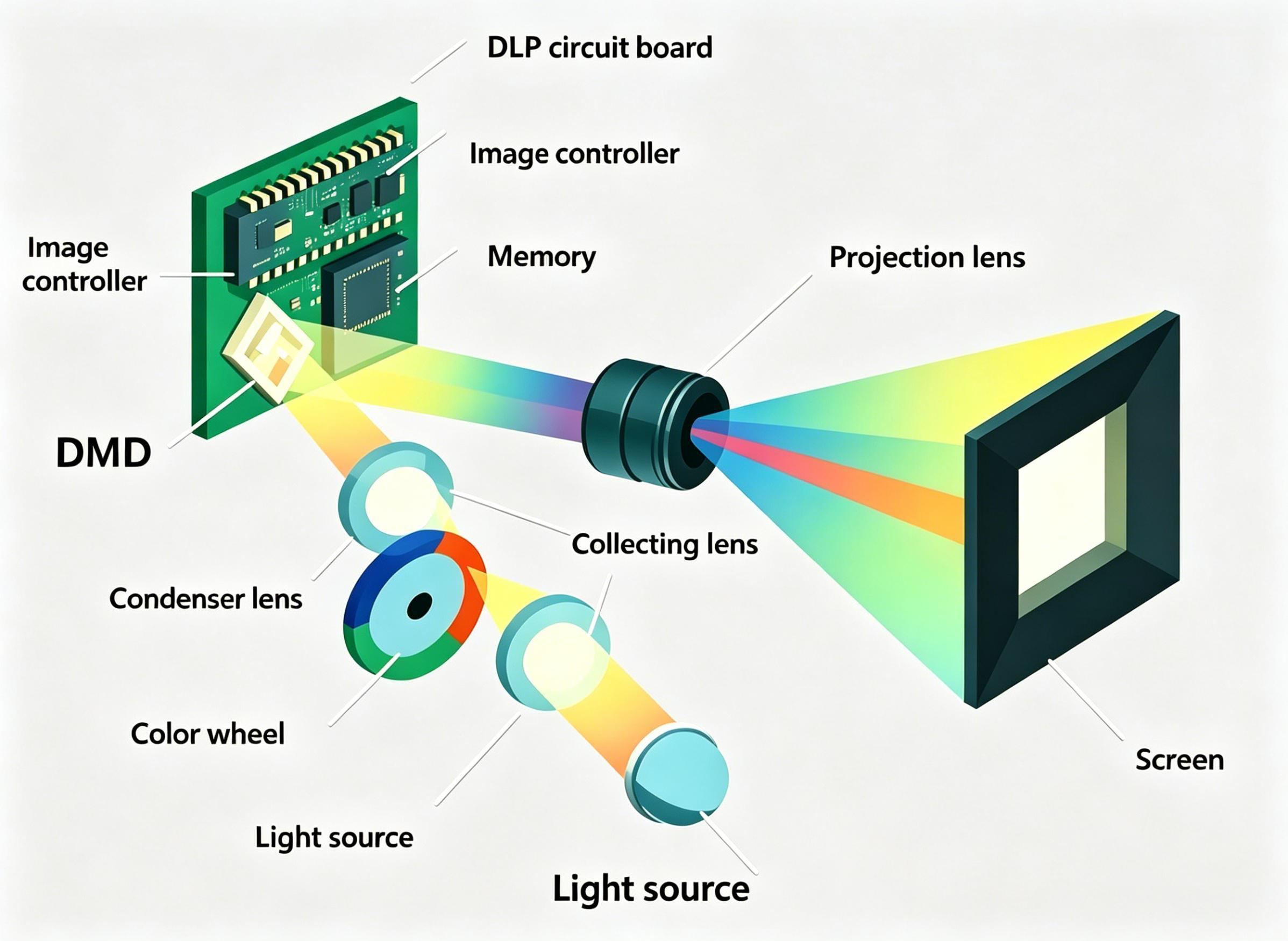
DLP (Digital Light Processing) functions with a tight grid of tiny mirrors fixed on a chip called the Digital Micromirror Device (DMD). Each mirror links to one pixel in the image being shown. These mirrors tilt toward or away from a light source. In this way, they adjust the light intensity for each pixel. A fast-rotating color wheel filters light into red, green, and blue in turns. This process sends the colors through the optics. Full-color pictures form by mixing quick bursts of single-color frames. Our eyes see this as smooth, ongoing color.
DLP projectors use reflected light instead of light that passes through. As a result, they create clear pictures with strong contrast and little visible pixel grid. This setup also improves how they handle movement. It cuts down on ghosting effects. Thus, DLP works well for video viewing or scenes with quick action.
How LCD Technology Works
LCD (Liquid Crystal Display) projectors take a unique path. They direct light through three distinct liquid crystal panels. Each panel handles one main color: red, green, or blue. A powerful lamp or laser gives out white light. Then, dichroic mirrors or filters divide this light into its color parts. The liquid crystals in the panels manage the light's strength. They do this by letting some light through or blocking it as needed.
After that, the three color streams come together via a prism setup. This creates a complete color image. The image then projects onto a screen. Such an approach guarantees true-to-life colors and steady brightness over the whole display. Therefore, LCD projectors suit places where exact colors matter a lot. Examples include classrooms, business talks, or medical views.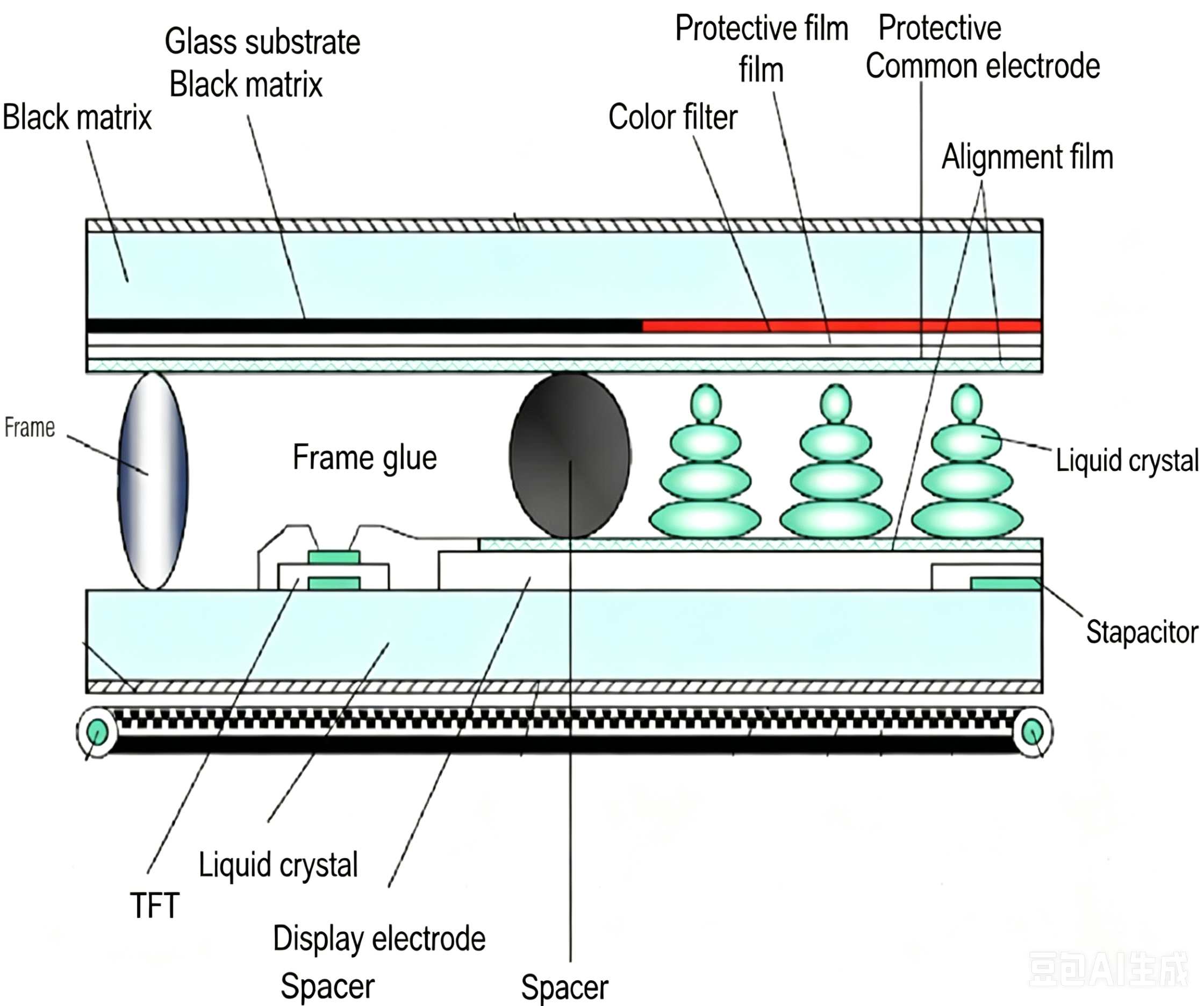
How DLP and LCD Projectors Compare in Image Quality
Picture quality stands as a key element for wholesalers who want to meet varied customer wants in fun, learning, and work settings.
Brightness and Color Accuracy
LCD projectors often provide greater brightness since light travels straight through the panels with few losses from bouncing. This quality makes them useful in rooms with plenty of surrounding light. In such spaces, outside light could otherwise fade the picture. On the other hand, DLP projectors shine in making richer blacks and better contrast levels. They achieve this through exact control with mirrors. These traits position DLP as a top pick for darker spots, like home movie rooms or special viewing areas.
Regarding colors, LCD models usually produce more realistic tones with balanced fullness. This fits well for talks or showing photos. DLP projectors, however, highlight bold hues. They create stronger visual punch. As such, they attract players or people watching lively videos.
Sharpness, Contrast, and Motion Performance
In DLP projectors, the array of small mirrors gives clean borders and less obvious pixel patterns. Each mirror works on its own. This allows fine tuning of single pixels. Plus, DLP deals with quick changes smoothly. It uses the turning color wheel or setups with multiple chips. This cuts motion blur and beats some LCD versions in smooth flow.
LCD projectors might show a minor “screen-door effect.” Here, slim gaps between pixels stand out if you look closely. Yet, they keep color evenness during long runs. For materials with fast action, like sports shows or moving signs, DLP projectors tend to offer better smoothness.
Reliability and Durability
For wholesalers handling big stocks in all sorts of places, how well products hold up ties straight to profits. It does so by lowering returns and fix-up expenses.
Maintenance Requirements
DLP projectors usually skip air filters. Their closed optical paths keep dust out of key parts. This cuts down on how often you need to maintain them. It also lowers costs over years, especially where many machines run at once.
LCD projectors depend on air filters to shield inside optics from dirt. You must clean or swap these filters now and then to keep top performance. If you ignore this, brightness can become uneven or the unit might overheat. The lamp's working life matches up between both kinds. However, real lasting power hinges on how you use them and the air quality around.
Durability in Different Environments
DLP setups fight off dust well because of their sealed light routes. This makes them fit for factory spots or outside use. Their build with moving parts ensures steady work even when moisture levels shift.
LCD projectors do fine in managed inside areas. But they call for more attention in dusty or wet spots. No matter the type, good air flow extends part life. Wholesalers should tell clients this important fact.
Cost Implications for Wholesalers
Price factors go further than starting costs. They cover upkeep, power use, and how well they sell later.
Initial Investment vs Long-Term Value
LCD projectors tend to cost less at the start. Their making process is straightforward. This draws in buyers watching their budget, like schools or those buying in lots.
DLP projectors demand more money upfront. This comes from their complex optics and mirror tech. Still, their sealed builds trim down regular upkeep expenses. Over time, this leads to a smaller overall ownership cost. When you add in items for cleaning, less idle time, and power savings, many wholesalers see DLP as a smarter money choice. Even with the steeper first price, it pays off.
How much value they hold for resale can vary too. It depends on the brand's name and how the market views them. DLP projectors often keep a bit more worth thanks to their tough make.
Market Demand Trends
Wholesalers ought to think about what different buyer types like:
- Schools frequently choose LCD projectors for their reliable light output.
- Fans of home movie setups pick DLP projectors for better contrast and movie-like feel.
- Business users seek dependability and easy carrying. Small DLP models often stand out here.
Keeping track of these patterns aids wholesalers in fine-tuning stock. It helps cut storage expenses and match goods to specific groups.
Selecting Between DLP and LCD
Wholesalers need to match the tech to what users expect. They should also smooth out their supply chains.
Evaluating Market Needs
Spot the main user types first. Schools want tough units for class use. Fun spots need deep picture effects. Companies focus on easy carry and quick setup. Look at light strength in lumens, clearness like Full HD or 4K, and room light levels. These help pair items with what customers truly need.
Building a Balanced Portfolio
Having both tech types in stock spreads out risks from shifting tastes. Middle-priced options mix price and flexibility well. They draw in many kinds of buyers. Teaming up with solid brands keeps quality steady. It boosts trust with suppliers and brings back customers often.
Emerging Innovations
The projection field changes quickly. It mixes new tech with power-saving ideas and no-wire links.
- Laser light sourcesreplace old lamps more and more. They save energy and last over 20,000 hours.
- Hybrid designsmix DLP's accuracy with LCD's true colors for all-around use.
- Wireless connectivitythrough Wi-Fi or Bluetooth adds ease in team work areas.
Wholesalers can grab chances to grow by selling smart projectors. These have voice commands or built-in streaming. Low-energy “green” types also appeal to those who care about the planet. Keeping up with HDR rules, laser safety types, and fresh guidelines lets wholesalers give spot-on advice that fits what the market wants.
Conclusion
DLP and LCD projectors each bring clear strengths for certain areas. DLP stands out in strong-contrast movie views. LCD gives bright, uniform colors for learning and work tasks. Wholesalers gain by keeping a mix of stock and following tech shifts. This way, they boost sales chances.