As standard home appliance areas like TVs keep dropping, the laser projection market is seeing solid expansion, climbing quickly in 2022. Based on the most recent Global and China Mainland Laser Projection Market Analysis Quarterly Report from Luotu Technology, global laser projector shipments (including laser TVs) hit 1.45 million units in 2022. This showed a year-on-year gain of 24.4%.
Laser Projector Market Report
In 2022, the Chinese mainland laser projector market (including laser TVs) sent out 679,000 units. It held 47% of the worldwide market. This put it as the top purchasing area. The market rose by 12.6% over the year before. North America came after with a 23% part. Western Europe took 13%. The Middle East, Africa, and Latin America each made up 2% of the market.
Luotu Technology predicts that in 2023, global laser projector shipments will get to 1.67 million units. This points to roughly 15% expansion. The Chinese mainland market should send out 850,000 units. That is a 25.7% rise from 2022.
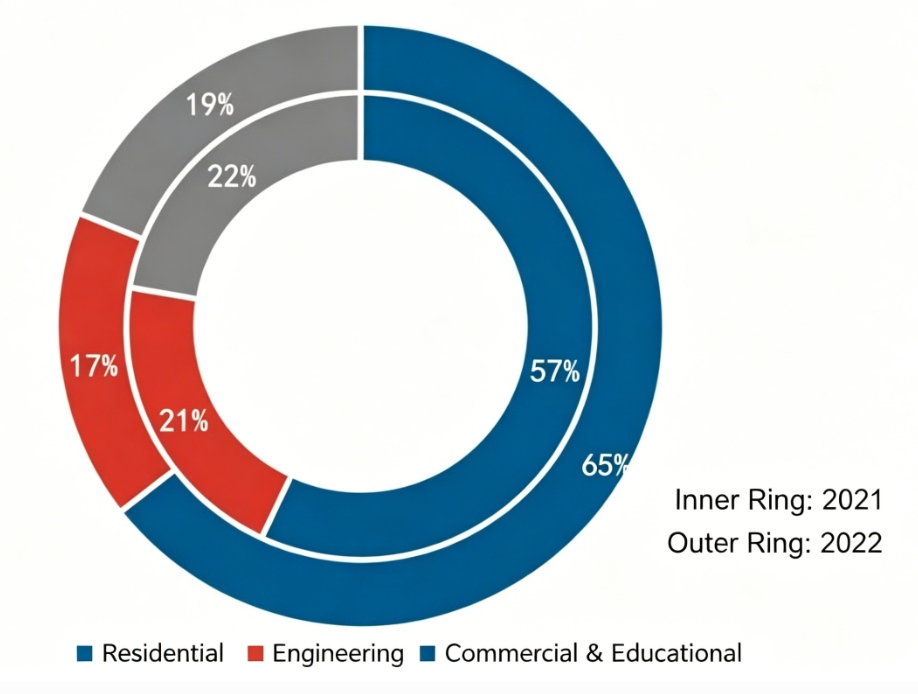
The growing call for big-screen shows in homes pushes this expansion the most. In 2022, the home market part went up to 65%. It increased by 8%. The engineering market ran into issues from the pandemic. As a result, its shipment part fell to 17%. The commercial and education market had a 4.7% drop year-on-year. This cut its part to 19%. Meanwhile, the use of smart application systems is picking up. Lighter and more movable laser projector designs are getting usual. These shifts are widening the uses of laser projectors in work places. So, commercial laser projector shipments rose by 29%.
As the home purchasing market guides the comeback, other fields should slowly pick up again.
Factors Driving Growth Despite the Downtrend
The latest rise in laser projectors could link in part to the pandemic's effects. In the last few years, the pandemic sped up the “stay-at-home economy.” Remote work and home offices turned into a fresh norm. Buyers shifted from being pushed into this arrangement to settling in easily. In this time, the home laser projector market saw notable expansion. All View Cloud (AVC) data shows that home laser projector sales reached 111,000 units in the second half of 2022. This was a 301% year-on-year gain. Income came to 670 million yuan. It went up 239% from the time before.
The movie business took big hits during the pandemic. People could not see films in theaters. Laser projectors stepped in at a good time. They let families and pairs have a movie-like setup at home. Users could lower the lights, get snacks ready, and still have a deeper watching feel than regular TVs. Privacy stayed intact too.
From February to March 2023, as many as five new laser projector models came out. This kept up with the quick speed of phone releases. It shows that laser projectors are turning into a favored option for home buyers and young groups.
Laser Projectors vs. Traditional TVs
Will laser projectors take the place of regular TVs as the main home screen? Present patterns say a total switch is not probable. Standard home items like TVs keep a firm hold. Laser projectors mostly serve as added picks for certain arrangements.
Laser projectors give a fuller feel in some settings than TVs do. They bring a price benefit as well. For instance, a laser projector can make a 100-inch or bigger screen without trouble. A 100-inch TV might weigh up to 50 kilograms. It also runs much higher in cost.
For young buyers, above all renters, laser projectors suit better. They cut down on setup, packing, and moving expenses. They skip the chance of screen breaks too. On top of that, laser projector light sources often last longer than folks expect.
That said, some limits exist. Laser projectors work with reflected light. This makes day-time watching not as good. Picture clearness, contrast, and brightness tend to fall short of LCD TVs. So, for folks who value a movie feel or easy arrangement, laser projectors fit well. For those who focus on picture clearness, regular TVs are still the top choice.
The Future of Laser Projection
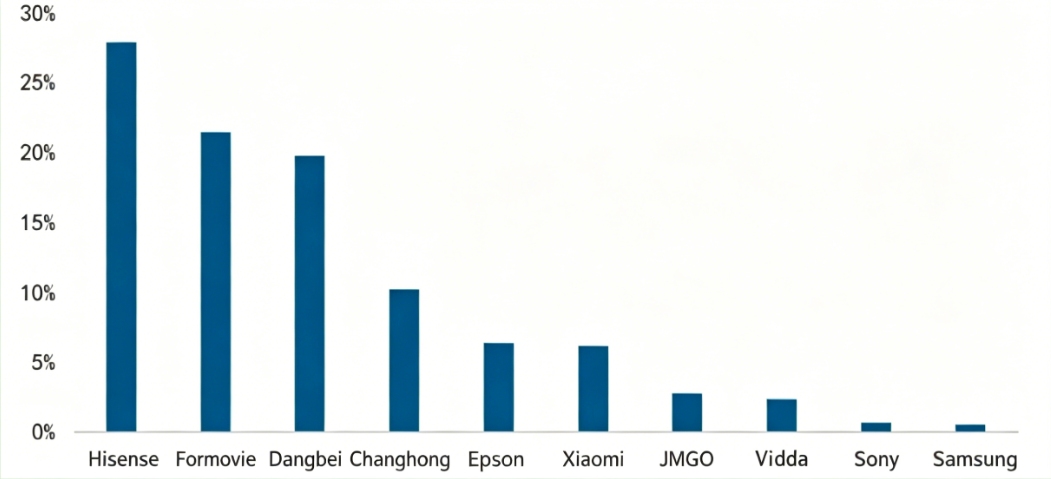
Even with tough market setups in late years, the laser projection industry keeps moving ahead. Top makers are putting lots of effort into fresh laser projector models. Rivalry in the home field stays sharp.
For 2023, the laser projector market should face another round of rise. This spreads past homes to cover engineering, work, culture, and trip uses. Brands like Dangbei, Xiaomi, Fengmi, JMGO, Epson, and Hisense stand a good chance to do well.
Worldwide screen patterns show that the LCD display zone is holding steady or even getting smaller. New laser projection technologies are spreading out fast. Both long-time foreign brands and home Chinese firms are creating and putting out complete lines. This proves real belief in the market.
The ongoing like for home fun, bendable screen sizes, and simple setup back the rise. In China, the 47% worldwide part mirrors strong local want for tech changes. On a global scale, a planned 15% rise is set with recovery after the pandemic. Mainland China looks for a 25.7% gain, pushed by need for larger screens minus the weight of old TVs.
Work rise, set at 29%, comes from movable laser projector designs and smart setups that blend well into different spots. Education uses are starting to bounce back bit by bit. Online learning aids help this. The pandemic changed buyer ways for good too. This adds to the call.
New laser projector releases go on at a steady clip. Better brightness and color performance draw in young users and renters. Next to TVs, laser projectors give money and size perks. They add easy carrying and longer light life. Yet, regular TVs beat them in clear day watching and picture sharpness.
Thinking ahead, 2023 brings new chances. Home keeps as the main spot. But work and trip areas are growing. New ideas from brands like Dangbei, along with world patterns picking laser projection over fading LCD markets, point to a lively path for the field. Big screens, smart lights, and mixed uses all help make a hopeful view.
To add more depth, think about how this market fits into bigger tech shifts. Homes now double as work and play zones. Laser projectors bridge that gap with their all-in-one appeal. In busy cities like those in China, space matters a lot. These devices save room while delivering big views. Global buyers seek value too. The price edge over TVs draws budget-conscious families. Plus, as green tech rises, laser sources cut energy use compared to older bulbs. This draws eco-friendly crowds.
Engineering uses hold promise as projects restart. Post-pandemic builds need reliable displays for sites and halls. Portable laser projectors fit right in. Commercial spots, from cafes to offices, use them for quick shows. Smart links let them work with apps and devices seamlessly. Education rebounds with hybrid classes. Teachers value the easy projection for lessons.
The fast release cycle keeps things fresh. Brands push boundaries on resolution and sound. Young users share setups on social media, spreading the trend. Renters find them ideal for short stays. No heavy lifting means less stress during moves. Long-term, as tech improves, daytime performance should get better. This could widen appeal beyond evenings.
Competition sharpens quality. Dangbei focuses on home fun. Xiaomi adds smart home ties. Epson brings pro-grade brightness. Hisense mixes TV know-how with projection. This variety lets buyers pick what fits. Overall, the laser projection market stands ready for steady gains. With clear drivers like home demand and tech advances, it looks set for lasting success.