The global projector market is growing fast. Smart projectors and portable entertainment solutions for anywhere are increasingly popular. In addition to that, also home cinema systems as well as commercial displays are booming. Thus, more and more projector manufacturers are choosing the OEM / ODM way to market faster, to avoid huge investments and to react to market requirements in time. And choosing a manufacturer is not only about low prices and high volume and high capacity – it’s much more.
The success of a projector buyer depends on how he/she handles each step of the sourcing process. The factor of product positioning, development responsibilities, certification requirements, quality control, intellectual property and after sales service and support play crucial roles in a projector project. Here is a guide for a buyer written from a brand’s perspective on how to evaluate your options for your manufacturing, how to manage risk of a project, and how to set up a successful OEM or ODM project for making projector.
What Should Projector Buyers Prepare Before Contacting a Manufacturer?
Before contacting potential manufacturing partners it is advisable for buyers to set up a clear project framework. By setting up a proper project buyers can avoid miscommunication, expensive changes and help suppliers give a correct quotation and offer the best development solution.
Define Target Markets and Sales Channels
First, you need to know where you are going to sell the projector and who is going to use it. The expectations of a home theater user, business user, educational user and a user who wants to take a projector with him wherever he goes are completely different.
A home entertainment projector would typically be recommended with image quality and smart streaming in focus. A business presentations projector would typically be recommended with brightness, reliability and connectivity in focus. Clear market positioning enables manufacturers to recommend suitable technologies and components.
Create a Preliminary Product Specification
A basic specification sheet is to help align the buyers’ and suppliers’ expectations.
Typical specifications include:
Pixel, brightness, projection technology, operating system, throw ratio, wireless connectivity, speakers, smart functions.
A well prepared specification sheet avoids costly changes during development.
Estimate Budget, MOQ, and Launch Timeline
In addition to the cost of production of a Projector there are many other cost categories that a buyer needs to take into account, such as tooling, certification, sample development, packaging and logistics.
At the same time it is important to have a realistic view on the minimum order quantity (MOQ) and the time of launch. This way the supplier can give the best proposal for the production.
Plan Certification Requirements Early
Certification planning should begin before development starts.
In order to bring products to different regions, there are a number of certifications that are required to be in place, such as CE, FCC, RoHS, UKCA, PSE, etc. of the market where the product is going to be launched. It is very important to start early to avoid problems with testing and the release to the market.
How Do OEM and ODM Projector Projects Differ?
While the term OEM and ODM are used to describe simple manufacturing products, there are many more factors than just product design that must be considered when deciding to go with an OEM or ODM solution. Other important considerations include ownership, development responsibilities, investment required and future flexibility.
Who Controls Product Development?
In an OEM project the buyer has a much larger influence on the product characteristics.
In an OEM project, the Buyer typically defines the product architecture, hardware requirements, software features, industrial design and performance targets. The manufacturer then focuses on bringing the design to life through detailed engineering and subsequent production.
An ODM project begins with the existing product platform of the respective manufacturer. The customer then can modify certain parts of the technical basics while relying on the established foundation of the manufacturer.
Who Owns the Intellectual Property?
Intellectual property ownership is an important consideration during supplier selection.
While the OEM project brings more to our customer in terms of stronger ownership of design, software and features, an ODM project often is developed on shared technology platforms. This means some components are always owned by the manufacturer.
Before embarking on a development, clear contractual terms should clearly establish ownership.
How Do Development Costs Compare?
The amount of development investment required for an OEM project versus an ODM project can vary quite significantly.
OEM projects typically require more engineering expenses, longer development periods and more tooling expenses. But in return, the buyer gets stronger product differentiation.
By taking over an ODM project, you save on development costs and you can enter the market sooner, because most of the engineering work has already been done.
Which Model Supports Long-Term Brand Growth?
For brands looking for unique products and sustainable long-term success on the market, OEM development offers the greatest degree of flexibility.
For companies focusing on quick market introduction, low investment and simple technology ODM is the practical way to go.
How Can Buyers Evaluate a Projector Factory Before Cooperation?
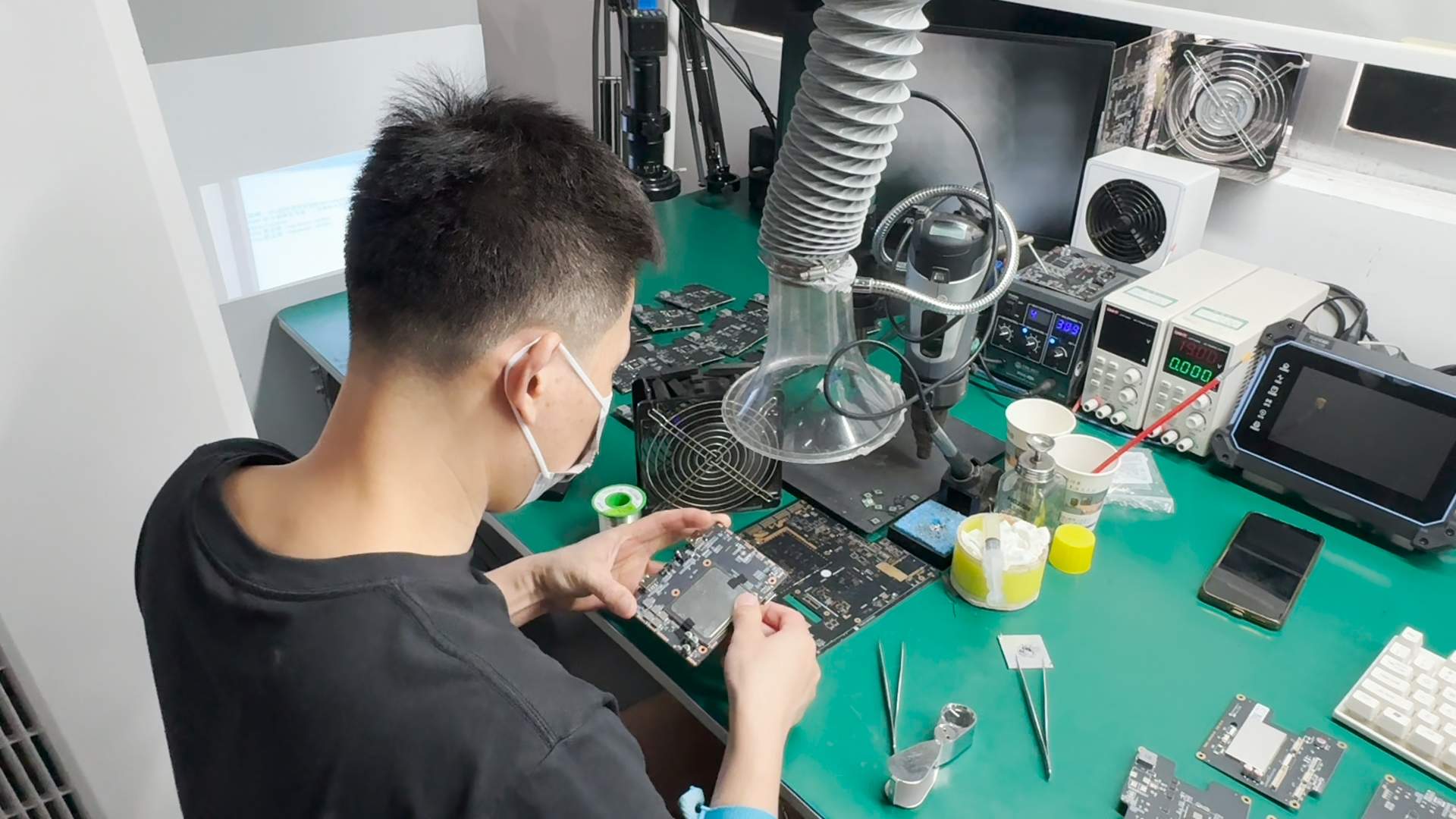
Selecting a reliable manufacturing partner is more than just checking a company’s web site for a company profile. Buyers must scrutinize a potential supplier’s operational capabilities, engineering resources, quality systems as well as project management practices.
Does the Factory Have Adequate Production Capacity?
Production capacity directly affects delivery reliability.
When selecting potential suppliers, buyers should seek information about the manufacturer’s monthly output, the configuration of their production lines, the degree to which assembly is automated, and experience with previous projects. Manufacturers who are able to increase production efficiently are typically able to support long-term growth.
Are Optical and Calibration Facilities Available?
Projector performance depends heavily on optical precision.
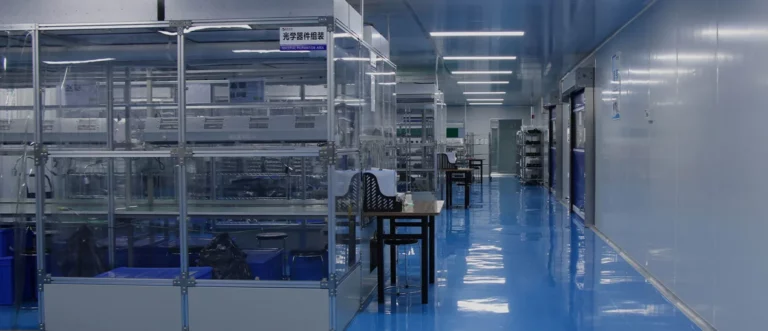
To ensure that the images are being produced consistently manufacturers should have optical alignment stations, means for testing brightness, color calibration systems and image inspection processes to check for defects in the image produced during mass production.
What Quality Management Systems Are in Place?
Quality management standards provide insight into manufacturing discipline.
When buying from suppliers it is wise to check if they are operating with a certified system, for example ISO9001 and then check how they manage the incoming goods, the assembly process and the final check before dispatch.
How Strong Is the Engineering Team?
The availability and effectiveness of Engineering resources can be key to delivering a project successfully.
A experienced engineering team can fine-tune thermal design, stabilize software, tackle optical challenges, and resolve problems a lot faster during development and production.
What Risks Should Buyers Watch During Projector Development?
Even the best planned project can hit some snags with regards to technical details and production. By identifying possible risks early on, the buyer can better cooperate with his manufacturing partner and avoid many unnecessary delays in a worst case scenario.
How Can Brightness Consistency Affect Product Quality?
Brightness consistency is the most important quality criterion for a projector.
Differences in lighting, optics, and even in calibration can cause huge differences between batches of production. It is very important for the buyer to verify whether the manufacturer of his new display performs brightness calibration and whether he uses standardized test procedures on all production days.
Our Consistent Brightness ensures that your product’s reputation is maintained and minimizes the risk of after sales complaints.
Why Is Thermal Performance Critical?
Projectors generate heat during operation, particularly high-brightness models.
Thermal design deficiencies can cause image degradation, premature component failure, increased fan noise, and overall system instability. As a customer, you should determine if the supplier conducts thermal simulations, temperature testing and long duration testing to simulate normal operating conditions.
Stability of products over long periods is influenced by reliable thermal performance.
How Can Software Compatibility Become a Risk?
Modern smart projectors rely heavily on software ecosystems.
It is also important to consider the potential compatibility issues that may arise when integrating different streaming applications, wireless casting protocols, operating system updates and third party devices. We expect manufacturers to describe their software validation procedures and to provide adequate long-term firmware maintenance.
The stability of the software is as important for customer satisfaction as the image quality.
Why Are DVT and Pilot Runs Important?
Design Validation Testing (DVT) and the pilot production run can expose problems before mass production is launched.
This step describes the verification of print image, mechanical function, software function and reproducibility in real production environment. Buyer should check if both verification steps are included in developer’s verification plan.
Early validation helps to prevent large-scale production of defective parts.
Who Is Responsible for Projector Certifications?
During a projector sourcing project, it is common for unclear certification requirements to cause problems. Before development starts, the responsibilities of the buyer must be clarified in order to avoid delays and additional costs.
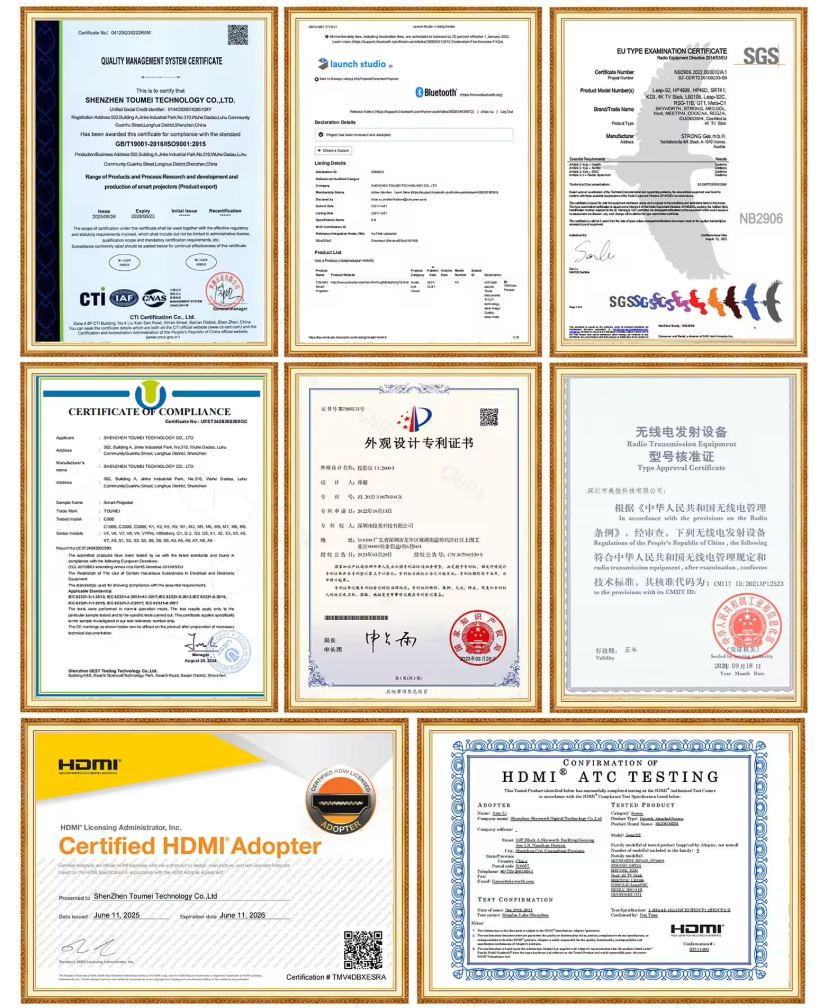
Which Certifications Are Usually Supported by Manufacturers?
Most experienced projector manufacturers can assist with common certifications for their products.
These may include:
Our product is CE certified for Europe, FCC compliant for North America, RoHS compliant for environmental reasons, UKCA certified for the United Kingdom and PSE approved for Japan.
Typically manufacturers provide test reports and other relevant documentation that they use in their technical documentation for certification applications.
What Responsibilities Remain with Buyers?
Buyers may also need to fulfill additional compliance obligations if they are targeting a particular market.
Some examples of other requirements are energy efficiency labels, local registration of products, import documentation, retailer specific requirements for compliance, and market surveillance requirements.
Clear responsibilities facilitate certification processes.
How Do Certifications Influence Project Timelines?
Certification testing often runs alongside product development.
Unforeseen test failures may require changes to hardware or software potentially impacting launch dates. Certification planning is initiated early in the development phase to minimize risks for launch on the market.
What Testing Should Be Completed Before Mass Production?
Our rigorous testing to determine the quality of our products prior to launch on the market.
What Happens During Engineering Verification?
Engineering verification focuses on confirming that core hardware functions correctly.
Test includes picture quality, integration of hardware, connectivity check, thermal operation and basic software functionality.
Major technical issues are identified in order to prevent unnecessary investment.
How Is Reliability Evaluated?
Reliability testing simulates real-world operating conditions.
Test procedures such as high temperature,vibration,power cycling, and long life duration are used to check the durability of a projector.
Reliable products enable fewer warranty claims and a better brand reputation.
Why Is Pilot Production Necessary?
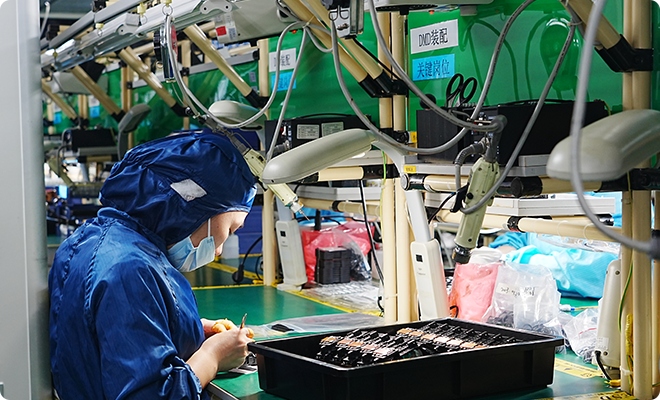
Pilot production is a stage between development and mass production.
Initial production run is kept small enough to enable verification of the assembly process, for an estimation of production time, for checking consistency of quality and for testing supply chain.
Pilot production that is successful is a very important step before the large scale production in order to give confidence to the next step.
How Are Projector Manufacturing Costs Calculated?
When determining the price of a projector there are many additional components that need to be considered above and beyond the cost of assembly of the final product. Understanding the total cost of a product can allow a buyer to make better purchasing decisions and enable them to develop an accurate budget for their project.
How Do Optical Components Influence Cost?
The optical system typically is one of the cost intensive components in a projector.
The cost of a product is determined by the projection technology, the design of the lens, the brightness and the image processing components.
Higher performance requirements generally increase manufacturing expenses.
What Role Do Tooling Costs Play?
Custom industrial design often requires dedicated tooling.
Costs for developing molds for the projector housing, remote control, packaging insert, and mechanical parts can be high at the start, but spread over production volume.
How Does Software Development Affect Budget Planning?
Smart projector platforms increasingly rely on customized software.
Modification of the operating system, integration of applications, wireless connectivity, user interface development and localization services all affect development costs.
Software complexity can significantly influence total project investment.
What Additional Costs Should Buyers Consider?
In addition to the cost of producing the product, the buyer should also have a budget for the following: certifications, logistics, warehousing, packaging design, after sales service, and other market specific compliance.
A full cost analysis for your project will help avoid unexpected expenses later on.
What Trends Are Influencing OEM and ODM Projector Manufacturing?
The Projector Industry continues to evolve with improvements in technology and changing customer needs.
Why Are Smart Projectors Becoming More Popular?
More and more consumers today look for a projector with an integrated operating system and built-in streaming functions.
With direct access to content, wireless connectivity, and a plethora of applications, there is less need for external products to increase user convenience.
How Is Laser Projection Changing the Market?
Laser light sources are gaining share in both consumer and commercial projector markets.
With an increasingly long operating time, constant brightness, low maintenance and high energy efficiency, laser technology is becoming increasingly attractive.
What Role Does Artificial Intelligence Play?
In more and more projector categories, AI functionality is becoming standard.
Other functions like auto focus, automatic keystone correction, obstacle detection, screen alignment and image optimization facilitate setting up the product and the user experience.
How Is Sustainability Affecting Manufacturing Decisions?
Environmental responsibility is becoming an important purchasing consideration.
As energy efficiency becomes an important criterion in the selection of products by consumers, manufacturers are adopting energy efficient designs, using recyclable materials, minimizing packaging materials and adopting environmentally responsible manufacturing practices.
Sustainability initiatives will likely play an even greater role in future OEM and ODM projects.
Conclusion
Choosing a manufacturing strategy for a projector brand is a very important decision. While there are OEM and ODM strategies that can quickly bring a product to market, the choice will depend on the objectives of the business, the resources available, the level of product differentiation required and the time-frame for launch.
Sourcing for the projector buyer requires more than just the best price from a competitive selection of quotations. In addition to product positioning and technical requirements, the evaluation process should also include planning for relevant certifications, as well as an assessment of a supplier’s quality management systems, their ability to safeguard intellectual property, assess potential risks, and provide ongoing support to customers after the initial sale. Effective evaluation of these factors can help ensure that the buyer develops reliable products, avoids costly problems in production and develops effective long-term relationships with manufacturers who act as true suppliers.
The advancements in projector technology through laser, smart projector operating systems, AI improved image quality and more eco-friendly manufacturing are key trends in the global projector market that buyers need to be aware of to launch a product on the market and sustain growth in the future.