A portable projector brand earns a leading position by getting the unglamorous things right, order after order: the projector suits a real setting, the production unit matches the approved sample, and support continues after shipment. A bestseller may attract attention. It tells a buyer very little, however, about optical judgment, software maintenance, factory discipline, or whether the next batch will behave like the first.
That changes the question for distributors, importers, and private-label buyers. Instead of asking which logo is most visible, ask what the supplier can demonstrate. Useful evidence tends to appear in seven places: use-case fit, specification practice, product planning, manufacturing control, localization, support, and the route by which field problems reach the development team.
Market Leadership Is More Than Unit Sales
A portable projector is a small box with several jobs. It has to manage light, heat, sound, controls, connections, and often a smart interface; some designs also have to manage a battery. Aggressive pricing can push one model up a sales chart, but a bad room match, vague brightness language, an irritating fan, or neglected software can pull it down just as quickly.
So treat leadership as repeatability, not celebrity. Can the brand name the intended user? Can it substantiate the product claims, reproduce the sample, and explain why another projector belongs beside it in the range? Buyers at an earlier screening stage can first review how to find a reliable portable projector manufacturer, then return to the more demanding scorecard below.
Seven Capabilities That Define a Leading Portable Projector Brand
Product-Market Fit Across Projector Use Cases
The room is a better starting point than a copied specification list. A quiet bedroom, a campsite, and a mobile training session put different pressure on ambient-light tolerance, image size, power access, setup time, audio, and connectivity.
Ask the brand to describe the main use case in one plain sentence. Then trace that promise through the optics, enclosure, controls, interfaces, and software. Where localization is required, a defined process for customizing a smart projector for a target market is far more useful than a loose menu of extra features.
Credible Brightness and Specification Communication
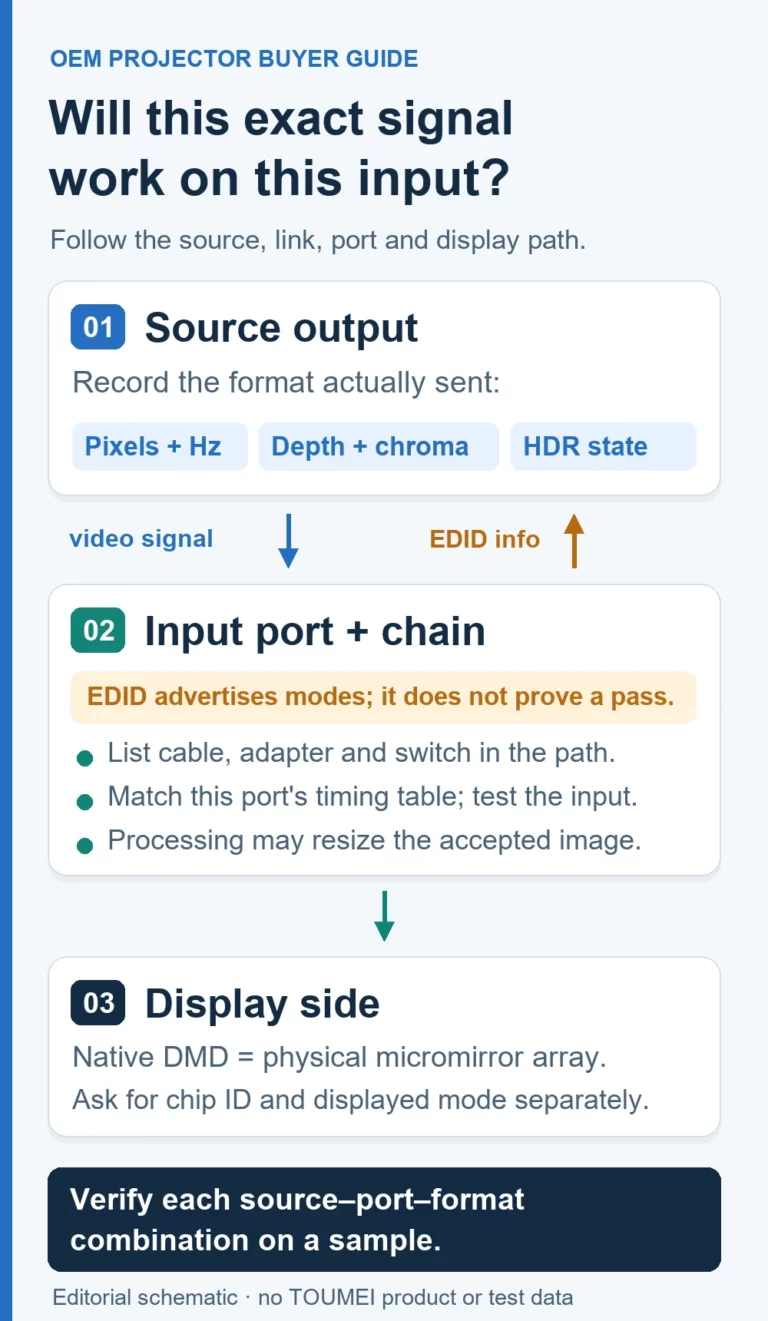
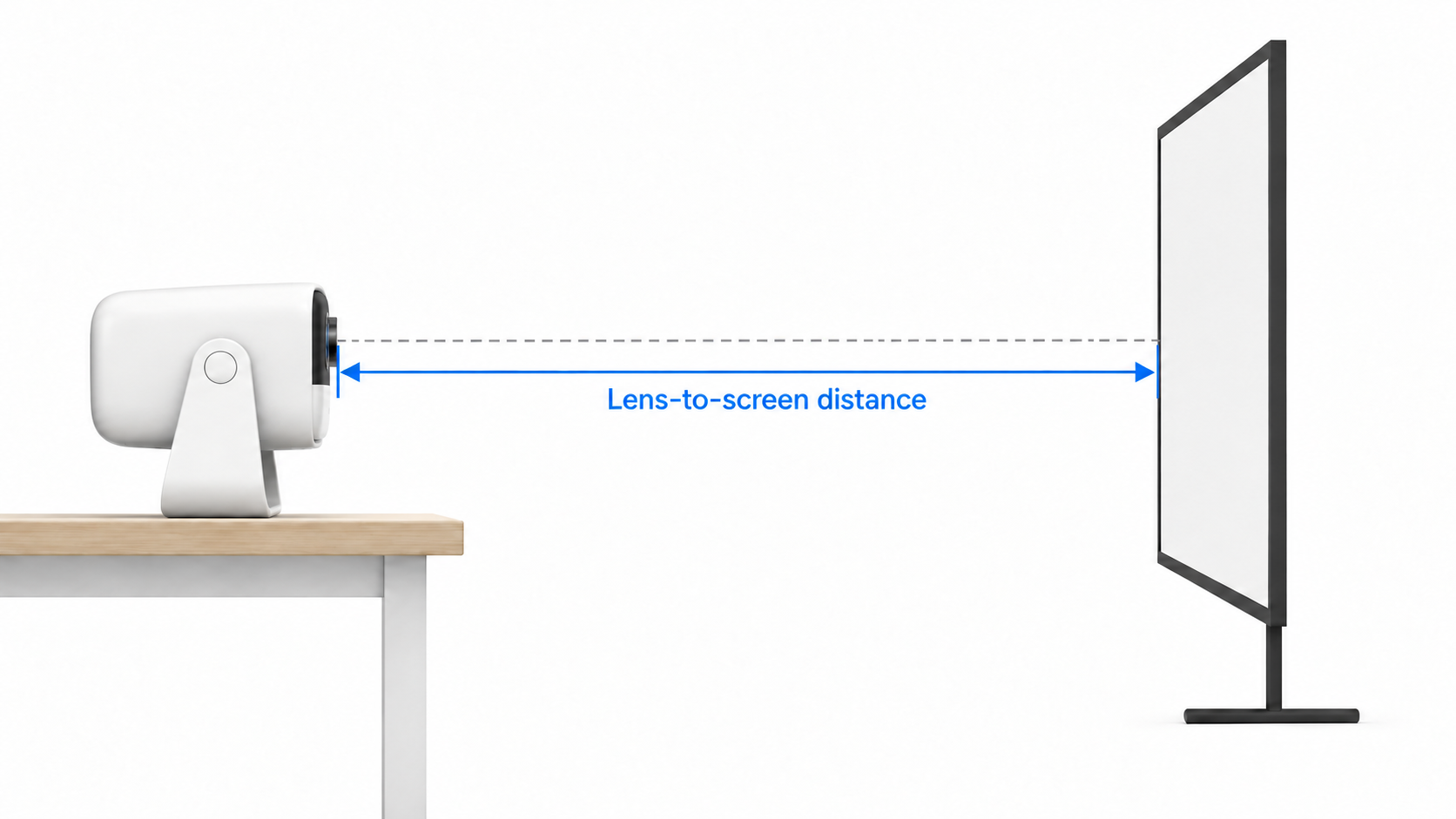
Projector buyers cannot evaluate what has not been defined clearly. Brightness terminology, native resolution, supported input resolution, throw relationship, recommended image size, power requirements, and operating conditions should be presented without mixing unlike measurements.
There is a formal international standard covering information and format for front-projection data-projector specification sheets. That does not rank brands, but it reinforces a basic purchasing principle: specification discipline is auditable. A leading brand makes claims that can be connected to a test method and an agreed sample. It also tells buyers what may change the result, such as screen size, ambient light, picture mode, or power mode.
A Coherent Portable Projector Product Roadmap
A long SKU list is not automatically a roadmap. A useful range gives each projector a job. One model may be the compact entry point, another may serve brighter rooms, and a third may support longer portable use or a more advanced smart system. The steps should be visible to buyers without making adjacent models difficult to distinguish.
A coherent roadmap also controls complexity behind the scenes. Reusing mature components where appropriate can reduce unnecessary variation, while planned differences should earn their place through a clear use case, price position, or channel need. This discipline helps a brand improve a platform instead of restarting with every release.
OEM/ODM and Customization Readiness
Portable projector leadership often depends on the ability to adapt a proven platform without losing control of the product. Light OEM work may cover branding, packaging, manuals, or interface presentation. Deeper ODM work can touch optical design, mainboard decisions, software, enclosure design, tooling, and validation.
What matters is not the number of changes a supplier accepts, but how each change is controlled. The project record should show what is frozen, when another sample is required, who signs off, and which acceptance criteria production must meet. An instant yes to every request may hide unresolved cost, timing, test, or engineering consequences.
Quality Control and Supply Consistency
The golden sample is only the beginning. Production leadership means translating that sample into incoming checks, controlled assembly, functional tests, aging where relevant, final inspection, and traceable corrective action. The exact plan varies by projector, but the logic should be visible.
Ask how the supplier checks focus consistency, image defects, wireless functions, ports, remote control, audio, fan behavior, and software version. Then ask what happens when a failure is found. A mature answer names the decision point, records the result, and prevents an unapproved substitution from quietly becoming the new standard.
Compliance and Market Localization
Projector compliance is not a logo placed on a carton. Image projectors can be subject to optical-radiation safety evaluation, and national requirements may add product, radio, power, labeling, or documentation obligations. The relevant set depends on the target market and final configuration.
Localization also reaches the user experience. Language, power accessories, manuals, packaging marks, default region settings, app availability, and support content should match the actual channel. A leading brand knows which elements are fixed, which are configurable, and which require fresh review after a hardware or software change.
Channel Support and After-Sales Learning
A capable brand gives the sales channel enough material to describe the projector honestly: clear product information, scene-appropriate images, setup help, troubleshooting guidance, relevant spare-part logic, and a defined escalation route for recurring faults.
Ticket volume alone is not insight. The useful part is the pattern behind it. When setup complaints repeatedly involve the same screen, app, or wireless environment, the team has to decide where the remedy belongs: documentation, firmware, the accessory bundle, the product listing, or a hardware revision.
A Buyer Scorecard for Evaluating Portable Projector Brands
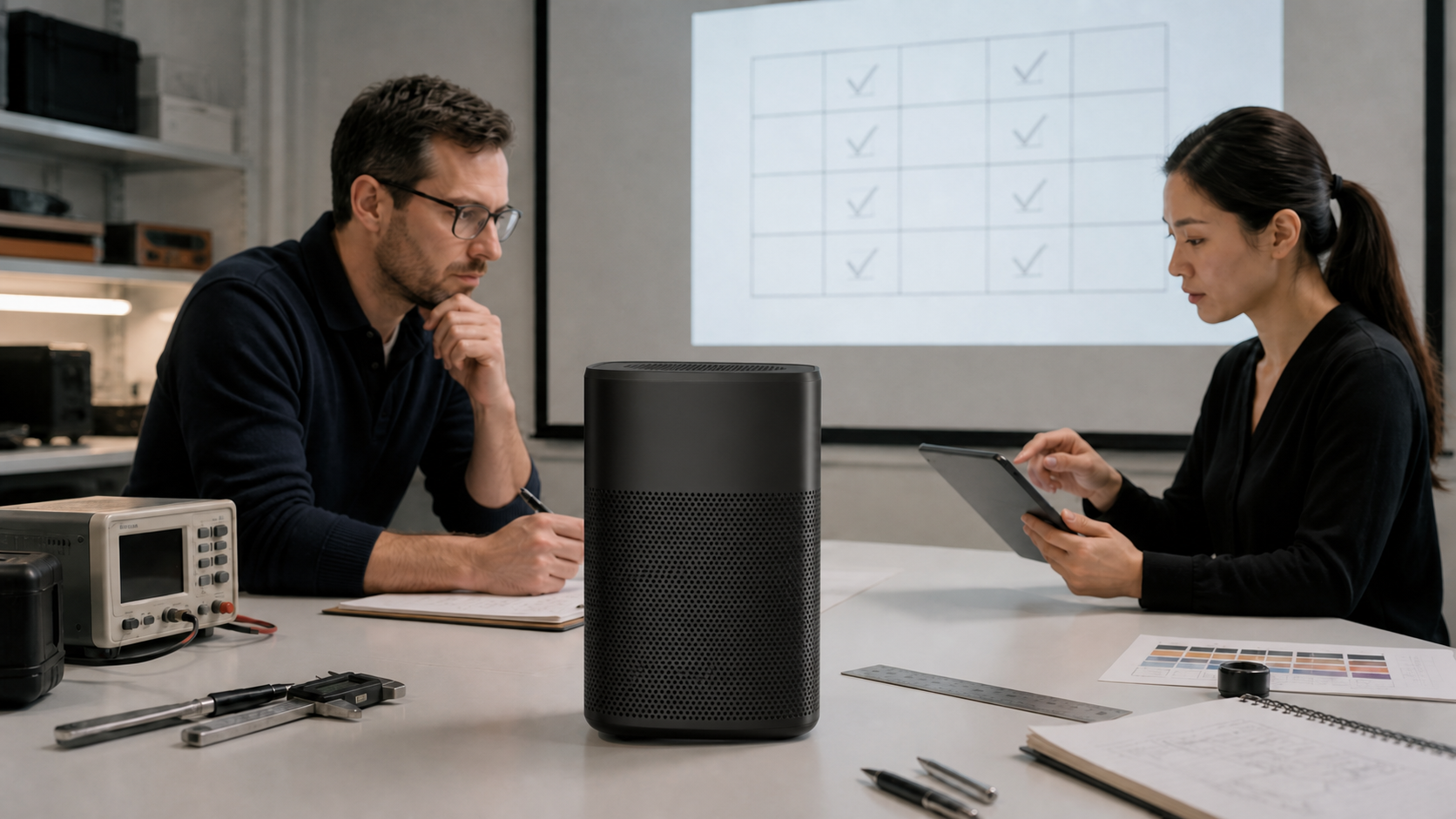
Do not award points for a polished presentation. Give credit only after the supplier shows the document, sample, process, or record named in the middle column.
| Capability | Evidence to Request | Warning Sign |
| Product-market fit | Defined user, room, screen, channel, and price position | One projector is described as ideal for every setting |
| Specification discipline | Test method, operating mode, sample result, and condition notes | Brightness or resolution terms change between documents |
| Product roadmap | Clear role for each SKU and a version plan | Many near-identical models with no upgrade logic |
| OEM/ODM control | Requirement list, change log, sample stages, and sign-off owner | Customization is promised before feasibility review |
| Quality consistency | Inspection plan, functional checks, failure handling, and version trace | Quality is described only with adjectives |
| Compliance readiness | Target-market checklist and document owner | Certification is treated as universal or permanent |
| Channel and after-sales support | Manuals, setup assets, issue categories, and feedback loop | Support begins only after complaints become public |
The scorecard does not need a complicated formula. A critical failure in safety, claim accuracy, production consistency, or change control should outweigh several attractive but nonessential features.
Signals That Look Impressive but Prove Little
Several signals deserve a second question:
- A very high headline specification: ask for the measurement definition, mode, conditions, and approved sample.
- A large catalog: ask which projectors share a platform and why each SKU exists.
- Fast customization: ask what is actually customized, which tests repeat, and which approvals can delay production.
- A polished factory presentation: ask to follow one projector from requirement to inspection record.
- A long feature list: ask which three features solve the primary use case and which ones create support burden.
None of these signals is automatically bad. They simply become meaningful only when connected to evidence and a repeatable process.
About Toumei Projector
Portable Projector Portfolio and B2B Focus
Toumei Projector is based in Shenzhen. Company source material states that the business was established in 2013, integrates production, sales, and research, and focuses on DLP smart projection and related solutions. Its current service information positions the company for brands, distributors, importers, and wholesalers rather than only end-user retail.
The public OEM/ODM portfolio is organized around portable, outdoor, and home-entertainment projector directions. That structure gives a B2B buyer a starting point for discussing use case and channel before selecting a particular configuration.
OEM/ODM Customization Across the Product Chain
The company's materials describe complete-projector OEM/ODM work spanning optical design, software development, mainboard hardware, structural design, mold development, production assembly, and aging tests. The projector OEM/ODM service overview explains the commercial audience and the distinction between lighter platform branding and deeper product changes.
This breadth should be used as a scoping map, not an assumption that every project includes every activity. A buyer should identify the base platform, list each requested change, and confirm which items require engineering, tooling, software work, or a fresh validation cycle.
In-House Quality Control and Technical Support
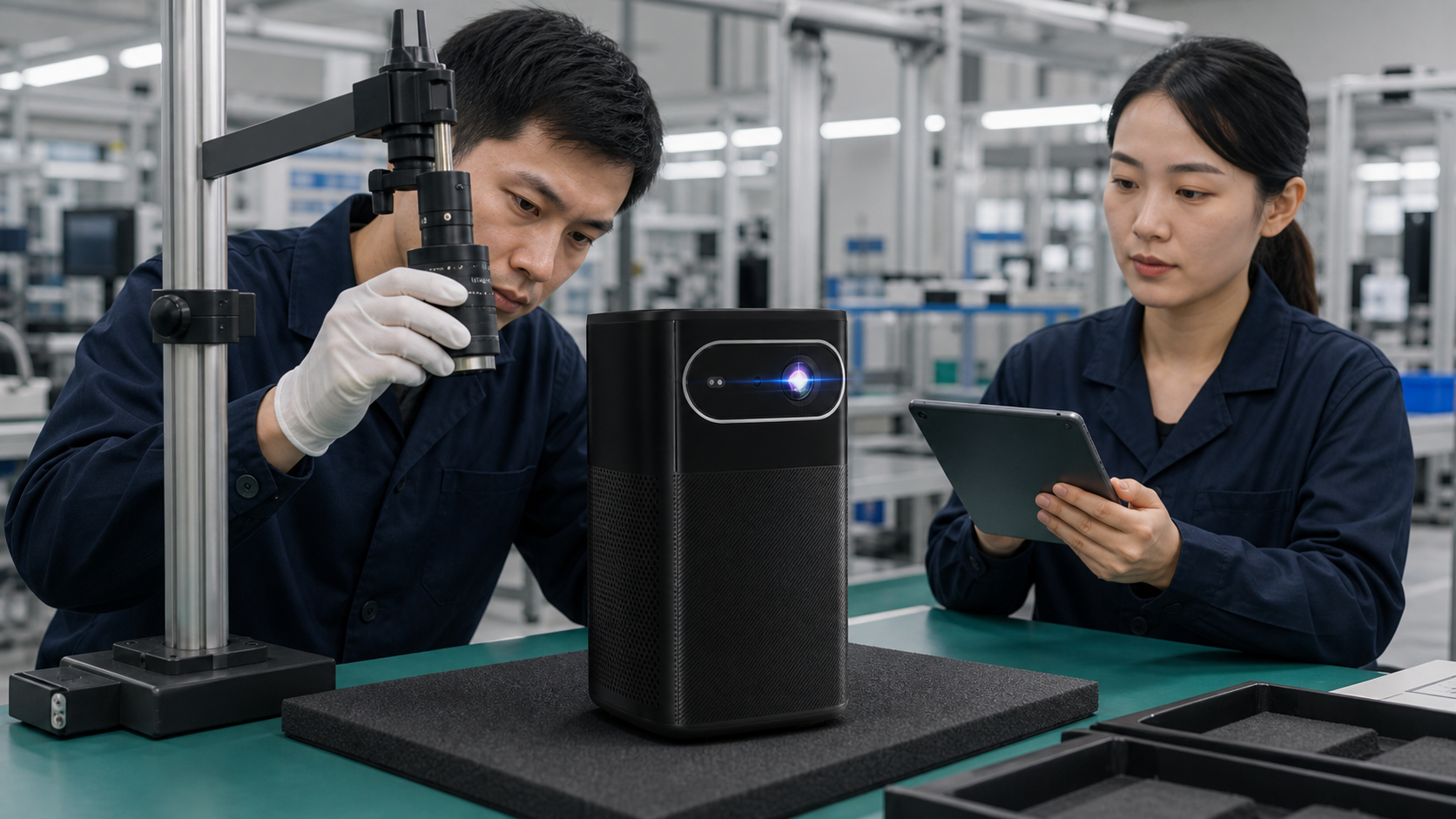
Company materials describe inspection and control at multiple points in production. The same materials place product development, software design, quality work, after-sales responsibilities, and technical problem solving with the R&D team.
The practical follow-up is model-specific. Buyers should ask which checks apply to the selected projector, identify the approved software build, document sample sign-off, and agree on how a production failure is recorded and closed. Only then does a company introduction become useful project control.
What Buyers Should Confirm Before a Project Starts
Before paying for tooling or production, confirm the intended room, screen, market, channel, target configuration, packaging, software scope, sample stages, inspection standard, and approval owner. Also separate the factory production window from artwork, sample review, compliance work, inspection, and shipping. The OEM projector production timeline is a useful prompt for defining where each clock begins.
The most efficient opening discussion is a written projector brief rather than a request for the top model. Include the target user, room conditions, projected image size, required connections, software role, portability constraint, launch channel, and the evidence needed at sample approval. That gives the engineering and commercial teams one reference point.
Toumei Projector can then be evaluated against the same leadership test used for any supplier: clear claims, traceable decisions, repeatable quality, and a product that fits the buyer's real market.
How a Portable Projector Brand Builds Durable Leadership
Durable leadership grows through a loop, not a launch event:
- Define one primary projector use case and its non-negotiable conditions.
- Test the candidate platform in that room, with that content and connection path.
- Freeze a sample, software build, accessories, packaging, and claim language.
- Run a controlled first order with agreed inspection and failure rules.
- Group field feedback by cause instead of reacting to isolated comments.
- Improve the platform or support material without erasing version history.
- Add the next projector only when it solves a distinct customer or channel job.
Copying a marketplace listing is quicker at the start; repairing the resulting confusion is slower at the end. A controlled loop gives the product team, factory, sales channel, and support staff one shared description of success.